The Quiet Signals Your Dog Is Sending You Every Day
A yawn, a lip lick, a glance away: your dog is talking all day. A practical, jargon-free guide to the small signals city dog owners miss, with checklists and a simple five-minute habit.
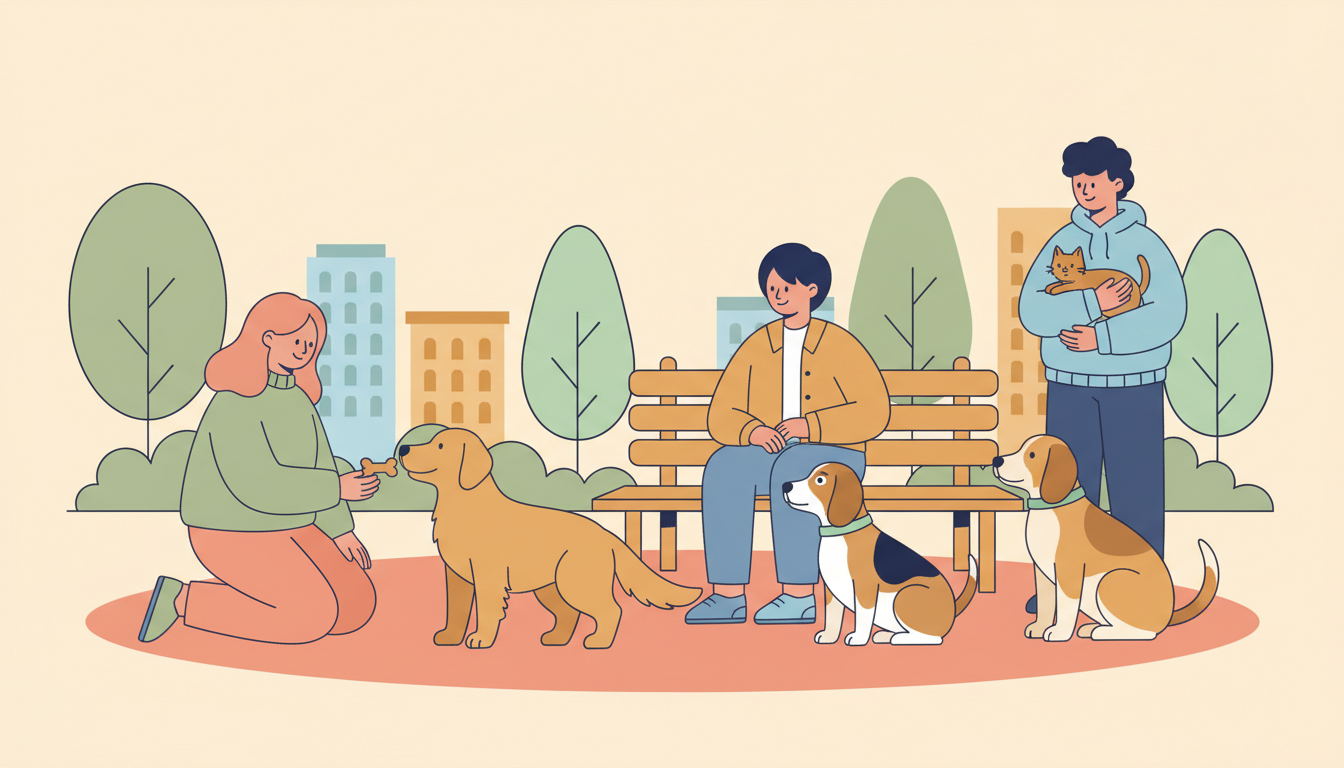
You're waiting at a pedestrian crossing, lead loose in your hand. Across the road, another dog trots past. Your dog yawns, licks his lips, and looks away. You think nothing of it and the light turns green.
But what if that tiny moment was your dog telling you something?
Dogs rarely shout. Most of the time they whisper, with a glance, a shift of weight, a flick of the ears. This guide walks you through those small signals in plain language, with checklists and everyday examples, so you feel curious and capable rather than overwhelmed.
Why Small Signals Matter More Than Big Ones
Let's begin with a scene you may know well.
The tram doors hiss open and the platform fills up. Your dog's lead, slack a second ago, goes slightly tight. A stranger reaches out a friendly hand, and your dog turns his head away. Just a few degrees. Most people miss it.

That's the whole idea in miniature. Dogs talk mostly through posture, movement and tiny changes in the face. A stiffer stance, a closed mouth, a glance sideways. A growl is the loud ending of a conversation that started quietly, usually when the quiet parts went unnoticed.
So here's the method we'll use throughout this article. Look at the whole dog, not one body part. A wagging tail alone tells you almost nothing. And compare what you see with what's normal for your own dog, because a relaxed greyhound and a relaxed pug look very different.
You don't need special equipment or a training background. You just need a few weeks of paying attention. (Your dog has already been watching you far more closely.)
One note: this is general guidance, not a diagnosis. If your dog's behaviour changes suddenly, mention it to your vet.
What a Relaxed Dog Looks Like (Learn Your Baseline First)
Before you can spot the signs of worry, you need a clear picture of calm.
You can't spot a worried dog until you know your own dog's calm. That's the whole logic here. A tail held high means something different on a Border Collie than on a Husky, and "tense" only registers when you've seen "loose" many, many times.
So start with what relaxed looks like. Check for:

- Soft eyes, with no hard stare and no wide whites showing
- A loose, slightly open mouth (sometimes it looks almost like a smile)
- Ears in their natural resting position, not pinned back or locked forward
- A wiggly or loosely swaying body
- An easy, bouncy stride
- Weight spread evenly over all four legs
But your dog's version of "relaxed" is personal. Floppy ears hide small movements. A curled tail can look alert even when it isn't. Short-muzzled breeds like Pugs and French Bulldogs have faces that read differently, and a heavy coat can mask tension along the back.
Here's a simple exercise. On three or four ordinary walks, quietly watch and take notes. How does your dog look at home? On the pavement? In the park? What do the tail and ears do when nothing is bothering them? Don't correct anything. Just observe.
And grab your phone. A few relaxed photos or short videos give you a reference you can compare against later, when something feels off but you can't say why.
Head to Tail: The Signals Worth Watching
With your dog's baseline in mind, you can start reading the details, beginning at the face and working back.
Dogs talk with their whole bodies. You just have to know where to look.
- Eyes: Soft, squinty eyes usually mean relaxed. A hard, fixed stare suggests tension. Whale eye (the whites showing as the head turns away) points to discomfort. Blinking and looking away are polite attempts to defuse things.
- Mouth: A loose, slightly open mouth is calm. A tight or closed one signals worry. Lip licking or yawning when nothing is sleepy or tasty often means stress.
- Ears and head: Ears pinned back or held stiffly forward both flag unease. So does a head turned away or lowered.
- Body: Stiffening, freezing, crouching, or weight shifting backwards means your dog wants out of the moment. Shaking off when nothing is wet works as a reset button. A sudden sniff of the ground during a tense moment is a classic stalling move.
- Tail: A wag alone doesn't mean happy. A high, stiff, quick wag is very different from a loose, sweeping one. Check height, speed, and stiffness together.
- Paws and extras: A raised paw can signal uncertainty. Watch for heavy panting on a cool day, wide eyes, sudden scratching, and excessive shedding or drooling in an unusual situation.
One signal rarely tells the whole story. A yawn after a nap is just a yawn. A yawn while a stranger leans over your dog is something else entirely.
So read the cluster, not the single clue. Then factor in the setting: the vet's waiting room, a crowded tram stop, a child rushing in for a hug. Context decides the meaning every time.
Reading the Moment: Signals in Real City Situations
Put those clusters and that context together, and everyday city life starts to make a lot more sense.
One signal can mean many things. A single lip lick might just mean your dog tasted something. But several signals together, in the same moment, tell a much clearer story. Here are four everyday scenes where that matters.
Meeting a dog on a narrow pavement. A relaxed approach is curved, loose and a little wiggly, sometimes with a play bow (front legs down, back end up). A worrying one is stiff, direct and fast, with a fixed stare. Don't wait to see which it is. Create space early, cross the road calmly, and keep your lead relaxed. A tight lead tells your dog something is wrong.
A friendly stranger or child reaching in. Watch for lip licking, a turned head, or a body leaning back and away. That's your dog saying "not now." Step in with a friendly line like, "Could you give him a moment? He's still deciding." Most people happily wait. If they don't, you can simply move on.
Noisy scenery. Trams, building work, fireworks, a packed square on a Saturday. A dog who freezes, pants heavily, or pulls toward the exit is overloaded. Move to a quieter spot, add distance from the noise, and offer a calm moment before you continue. Sniffing a lamppost or taking a slow breath beside you counts as recovery.
Guests and the doorbell at home. Dogs ask for space too. If yours drifts to a favourite bed, settles in another room, or turns away from the commotion, respect it. That's a polite request, not rudeness. Let your guests settle first, and let your dog come to them if and when they choose.
The rule of thumb is the same every time:
- Notice what your dog is showing you.
- Add distance from whatever's causing it.
- Let your dog recover until the body softens again.
- Decide whether to try again later, or call it a day.
Calling it a day isn't failure. It's good listening.
How to Respond When Your Dog Says 'This Is Too Much'
Noticing is half the job; what you do next is the other half.
When your dog signals discomfort, slow everything down. Here's the sequence:
- Pause. Stop walking, stop talking, stop reaching.
- Look at the whole dog. Check the body, the ears, the eyes, the tail.
- Create distance. Step back or turn away to give them space.
- Keep your voice and body calm. Your dog reads you as much as the situation.
- Let them sniff or settle before you move on.
Please don't punish a growl or a snap of warning. It feels like the problem, but it's actually the alarm working. Punish it and the dog may stop giving that warning, which makes the next signal harder to read. So treat those quiet signals as a gift, not a nuisance.
A few things to avoid:
- Forcing greetings
- Dragging a hesitant dog forward
- Hugging or leaning over a dog who's already stiff
- Crowding them in a lift or on a narrow stairwell
Everyday habits help too. Choose quieter routes and times when your dog is unsure. Reward calm behaviour when you see it. And let them watch the world from a distance, at their own pace.
If worrying signals are frequent, getting stronger, or come with changes in appetite, sleep, toileting or movement, book a visit with your vet. They can check for health causes and advise on next steps, and may suggest a qualified behaviour professional from there.
A Five-Minute Habit to Start This Week
You don't need a big plan to begin listening better. You need five quiet minutes.
Pick one calm moment each day. Maybe it's after dinner, or on the sofa with your morning coffee. Watch your dog for three to five minutes without talking, and quietly name what you see: ears, eyes, mouth, body, tail. Do the same once on a walk, and see how the picture changes.
Then jot down one signal you hadn't noticed before and where it showed up. A phone note works fine. Share what you spot with family and anyone who walks or lives with your dog, so everyone responds the same way.
It's a tiny habit. But it makes walks calmer, builds trust, and eases everyday city life for both of you. And if something changes suddenly or worries you, your vet is always the right next call.
Want Pethood on your block?
Pethood is on Google Play. On iPhone? Join the waitlist: one email to confirm, one when it’s on the App Store.
More from the journal.
 Training
The Mat Habit: Teaching Your Dog to Switch Off Anywhere
Tired of a dog who circles, sighs and pops up the moment you sit down? Learn a simple mat routine that works at home and travels with you to parks and benches.
 Behaviour
Why Your Dog Barks Indoors and What Actually Helps
Dog barking in your flat? Learn why dogs bark indoors, how a one-week diary reveals the trigger, and which calm, practical steps help you and your neighbours.
 Behaviour
Dog Guarding Food, Toys or the Sofa? What to Do Next
Does your dog freeze or growl over a bone, toy or the sofa? Learn the early signs, why guarding happens, and calm, practical steps to help your dog feel safe.