Dog Guarding Food, Toys or the Sofa? What to Do Next
Does your dog freeze or growl over a bone, toy or the sofa? Learn the early signs, why guarding happens, and calm, practical steps to help your dog feel safe.
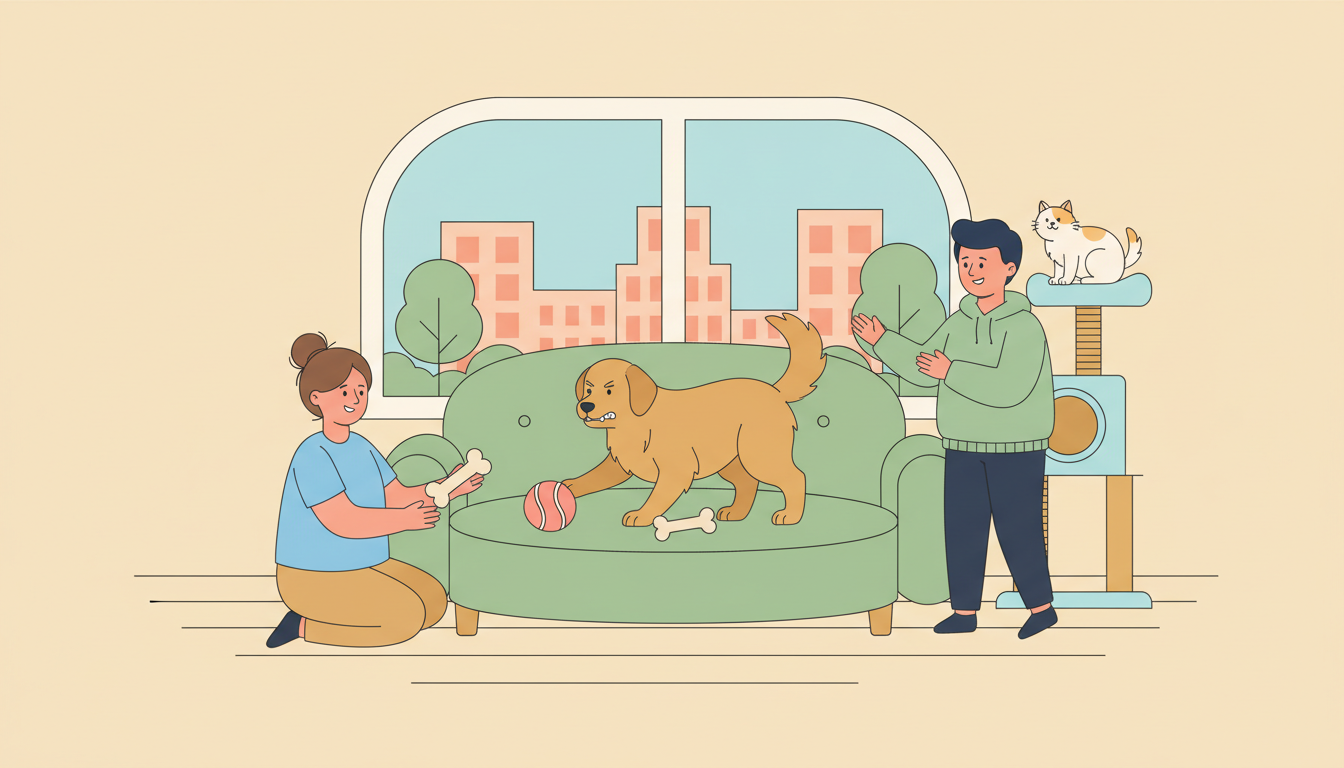
It's an ordinary evening. Your dog has settled in with a favourite chew, and you walk past on your way to the kitchen. Suddenly everything goes still: the body stiffens, the eyes lock on you, and the chewing stops.
Is this normal, and should you be worried? Many owners quietly wonder exactly that. The reassuring answer is that this is a common situation, and a calm, kind approach goes a long way.
This behaviour is known as resource guarding: a dog trying to keep hold of something they value, such as food, a toy or a spot on the sofa. Below you'll find a clear checklist and practical steps you can start today.
Why that sudden freeze over a bone happens
Before looking at the signs and the solutions, it helps to understand what is actually going on.
You're heading to the kitchen. Your dog is mid-chew on a bone, and as you pass the bowl, everything stops. The body goes stiff. The eyes lock on you. Do you laugh it off or take a step back?

This is called resource guarding. It simply means a dog is trying to keep hold of something they value, like food, a chew, a toy, a bed or a spot on the sofa. It's common, and it doesn't make your dog "bad" or "dominant." There are calm, practical things you can do.
Below, we'll cover how to spot the signs, why it happens, what to do and avoid, and when to call a professional.
How to recognise a dog who is guarding something
The first step is learning to read the small signals, because guarding sits on a scale.
Guarding almost never starts with a growl. It starts quietly, with small signals that are easy to miss if you're not looking for them.
Watch for these early signs:

- Freezing mid-chew or mid-bite
- A stiff, rigid body
- A hard stare, sometimes with the head lowered
- Eating faster as you approach
- Turning the body to shield the item
- Picking it up and moving away
- Tucking a toy under the body
Then there's the louder end of the scale:
- Lip lift
- Growl
- Snarl
- Snap
- Lunge
Here's the part many owners get wrong. A growl isn't bad manners. It's useful information, and your dog is giving you a warning before anything worse happens. Punish it and you don't remove the feeling. You just remove the warning.
In city homes, certain spots come up again and again. The kitchen bowl is the classic. Chew treats during an evening wind-down are another (everyone's tired, nobody's paying attention). Then there's the sofa or bed the moment someone sits down, stolen socks and tissues, and guarding one person from another.
Your dog might guard against people, other dogs, or the cat in the same flat. And it doesn't stay indoors. On walks, a found scrap of food or a stick in a busy park can set it off.
One last thing. Look at the whole dog. A soft, wiggly body with loose movement means something very different from a still, tense one. The same item, the same spot, but a completely different message.
Why dogs guard: it is usually worry, not stubbornness
Once you can spot the signs, the natural next question is why your dog does it at all.
Here's the simplest way to think about guarding: your dog has something they value, and they're afraid of losing it. That's all. The growl over a bone or the stiff freeze beside the sofa isn't a power play. It's worry, dressed up as a warning.
Several things can feed that worry. A dog who has had food or toys taken away before may expect it to happen again. Competition for meals or space can add pressure. So can stress, or a particularly irresistible item like a chew they've waited all day for. And some dogs are simply more protective by temperament, the same way some people hold tight to their things.
You may have heard that guarding means a dog is "dominant" and trying to rule the house. It doesn't. They're not auditioning for leader. They're trying to keep something.
City life adds its own twists. In a flat or shared home, a dog's bed or favourite sofa spot often sits right in the walkway, with people passing close by all day. More comings and goings mean more moments of "will someone take this?" Plan around that without blaming anyone, including your dog.
One more thing. Pain, illness, or plain tiredness can make a dog far less tolerant. If guarding appears suddenly or gets noticeably worse, that's a reason to involve your vet.
What to do: calm, practical steps for food, toys and the sofa
With the "why" in mind, here is what you can actually do at home.
First, the safety rule. If your dog has ever bitten someone, or you feel afraid around them, skip the DIY plan. Go straight to your vet or a qualified behaviourist. Fear changes how you move, and dogs notice.
If you're not in that situation, these five steps are a calm place to start.
- Stop grabbing things. Don't take the food away, poke at the bowl or pull items from the mouth to "show who's boss." It teaches your dog that people approaching means loss. That makes guarding worse.
- Manage the setup. Feed in a quiet spot, behind a door or a baby gate. Keep children and visiting dogs away during meals and chews. Hand out chews when your dog is alone in a room or crate.
- Build good feelings about people approaching. Stay at a distance where your dog is still relaxed. Toss something tastier than what they have, then walk away. Repeat slowly, moving a little closer only when your dog stays loose and comfortable.
- Teach a simple trade. Offer something better and let your dog choose to drop or leave the item. Then give the original back where it's safe to do so. Practise with low-value items first.
- For the sofa, invite instead of push. Teach an "off you come" cue with a treat on the floor and reward calm moves. Put an appealing bed nearby as an alternative. Use a lead or a barrier if needed, so nobody ends up in a confrontation.
Here's what this looks like in practice. Say your dog tenses when you pass the food bowl. Walk past, drop a small, tasty treat into the bowl and keep walking. No staring, no reaching. After a few relaxed passes, your dog starts to read your footsteps as good news.
Keep sessions short. Go at your dog's pace. And if you see stiffness or a freeze, stop right there and give them space.
What not to do, and a note for homes with cats and visitors
Just as important as what you do is what you avoid, especially in a busy household.
Start with what to avoid. Don't punish growling. A growl is a warning, and if you scold it away, you can teach a dog to skip the warning and go straight to a bite. Don't shout, don't stare the dog down, and don't reach over a stiff, frozen dog. And don't "test" your dog to prove a point. You'll only erode the trust you're trying to build.
In a home with cats, keep the setup simple:
- Feed dogs and cats in separate rooms.
- Keep cat food and litter trays well out of the dog's reach.
- Give each pet their own resting spots, so nobody has to defend a favourite cushion.
Visitors need a few ground rules too. Ask guests not to approach the dog's bed or food. Never leave young children unsupervised with a dog who guards, and teach kids to leave dogs alone when they're eating or chewing. That one habit prevents a lot of bites.
Outside, always check the signage and current local rules about leads wherever you walk, as they can differ between parks, riverside paths and neighbourhoods. Before you visit busy places, practise a reliable "leave it" and recall somewhere quiet first.
When to call your vet
Home management has its limits, and knowing when to step back and ask for help is part of doing this well.
Guarding that shows up out of nowhere, or gets worse fast, deserves a vet visit. Pain, illness and other physical problems can lower a dog's tolerance overnight. And only a vet can check for that.
Call too if your dog has snapped or bitten, if you feel unsafe, or if a child or vulnerable adult lives in your home. Don't wait it out.
At the appointment, ask your vet to rule out health causes. If behaviour is the issue, ask them to point you towards a qualified, kind and reward-based behaviour professional.
One last thing. This article offers general guidance only. It can't diagnose your dog or replace a proper vet visit.
One small change this week
Here's the whole thing in four moves. Spot the early signs, like a stiff body or a hard stare over the bowl. Never punish the growl, because that's your dog's warning, and you want to keep it. Set up your home so guarding never gets practice. Then build trust with gentle trades, one small swap at a time.
Progress is usually gradual, and that's normal. So this week, choose one safe change: give chews in a separate room, feed in a quiet corner, or practise calm approach-and-treat passes. Keep brief notes on when and where guarding happens, so you can share them with your vet or a qualified behaviour professional.
If the behaviour is new, sudden, or has ever involved a snap or bite, book a check with your vet. Asking for help doesn't mean you've failed. It means you're looking after your dog well.
Want Pethood on your block?
Pethood is on Google Play. On iPhone? Join the waitlist: one email to confirm, one when it’s on the App Store.
More from the journal.
 Cats
Your Kitten's First Weeks at Home, Step by Step
A week-by-week guide to a new kitten's first weeks at home: safe room setup, a calm arrival, introductions to a dog or cat, vet visits and when to call for help.
 Health & vet
How to Choose a Vet You Can Trust, Close to Home
Choose your vet now, not in a panic. A calm checklist for Zagreb pet owners: practical tips, questions to ask, what to notice on a first visit, and how to prepare.
 Health & vet
Autumn Walk Hazards: What Dogs Pick Up and What to Do
Fallen fruit, conkers, mushrooms and hidden glass: a calm, practical guide to autumn walk hazards for dogs and cats, with a simple routine and clear vet advice.