Autumn Walk Hazards: What Dogs Pick Up and What to Do
Fallen fruit, conkers, mushrooms and hidden glass: a calm, practical guide to autumn walk hazards for dogs and cats, with a simple routine and clear vet advice.
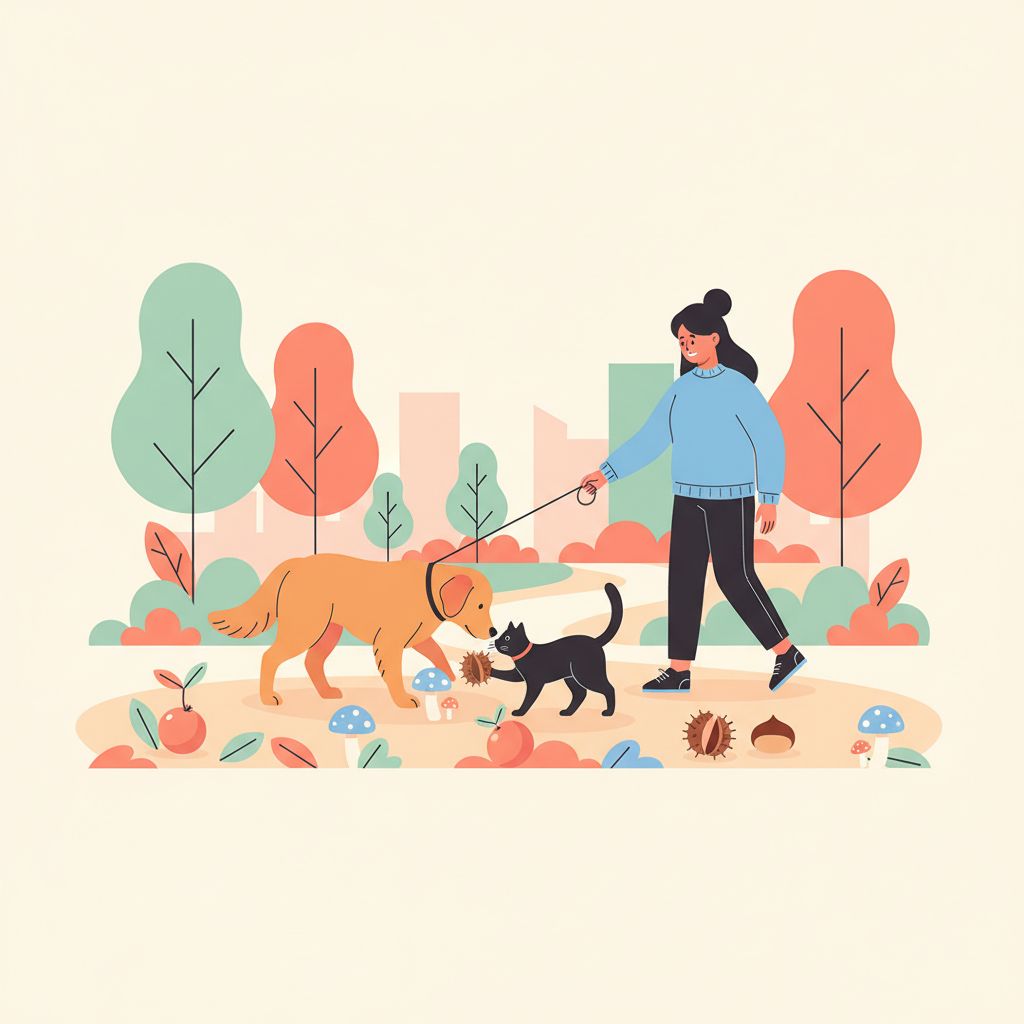
It's a damp Sunday morning in Maksimir. A dog trots along a leaf-covered path, nose pressed to the ground, then stops short. Jaws working. Whatever it found, you didn't see it, and neither did the dog until it was already in its mouth.
Every owner has stood in that moment and asked the same thing: what was that, and is it a problem? Most of the time, the honest answer is that it's fine. Occasionally it isn't, and autumn gives dogs more chances to find out than any other season.
This guide skips the scare list. Instead, you'll get a calm, practical routine you can use on any city walk, from Zagreb's parks to riverside paths across Europe.
Why autumn walks need a little more attention
The season changes what lies on the ground, so it helps to understand how.
Fallen leaves bury objects that are easy to spot in summer. Fruit drops and starts to ferment. Mushrooms pop up after a few wet days, often overnight. And dogs, being born scavengers, treat all of it as an invitation (your calm "leave it" doesn't stand a chance against a good smell).

This guide offers general safety information, not a replacement for your vet. It also won't hand you a list of things to fear. You'll get a simple routine you can follow on the Sava embankment or in your local park without turning every walk into a drill.
Cats can be affected too, especially outdoor cats and those who roam balconies and gardens, so you'll find a short cat note along the way.
The usual suspects: fruit, nuts, conkers and mushrooms
With that in mind, here is what is actually worth watching for.
Autumn walks come with a built-in snack bar, and your dog has noticed. Most of what lies on the ground is harmless. A few things aren't, and some look a lot like the ones that are. Here's a quick reference you can screenshot before your next walk in Maksimir or along the Sava.
| What it is | Why it matters | What to do |
|---|---|---|
| Windfall fruit (apples, pears, plums) | Fermenting fruit can cause alcohol poisoning and upset stomachs. Stones and pips are a worry too, and plum stones can lodge in the gut. | Steer your dog away. If a whole plum stone is swallowed, call your vet. |
| Grapes and raisins | Well known as harmful to dogs, even in small amounts. | Never offer them as a treat. If your dog eats any, call your vet straight away. |
| Conkers (horse chestnuts) | Toxic to dogs, and a hungry gulper can choke on one or end up with a blockage. | Don't let your dog pick them up. Contact your vet if one is swallowed. |
| Sweet chestnuts | Edible, but they look similar to many owners. Whole nuts and spiky husks can still cause choking or blockage. | If you can't tell the difference, treat both as off limits. |
| Acorns and walnuts | Hard to digest, can carry mould, and a whole nut is a blockage risk. | Discourage scavenging. Watch for vomiting or a swollen belly. |
| Mushrooms | Many look alike, and even experienced foragers get fooled. | Unidentified mushrooms are never worth the risk. Note what it looked like (a photo helps) and tell your vet. |
| Mouldy bins and compost | Mould can cause tremors and vomiting. | Keep your dog away. Call your vet if you see shaking. |
| Discarded food and wrappers | Unknown ingredients, plus a wrapper can block the gut. | Use a firm "leave it" and carry something better to offer. |
| Cigarette ends | Contain nicotine, which is harmful to pets. | Tell your vet if one is eaten. |
| Bonfire remains | Ash, charred food and leftover debris can burn mouths and upset stomachs. | Keep your dog well clear of old fire sites. |
| Sharp objects under leaves | Glass, metal and fishing hooks hide in leaf litter and can cut paws or mouths. | Check paws after each walk. Seek help for deep cuts or swallowed items. |
Fallen leaves make the ground a lottery. That's the real trouble. You can't see what's underneath until your dog's nose is already in it.

So build the habit now. A reliable "leave it" does more than any list. And if your dog does swallow something odd, don't wait for symptoms. Call your vet early, say what was eaten and roughly when, and bring along any packaging or a photo. (Your vet would much rather get a call that turns out to be nothing.)
Seasonal risks that are easy to miss
Beyond the obvious snacks, a few quieter hazards turn up as the weather cools.
Colder months bring hazards that don't make most checklists. Slug bait, rodent poison and antifreeze all show up in gardens and car parks once the temperature drops. Watch for blue pellets and small bright puddles under parked cars, and read any signage or notices along your usual route. A sign about pest control means your dog stays on a short lead.
Wet leaves are another quiet problem. They hide broken glass, old bones and discarded food on pavements and in parks, and a nose-down dog will find all three before you spot them.
Cats face a different mix. Autumn fruit and fallen leaves matter less. Garden chemicals, compost bins and warm car engines are the real risks, since cats love a sheltered, warm spot. Before you drive, knock on the bonnet or take a quick look underneath. It takes five seconds. And it's a habit worth keeping all winter.
A simple routine to stop scavenging before it starts
Knowing the risks is half the job; the other half is a routine that keeps your dog from reaching them.
Prevention beats rescue every time. Here's a routine you can start this week.
- Scan the route. Look ahead and steer round heavy fruit drop, mushroom patches and bin areas. Be extra careful after rain, when everything smells stronger and more tempting.
- Choose your lead. Keep it short or flexible in risky spots. A lead extension works only on clear ground, where you can see everything within reach.
- Teach "leave it" and "drop." Use small, high-value treats. Practise at home first, then in quiet outdoor spots, then in tempting places. Think a few minutes a day, not a one-off lesson. Dogs learn this in layers.
- Reward the right choice. When your dog looks at you instead of the ground, pay up. And always carry something better than whatever's on the path.
- Consider a basket muzzle. For dogs who gulp everything in sight, a well-fitted one can be a safety net. Introduce it gradually, pairing it with treats so it becomes a good thing. Your vet or a qualified trainer can tell you whether it suits your dog.
- Never wrestle objects out of a mouth. It can trigger a panicked swallow, which is the exact thing you're trying to avoid. Swap for a treat instead, or calmly guide your dog away.
Before you head out, run through a quick checklist:
- Treats in your pocket
- Lead chosen for the route
- Route planned around the risky spots
- Phone charged
- Your vet's number saved
None of this takes long. But it turns a walk full of surprises into one where you're a step ahead.
When to call your vet
Even with good habits, something will occasionally slip past you, and knowing what to do next matters.
Call your vet the moment you suspect your pet has eaten something unsafe. Don't wait for symptoms. Some problems build slowly, and by the time your dog or cat looks unwell, the window for easy treatment may have narrowed.
Resist the urge to fix it yourself. Skip the home remedies, and don't try to make your pet vomit unless your vet specifically tells you to. It can cause more harm than the original problem.
Before you phone, gather a few details:
- What your pet ate
- Roughly how much
- When it happened
- Your pet's size and age
- Any symptoms you've noticed
If it's safe, snap a photo of the item or bag up a sample. The packaging helps too. It gives your vet something concrete to identify.
Some signs should prompt a quick call. These include vomiting, drooling, a tender or swollen belly, lethargy, tremors, wobbliness and loss of appetite. (This isn't a complete or diagnostic list, so trust your gut if something seems off.)
One last thing. Find an out-of-hours vet near you today and save the number in your phone. Emergencies rarely wait for opening times. And remember that guidance like this never replaces advice from a professional who can examine your pet.
Make autumn walks relaxed again
Most autumn walks end with nothing worse than muddy paws. That's the reality. A few simple habits just make the whole outing calmer for both of you.
- Scan the ground as you go, especially under trees and along verges.
- Practise "leave it" until it's automatic, even with a tempting snack in front of the nose. Spend a few minutes on it at home this week.
- Know your vet plan, including the nearest clinic and who to call after hours. Save those numbers in your phone today.
And look out for your neighbours too. Found a great, safe route? Share it. Spotted a patch of mushrooms or broken glass? Warn the dog owners nearby. Before your next outing, give the pre-walk checklist a quick read.
Want Pethood on your block?
Pethood is on Google Play. On iPhone? Join the waitlist: one email to confirm, one when it’s on the App Store.
More from the journal.
 Health & vet
 Pet First Aid Kit: What to Keep at Home and on Walks
Build a pet first aid kit in 15 minutes: a simple checklist for your home and walk bag, first steps for city emergencies, and when to call the vet.
 Behaviour
 Dogs and Children: Safe, Calm Daily Routines at Home
Practical steps for keeping dogs and children safe at home: a safe dog space, body language lessons for kids, calm daily routines and clear supervision rules for families.
 Health & vet
 Dog and Cat Grooming at Home: A Simple Starter Routine
A simple starter routine for grooming your dog or cat at home: brushing, nails, ears and paw care for city pets, with short sessions, calm habits and clear signs it's time to call your vet.