Pet First Aid Kit: What to Keep at Home and on Walks
Build a pet first aid kit in 15 minutes: a simple checklist for your home and walk bag, first steps for city emergencies, and when to call the vet.
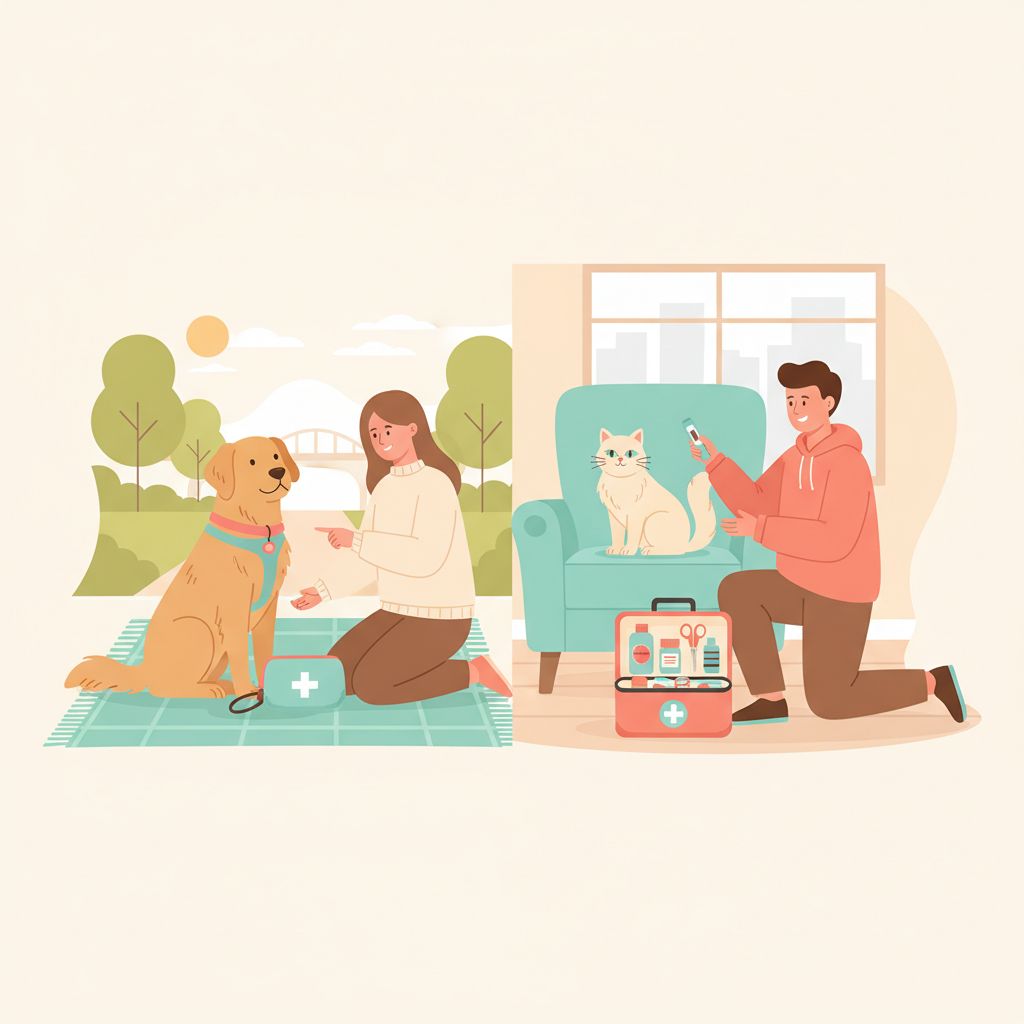
You're halfway along a park path in Zagreb, the morning calm, your dog trotting ahead, when she suddenly stops and holds up a paw. You crouch down, and a thought lands: what's actually in my bag that could help? Would you know what to grab?
A well-planned pet first aid kit turns that moment from panic into a calm, practical response. In this guide, you'll find a simple checklist for both your home and your walk bag, whether you share your life with a dog or a cat.
One clear note before we start: this is about being prepared until you reach a vet, not about replacing one.
Why a pet first aid kit is worth building before you need it
You're strolling through Maksimir on a Sunday morning when your dog yelps. A sharp stick has torn a flap of skin near his shoulder. Or you're back from a pavement walk and notice a bloody smear where a paw pad split on broken glass. Or your cat strolls in from the balcony with a scratched ear and a look that says nothing happened.
That's when you'll want a kit already waiting, not a frantic search through drawers. Ready supplies save you minutes, and your decisions come out calmer when the basics sit within reach.

One thing first. First aid is only a bridge to a vet, never a replacement for veterinary care. Below, we cover a home kit, a smaller walk kit, first steps for common situations, and when to call your vet.
What to keep in your home pet first aid kit
So what actually goes inside? Whether you're building a dog first aid kit or a cat first aid kit, the core of the home setup is the same, and this is your practical pet first aid kit checklist for the house.
Start with one box or bag. Label it clearly, then keep it in a fixed, easy-to-reach spot (a hallway cupboard works well). Everyone in the household should know where it lives. When something goes wrong, nobody should be hunting through drawers.
Here's what to put in a pet first aid kit for use at home:

- Sterile gauze pads and rolls
- Self-adhesive bandage that sticks to itself and not to fur
- Blunt-ended scissors
- Tweezers
- Saline wound rinse
- Disposable gloves
- Clean towels or a spare blanket
- A digital thermometer made for pets
- A soft muzzle or a strip of cloth for a painful dog (even gentle dogs can snap when they hurt)
- A cat carrier or sturdy pet box within reach
Then add the paperwork. A kit full of bandages won't help much if you can't reach your vet. Include these:
- Your vet's phone number
- An out-of-hours emergency vet number you've checked in advance (call it once to confirm it's current and find out where the clinic is)
- Vaccination records
- Your pet's microchip number
- A recent, clear photo of your pet
That photo matters more than you'd think. If your pet bolts in a panic, you'll be glad you have it.
Cat owners, you get a couple of extras. Keep a towel in the kit for gentle wrapping, which calms a frightened cat and keeps claws under control. And make sure the carrier is already familiar. Leave it out in a corner of the living room with a blanket inside, so your cat treats it as a normal part of the home. A cat who's never seen the carrier will fight it. That's the last thing you need in an emergency.
One more thing. Leave medicines out of the kit, along with anything that needs a dose. Guessing at amounts can do real harm. And ask your own vet what, if anything, to add for your pet's specific needs. An older dog, a diabetic cat and a young puppy don't all need the same things.
A small kit for walks: what to carry in your bag
Your home kit stays put, but most surprises happen out on the street or the park path, so you need a lighter version that travels with you.
The best first aid kit is the one you actually have with you. So build a compact walk first aid kit for dogs and let it live in the bag or jacket you grab for every walk. No separate packing. No "I'll bring it next time."
Here's what fits in a pocket-size pouch:
- A few gauze pads and a small roll of self-adhesive bandage
- A small bottle of saline or clean water
- Tweezers
- A couple of disposable gloves
- A folded clean cloth
- A collapsible water bowl and a bottle
- Spare poo bags
- A spare lead or slip lead
- A charged phone with your vet's number saved
Then tailor it to the city. In summer, hot pavements can burn paw pads, so the water and cloth earn their place. In winter, cold and grit irritate paws, and a quick rinse with saline helps. Near benches and bins, watch for broken glass and litter. Busy tram and road crossings are where a spare lead matters most (a snapped clip is a bad moment next to traffic). And park paths bring sticks and brambles, so those tweezers will get used.
Cat owners, you're not left out. If your cat goes outside, carry a harness and lead plus a carrier, along with the same pocket-size basics. A cat that bolts or panics needs a secure way home.
Check your kit every season. Replace anything you've used or that's gone damp, because wet gauze is useless. And write the date of your last check on a small label or in your phone notes. Thirty seconds, four times a year. That's all it takes.
First steps for common city situations (until you reach a vet)
Having the right supplies is only half the picture, so here is what to do with them when something actually happens.
Take a breath. What follows is general guidance, not a treatment plan. Your job in a city emergency is simple: stay calm, keep yourself and your pet safe, and get to a vet.
Small cut or sore paw. Stop your dog from licking it (a lick can turn a scrape into an infection). Gently rinse the area with saline or clean water, then cover it loosely with a clean pad. Don't wrap it tight. Then get it checked. This buys you time. It doesn't replace a vet.
Something stuck, like a splinter or burr. Don't dig. Don't pull or force it, either, because you can push it deeper or snap it off under the skin. Note exactly where it sits so your vet can find it fast. Again, this buys time and doesn't replace a vet.
Hot pavement or a parked car. Move your pet into shade straight away and offer small sips of water. Not a full bowl gulped down. Then call your vet for advice immediately, even if your dog seems to be recovering. Heat can do damage you can't see. This buys time, not a cure.
Suspected poisoning or something swallowed. Remove access to whatever it was. Keep any packaging, or snap a photo of the item, because your vet will want to know exactly what and how much. Then phone your vet or an emergency vet right away. Don't try to treat it at home (making a pet vomit can cause serious harm in some cases). Quick action helps, but only a vet can treat it.
A note on handling. An animal in pain can bite or scratch, even a gentle one that has never so much as growled at you. Move slowly and speak softly. If you have a muzzle, use it. For cats, a towel gently draped over the body can help. Protect your own hands first, because an injured owner can't get a pet to the clinic.
Whatever the situation, the message stays the same. These steps buy time. The vet is where the real help happens.
When to call your vet
Some situations are beyond what any kit can handle, and knowing the warning signs helps you act quickly.
Some situations can't wait. Call your vet promptly if you see any of these:
- Heavy or continuing bleeding
- Trouble breathing
- Collapse or sudden weakness
- Seizures
- Suspected poisoning
- A swollen or hard belly
- Repeated vomiting
- A deep wound
- An eye injury
- Signs of heatstroke
And if you're unsure? Call anyway. Phoning to ask is always fine, and vets would much rather hear from you early than late.
So do some prep today. Save your regular vet's number and an emergency clinic's number in your phone. Check how to reach out-of-hours care in your city (it's far easier to find now than at 2 a.m.). Keep your pet's records and microchip number somewhere you can grab them fast.
When you call, follow the instructions you're given, and tell the clinic you're on your way so they can prepare. First aid is only there to bridge the gap until you reach a vet. It never replaces one.
Make your pet first aid kit a habit
So that's the whole system: one kit at home, one small pouch for walks, key numbers saved, and a quick check every season. None of it is complicated, and all of it is easier to do on a calm weekend than in the middle of a scare.
This weekend, give it 15 minutes. Gather the items, label the box, pack the walk pouch, and save your vet's number plus the nearest 24-hour clinic in your phone. Then show everyone where the kit lives, including the kids and any pet sitter.
Finally, ask your own vet what else suits your dog or cat at your next visit. They'll know. And if this checklist was useful, pass it on to another pet owner in your street or park group, because the next paw in the air might be theirs.
Want Pethood on your block?
Join the waitlist. One email to confirm, one on launch day, nothing else.
More from the journal.
 Behaviour
 Dogs and Children: Safe, Calm Daily Routines at Home
Practical steps for keeping dogs and children safe at home: a safe dog space, body language lessons for kids, calm daily routines and clear supervision rules for families.
 Health & vet
 Dog and Cat Grooming at Home: A Simple Starter Routine
A simple starter routine for grooming your dog or cat at home: brushing, nails, ears and paw care for city pets, with short sessions, calm habits and clear signs it's time to call your vet.
 Training
 Puppy Socialisation Checklist for City Life
A practical, tickable puppy socialisation checklist for city life: sounds, surfaces, people and traffic, with a one-week plan to build a calm, confident urban dog.