Your Kitten's First Weeks at Home, Step by Step
A week-by-week guide to a new kitten's first weeks at home: safe room setup, a calm arrival, introductions to a dog or cat, vet visits and when to call for help.
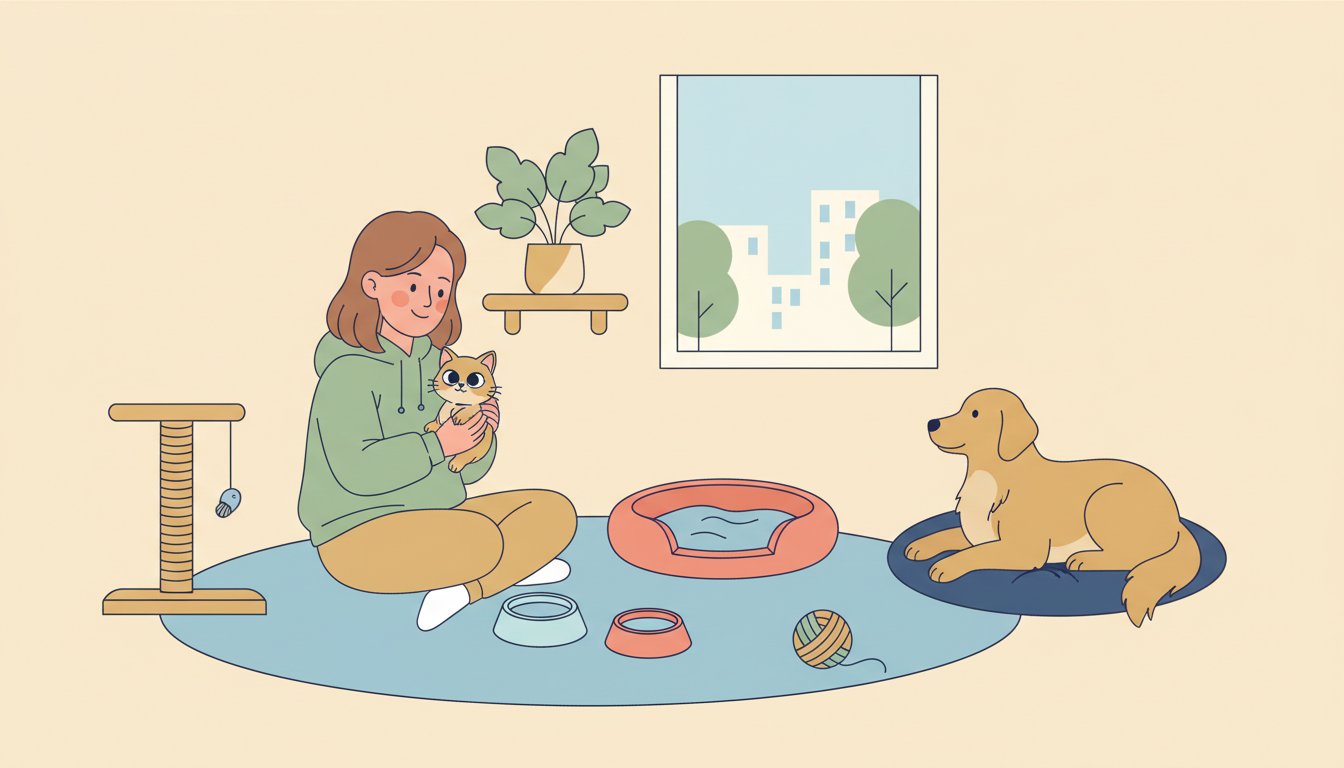
The carrier is barely on the hallway floor before the kitten has vanished behind the sofa. You crouch down, peer into the gloom, and wonder whether something has gone wrong.
Nothing has. Hiding is what frightened kittens do, and it is a perfectly sensible response to a loud, enormous, strange-smelling new world.
This guide walks you through a new kitten's first weeks at home, one stage at a time, with a short checklist at each step. It is written for flat-dwelling and house-dwelling owners alike, including those who already share their home with a dog or another cat.
Why the first weeks matter more than the first day
You've pictured it for weeks. Kitten arrives, kitten climbs into your lap, kitten purrs. Then the carrier door opens and a tiny animal bolts under the sofa and stays there. That's normal. To a kitten, your flat is enormous, loud, and full of strange smells.
Settling in takes weeks, not hours. This guide gives you a clear sequence of steps, a short checklist at each stage, and honest advice on pace, so you know when to hold back and when to nudge things along.

Every kitten is different. Treat the timings as a guide you adjust, not a schedule you enforce. The approach works in a small city flat or a house with a garden, and it covers homes where a dog or another cat already rules the place.
The best way to protect that slow, steady pace starts before your kitten even arrives, with a single small room.
Before the carrier comes through the door: set up one safe room
Your whole flat is a lot to hand a kitten on day one. New smells, new sounds, new everything. One small room (a spare room or a quiet bedroom) works far better at first. There's less to take in, you can find the kitten quickly, and you can actually kitten-proof a few square metres properly.
Here's what the room needs:
- A litter tray, placed well away from food and water
- A covered or boxed hiding spot (a cardboard box with a doorway cut out does the job)
- A soft bed
- A scratching post
- A few simple toys
- A shallow water bowl
Then walk through the room on your hands and knees. Yes, really. You'll spot things you'd miss standing up.

- Windows and balconies: Fit secure screens or keep them closed. Balconies are the big risk in a flat, so don't let the kitten out there unsupervised.
- Cables: Tuck them away or cover them.
- Small items: Hair ties, buttons and anything else that can be swallowed should go in a drawer.
- Houseplants: Check with your vet which ones are safe before any stay in reach.
- Gaps: Block the space behind appliances.
- Machines: Keep washing machine and tumble dryer doors shut, always.
One practical tip. Ask the breeder, shelter or previous owner what the kitten is eating now, and buy the same food. That's one less change to cope with in a week full of them.
Plus, get your supplies sorted before pick-up day. Food, litter, bowls and bedding are much easier to choose calmly than in a rush with a new arrival waiting at home.
With the room ready and the supplies in hand, you can focus on the moment itself: the arrival.
The first day and night: keep it quiet and let the kitten lead
Here's how the arrival goes. Carry the kitten straight into the safe room and set the carrier down on the floor. Close the room door behind you first. Then open the carrier door, sit back, and wait.
- Place the carrier in the safe room.
- Shut the room door.
- Open the carrier door.
- Sit quietly and let the kitten come out when they're ready.
That might take two minutes or two hours. Some kittens bolt for the nearest hiding spot. Others tiptoe around the edges, whiskers twitching. A few race about like they've swallowed a battery. All of it's normal, so don't rush anything.
Once your kitten has had a look around, show them where the litter tray, food and water are. Then give them space. Short, gentle visits spread across the day work better than hours of constant attention (it's tempting, we know). Keep visitors to a minimum for the first few days. And if there are children in the house, ask them to sit at floor level and stay calm, letting the kitten come to them.
The first night can feel long. Choose a warm, draught-free spot for the bed and be patient. A ticking clock or a soft item that smells of you is a commonly suggested comfort. Think of it as an idea to try, not a guarantee.
Keep an eye on the basics. Is your kitten eating, drinking and using the tray? If anything worries you, mention it to your vet.
Once the first night is behind you, the pace can gently pick up.
Days three to fourteen: routines, handling and meeting the rest of the household
By now your kitten has probably stopped treating the safe room like enemy territory. Good. This is the stretch where you build a rhythm and start widening their world.
Keep the day predictable. Regular meal times, then a short play session with a wand or small toy, then rest. Always play with toys, never your hands. Kittens that wrestle fingers grow into cats that bite them. And don't worry about how much they sleep. Kittens sleep a great deal, so a nap isn't a warning sign.
Start gentle handling in tiny steps. Touch a paw for one second, then offer a treat. Brush an ear. Lift a lip for a moment, talking calmly the whole time. Stop before the kitten gets fussy. These small moments are practice for future grooming, nail trims and vet visits.
Once your kitten walks out of hiding with their tail up, open the safe room door. Add one more room at a time. A whole apartment at once can overwhelm a small cat, even a bold one.
Meeting a resident cat
Swap bedding first so each animal learns the other's scent. Then try short, supervised meetings through a baby gate or a cracked door. Make sure both cats have an escape route and high perches to retreat to.
Meeting a dog
Keep the dog on a lead or behind a gate at first. Reward calm behaviour with treats and praise. Never force contact. The kitten also needs a retreat the dog can't reach, like a shelf or a gated room.
Know what to watch for:
- Slow down if you see: hissing, flattened ears, fixed staring, or a dog that won't settle.
- It's going well if you see: relaxed bodies, curiosity, or both animals eating near each other at a distance.
Some tension in these early days is common. Plenty of households have a rocky first week. Going slower is never a failure. It's often the quickest route to a peaceful home.
With the household beginning to find its balance, it's time to think about your kitten's health and longer-term habits.
Weeks three to six: health basics, litter habits and small-world confidence
Book your kitten's first vet visit early. Bring any paperwork or records you were given, then ask the general questions. When should vaccinations happen? What's the plan for parasite prevention? What about microchipping and neutering timing? Your vet will tailor the answers to your kitten.
Litter habits come next. Keep the tray clean, keep it easy to reach, and resist the urge to move it around. A kitten who finds the tray in the same spot every day learns fast. If an accident happens, stay calm. It's rarely deliberate. If it keeps happening, ask your vet to rule out a health cause.
Your kitten stays indoors until the vet confirms they're ready for any outdoor access. In a flat, that's easy to make a good thing. Give them a window perch for watching the street, a climbing shelf for vertical energy, and puzzle feeders to make mealtimes interesting. Rotate the toys weekly so old favourites feel new again.
Now widen their small world. Introduce the vacuum cleaner, the doorbell, lift and stairwell noises, and the carrier gradually and calmly. Start quiet and distant. Let your kitten approach in their own time. A city flat is full of sudden sounds, and early, gentle exposure keeps them from feeling overwhelming later.
If a dog lives with you, give the kitten a quiet space of their own. Feed both pets in separate areas too. As routines settle, each animal gets room to relax, and that makes everything else easier.
Even with all this preparation, there will be moments when you need professional advice, so it helps to know when to pick up the phone.
When to call your vet
This is general guidance, not a diagnosis tool. You know your kitten better than any checklist does. When in doubt, phone your vet. A quick call costs little, and it can save a lot of worry.
Call if you notice any of these:
- Refusing food or water for a stretch
- Ongoing vomiting or diarrhoea
- Unusual lethargy or weakness
- Trouble breathing
- Straining in the litter tray, or no urine at all
- Discharge from the eyes or nose
- Limping
- A swollen belly
Anything that looks like an emergency needs prompt contact with a vet or an emergency clinic. Don't wait it out. The same goes for a kitten who has swallowed something they shouldn't have.
A little prep makes the call easier. Jot down what you've seen and when it started, plus what your kitten has eaten. And save your vet's number now, along with an out-of-hours option (you won't want to hunt for it at 2 a.m.). Not sure about something? Ask your vet. That's what they're there for.
A calm, steady start is the whole plan
That's the whole plan, really. A safe room. A quiet arrival. Slow introductions. Gentle routines. An early vet visit. Each step simply gives your kitten room to settle.
Setbacks will happen. A hiding day, a skipped meal, a hiss at the dog (all normal). Stay patient in these first weeks and the long-term bond usually comes easier.
So pick one thing to do today. Set up the safe room, and write down your vet's number and an out-of-hours contact before your kitten arrives. If a dog or cat already lives with you, take the introductions slowly, and keep a simple note of what your kitten loves and what rattles them. Then share your own settling-in tips with other pet owners in your neighbourhood. Someone nearby is probably crouched by a sofa right now, hoping to hear that everything is fine.
Want Pethood on your block?
Pethood is on Google Play. On iPhone? Join the waitlist: one email to confirm, one when it’s on the App Store.
More from the journal.
 Health & vet
How to Choose a Vet You Can Trust, Close to Home
Choose your vet now, not in a panic. A calm checklist for Zagreb pet owners: practical tips, questions to ask, what to notice on a first visit, and how to prepare.
 Health & vet
Autumn Walk Hazards: What Dogs Pick Up and What to Do
Fallen fruit, conkers, mushrooms and hidden glass: a calm, practical guide to autumn walk hazards for dogs and cats, with a simple routine and clear vet advice.
 Health & vet
Pet First Aid Kit: What to Keep at Home and on Walks
Build a pet first aid kit in 15 minutes: a simple checklist for your home and walk bag, first steps for city emergencies, and when to call the vet.