Why Your Dog Barks Indoors and What Actually Helps
Dog barking in your flat? Learn why dogs bark indoors, how a one-week diary reveals the trigger, and which calm, practical steps help you and your neighbours.
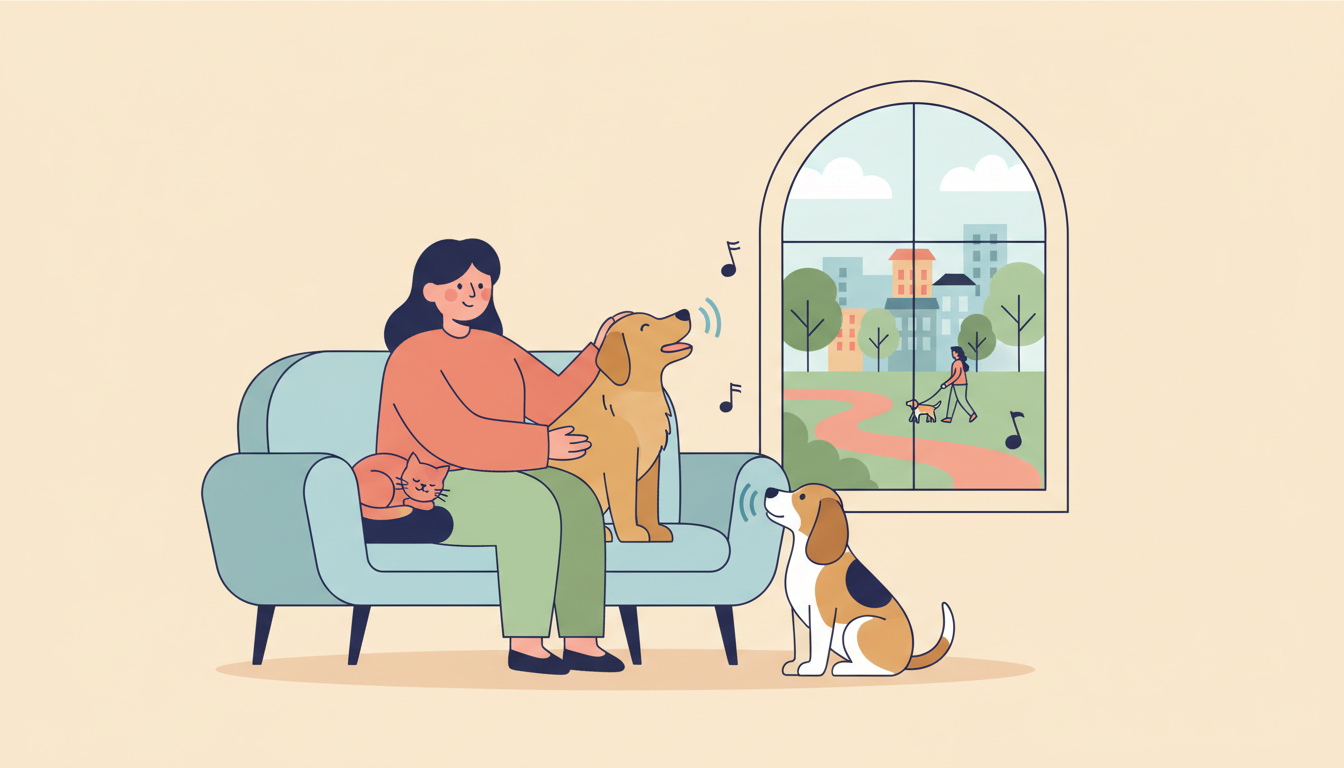
You're settling onto the sofa on a quiet evening. Somewhere in the stairwell, a door closes. Before you've even looked up, your dog launches into a volley of barks, and you can practically feel the neighbours hearing it.
So what is your dog actually trying to say? Here's a reframe worth sitting with: barking is information, and flats just make that information louder.
This guide walks through why dogs bark indoors, how to work out your own dog's triggers, and which calm steps genuinely help.
Barking Is Communication, Not Misbehaviour
Before we get to solutions, it helps to change how we hear the noise.
The lift pings. A neighbour walks past your door. Your dog erupts, and you wince, already imagining the note on the noticeboard.

Here's the thing. Your dog isn't being defiant. Barking is a message, usually something like "I heard that" or "someone's close." Dogs have few other ways to say it.
Flats make this louder. Shared walls, stairwells and echoing hallways carry sound further, and your dog hears far more of it than you do. Footsteps, keys, a door three floors down. All of it counts as news.
This guide covers the common reasons dogs bark indoors, a simple way to find your dog's trigger, calm steps that help, and when to bring in a vet.
One honest note first. Barking is normal dog behaviour, so the goal isn't silence. It's less barking, and barking you can live with.
The Most Common Reasons Dogs Bark Indoors
With that in mind, let's look at what's usually behind the noise.
Most indoor barking falls into five buckets. Once you know which one you're dealing with, the fix gets a lot clearer.
Alerting. Footsteps in the corridor, a neighbour's door clicking shut, voices on the stairs, the post dropping through the slot. In a flat, the sounds never stop, and a dog who treats the front door as their post will announce every one of them.

Boredom and excess energy. A dog with too little exercise and nothing to think about will invent a job. Barking is an easy one. It's free, it's loud, and it always gets a reaction.
Attention-seeking. If barking has ever earned a glance, a word or a treat, your dog may simply have learned that it works. Even a sigh and "quiet, please" counts as payment.
Excitement and frustration. Think of the lead coming off the hook, a visitor at the door, or a squirrel on the window ledge opposite that they can see but can't reach. The bark is pure overflow.
Worry when left alone. Barking or whining that starts soon after you leave, alongside pacing, drooling or destroyed doorframes, is a different animal. That's distress, not misbehaviour, and it needs patient, gradual work of its own (we cover it in our separate guide to leaving your dog home alone).
Which one sounds like your dog? Tick off what fits:
- Barks at sounds outside, then settles once things go quiet (alerting)
- Barks most on low-activity days or in the evening (boredom)
- Stares at you and barks, then pauses to see what you'll do (attention-seeking)
- Spins, jumps and barks just before walks or when guests arrive (excitement)
- Barks or whines only after you've left (worry)
Most dogs tick more than one box. That's normal.
Finding Your Dog's Trigger: A One-Week Diary
Knowing the usual suspects is useful, but the only way to know which one applies to your dog is to watch closely.
Guessing doesn't work. A bark at the door could mean "someone's here," "I'm scared," or "I'm bored and this is fun." The sound is identical. The fix isn't.
So start with a diary. Keep it for seven days, and write down four things each time your dog barks: the time of day, what happened just before, what your dog's body looked like (relaxed, stiff, pacing), and what happened just after. Keep it short. A note on your phone is plenty.
Here's a sample entry in plain language:
Weekday, mid-morning. Delivery person on the stairs. Dog at the door, stiff, fast barking. Stopped after about a minute.
By day five or six, patterns tend to show up. Maybe it's always the same hour, the same sound, or the same room. Maybe it only happens when you're out of sight.
Here's an optional trick. Prop a phone on a shelf and record while you're out. You'll hear and see what you'd otherwise miss, like pacing at the window or barking that starts a while after you leave.
When the week ends, answer these four questions from your notes:
- What sets it off?
- How long does it last?
- What does my dog do afterwards?
- Has anything changed recently in the home or routine?
That last one matters more than you'd think. A new neighbour, a shifted work schedule, or moved furniture can all be the spark.
Calm Steps That Help, Matched to the Cause
Once your diary points to a likely cause, you can choose a step that fits it.
Once you know why your dog barks, the fix gets much simpler. Match the step to the cause.
Alert barking. Cut down what your dog can see and hear. Frost the lower half of a glass door or window, or close the curtains, and play a radio at low volume to soften street noise. Then teach a calm spot, like a mat or bed set well away from the front door. Reward your dog for settling there whenever a sound happens. The key is timing: reward the quiet before the bark, not after it, or you're paying for the barking.
Boredom. Give a proper walk before the quiet part of your day, then serve a meal from a puzzle toy, a lick mat, or a scatter of kibble rolled up in a towel. And let your dog sniff. Sniffing isn't a pause in the walk. It's real mental work, and it tires a dog out in a way that fast, straight-line walking doesn't.
Attention barking. Turn away calmly or step out of the room for a moment. Then reward the first quiet pause. Everyone in the home has to respond the same way, though. If one person gives in, the barking works again.
Excitement at the lead or visitors. Practise short, boring departures. Ask for a sit or a pause before any greeting, and keep arrivals low-key (yes, even when you're thrilled to see them).
Worry when alone. Keep absences very short at first, then build up slowly. Don't punish. It can add to the worry rather than ease it.
Some things to leave out entirely:
- Shouting. Dogs often hear it as you joining in.
- Punishment. It teaches fear, not calm.
- Startle or correction collars. They often suppress the signal without addressing the cause, and they might make worry worse.
Finally, set realistic expectations. Change is gradual. Look for small wins, like barking that stops a little sooner or a dog who settles faster than last week. Silence overnight isn't the goal. Steady progress is.
Being a Good Neighbour While You Work on It
While your dog is learning, the people on the other side of the wall are still listening, so a little goodwill goes a long way.
Start with a knock on the door. Tell the people next door you know about the barking and you're working on it. Then ask them to let you know if it's worse at certain times. That small gesture often changes how people tolerate noise, because they stop feeling ignored.
Next, a few quick wins:
- Move the dog's bed away from shared walls.
- Add rugs and soft furnishings to soak up sound.
- Keep your dog out of the hallway, where every footstep on the stairs sets off a fresh round.
Plan around the hardest moments, too. If the pattern shows trouble during the school run or when the post arrives, have a chew or puzzle ready just before. Prevention beats correction.
And check your building's house rules, plus any local noise guidance, instead of guessing what applies. (Cats can be loud too, especially at 4 a.m., but dogs are the bigger worry for most neighbours.)
When to Call Your Vet
Sometimes barking isn't a training issue at all, and it's worth knowing when to look beyond the routine.
A dog that rarely barked and now won't stop, or one whose bark sounds different or comes at odd times, deserves a check-up. Pain and discomfort often show up as behaviour changes first. Watch for other signs too: restlessness at night, confusion, pacing, shifts in appetite or toilet habits, or stiffness when moving.
Older dogs need special attention. New night-time barking or vocalising can have a health reason, so mention it to your vet rather than assuming it's a habit.
Real distress when you're out is a different matter. Heavy drooling, frantic attempts to escape, or damaged doors and frames call for professional guidance.
One caveat. This article is general guidance only, and no one can diagnose a dog from a description alone. Your vet can rule out health causes and may point you to a qualified behaviour professional.
Bring your barking diary from earlier, plus any phone recordings. They'll tell your vet far more than memory can.
A Quieter Home, One Small Change at a Time
Here's the whole thing in a few lines. Find the cause. Match your step to it. Keep it consistent. And stay kind, to your dog and to the neighbours on the other side of the wall.
So start tonight. Open a note on your phone and begin the one-week diary, then pick a single trigger to work on, maybe the courier's buzzer or the lift doors clanging, and try one change.
Have that friendly word with your neighbours, too. And if anything feels off or sudden in your dog's behaviour, call the vet rather than waiting it out.
Progress will feel slow, and that's normal. Patience and consistency do most of the work, and a quieter home usually arrives one small win at a time.
Want Pethood on your block?
Pethood is on Google Play. On iPhone? Join the waitlist: one email to confirm, one when it’s on the App Store.
More from the journal.
 Behaviour
Dog Guarding Food, Toys or the Sofa? What to Do Next
Does your dog freeze or growl over a bone, toy or the sofa? Learn the early signs, why guarding happens, and calm, practical steps to help your dog feel safe.
 Cats
Your Kitten's First Weeks at Home, Step by Step
A week-by-week guide to a new kitten's first weeks at home: safe room setup, a calm arrival, introductions to a dog or cat, vet visits and when to call for help.
 Health & vet
How to Choose a Vet You Can Trust, Close to Home
Choose your vet now, not in a panic. A calm checklist for Zagreb pet owners: practical tips, questions to ask, what to notice on a first visit, and how to prepare.