Is Your Cat Drinking Enough? Bowls, Fountains and Wet Food
Is that untouched water bowl normal? Learn how bowl placement, fountains and wet food can help your cat drink more, how to spot changes early, and when to call the vet.
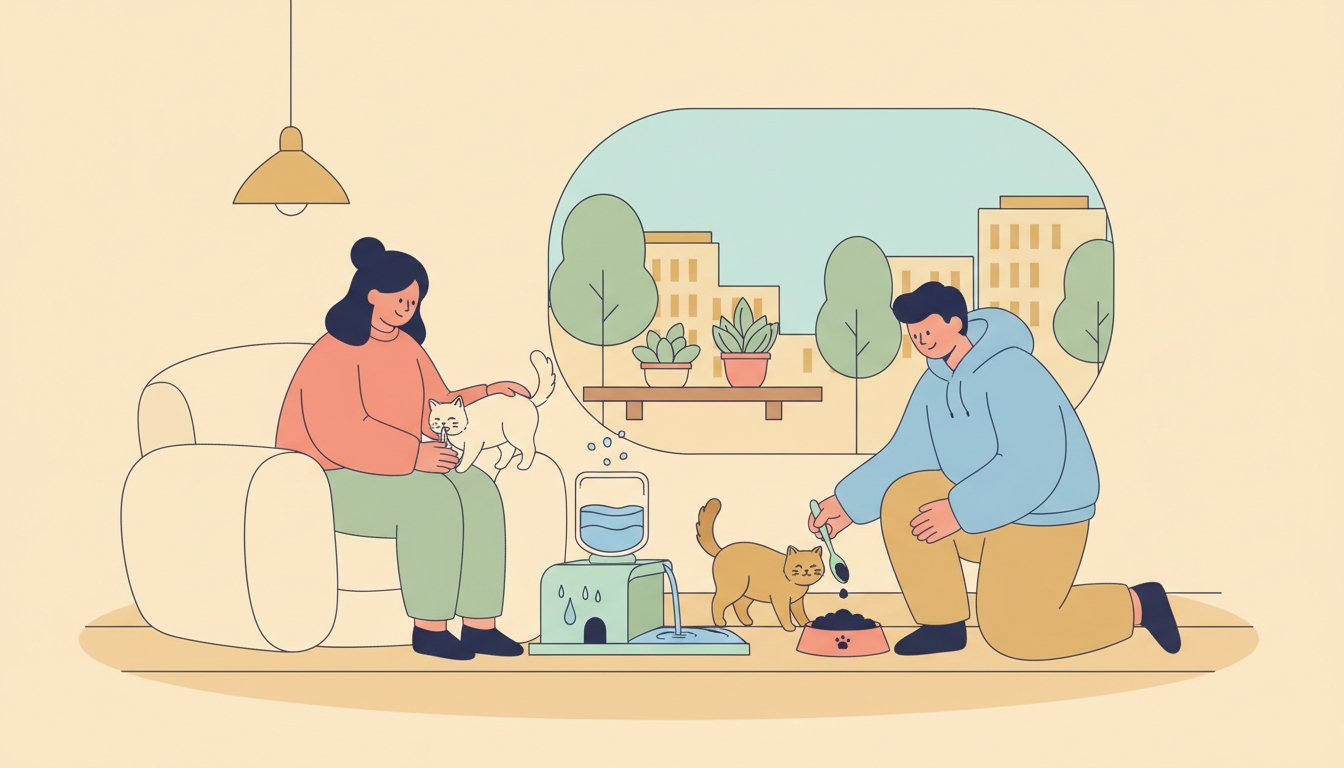
You refill the water bowl on your way out the door, and when you get home, it looks exactly the same. Same level, same stray whisker floating on top. It's a small moment, but it can set off a nagging question: is that normal for my cat?
Take a breath. Cats can be remarkably quiet drinkers, and a bowl that looks untouched doesn't always mean there's a problem.
Still, there's plenty you can do to make drinking easier and more appealing. This article walks through three practical levers you can try this week: the bowl and where it sits, a fountain, and wet food. It also covers how to keep an eye on things, and when to ask your vet.
Why cats can be quiet about drinking
You fill the bowl before work. You come home, and it looks untouched. Same water, same level, maybe a stray hair floating on top. So is your cat fine, or is something off?
Most of the time, it's fine. Cats rarely drink in front of you, and they take small, quick sips that are easy to miss. There's also the food. Moist food is largely water, so a cat eating wet meals gets a good share of its fluids from the dish. A cat on dry kibble gets far less that way, which means more has to come from the bowl.

There's no magic number of sips to aim for. What matters is learning your own cat's normal, then making water easy and appealing to reach. Three things help most: the bowl and where it sits, a fountain, and wet food.
Let's start with the simplest of the three, because it costs almost nothing to try.
Get the basics right: bowls, placement and fresh water
Start with the bowl. Many cats seem to prefer a wide, shallow dish, probably because it doesn't press against their whiskers when they drink. Try one and watch what happens. If your cat drinks more easily or lingers at it longer, you've got your answer. If not, no harm done. Treat it as an experiment, not a rule.
Material matters too. Ceramic, glass and stainless steel are all easy to keep clean. Plastic is the weak link. Once it's scratched or looking tired, it's harder to wash properly, so replace it when it starts to show its age.
Then think about where the bowl sits. In a city flat, space is tight, but a few small choices go a long way. Keep water away from the litter tray and away from the food bowl. Steer clear of noisy appliances like the washing machine or fridge. And pick a calm spot with a clear view of the room, so your cat can drink without feeling cornered.

Don't stop at one bowl. Set up several water points: one in the kitchen, one in the living room, and one near your cat's favourite sleeping spot. That way, water is always a few steps away, whatever your cat is up to.
Freshness comes down to routine. Rinse and refill daily. Every few days, wash each bowl with mild soap and rinse it well. Then stay consistent, because a simple habit you actually keep beats a perfect plan you drop after a week.
- Shape: wide and shallow, whisker-friendly
- Spot: calm, away from litter, food and noisy appliances
- Spare bowls: a few around the flat
- Daily refill: rinse and top up with fresh water
- Regular wash: mild soap, rinsed well, every few days
Once the bowls are sorted, some owners wonder whether moving water might tempt a reluctant drinker even more.
Do water fountains actually help?
Sometimes. Some cats go wild for moving water. They sit beside the stream, paw at it, drink for the first time all day. Others walk past it like it's a piece of furniture. So a fountain is worth a try, but it isn't a guaranteed fix.
When you shop, keep a few things in mind:
- It comes apart easily, with parts you can reach and scrub.
- The motor runs quietly, because a humming pump can put a nervous cat off.
- The size suits your space and the number of cats drinking from it.
Here's the part people skip. Cleaning matters more than the gadget. Slimy parts put cats off, and a fountain left to build up film does more harm than a plain bowl you wash every day. Plan on a full clean of every part, pump included, and follow the maker's instructions for how often and how.
Introduce it slowly. Set the fountain next to the old bowl first, and leave the old bowl out for a good while. Let your cat sniff, circle, and decide in their own time. Don't dip their nose in it or move the old bowl away on day one (that usually backfires).
Mind the cable. Keep it tidy and out of chewing reach, especially with a kitten or a curious dog in the home. Run it along the wall, tuck it behind furniture, and switch the fountain off if you can't supervise.
Then run a simple trial. Give it a few weeks and watch whether your cat actually visits. If they do, it's earned its spot. If they don't, you've lost very little and learned something about your cat.
Of course, the easiest way to get water into a cat may not involve a bowl or a fountain at all.
Wet food: the easiest extra water you can offer
Go slowly, though. Mix a small spoonful of wet food into the usual meal at first, then add a little more every day or two. Cats are creatures of habit (you've probably noticed), and a sudden switch can upset their stomach or put them off eating altogether. If you're thinking about a bigger change, talk to your vet first. That matters most for kittens, seniors and cats with health conditions.
A few simple tricks can make wet food even easier to enjoy:
- Stir a spoonful of lukewarm water into the food. It adds moisture and often boosts the smell.
- Serve it in a wide, shallow dish, so your cat can eat without their whiskers bumping the sides.
Hygiene counts here. Wet food spoils faster than dry, so don't leave it out for long. Wash the dish between meals, too.
What if your cat is loyal to dry food? Plenty are. Keep trying small, patient steps. Offer a teaspoon, then a bit more next week. And don't expect one change to do all the work. Water bowls, a fountain and wet food each add a little, and together they add up.
The right balance of wet and dry for your cat depends on their age, weight and health. That's a conversation for your vet.
With a few changes in place, the next step is simply paying attention to how your cat responds.
A simple weekly routine to notice changes early
You don't need a spreadsheet. Just a quick glance at the bowl each morning and evening. Is the level lower than yesterday? Higher? Jot a few words on your phone or a sticky note if something looks off.
Context matters, so write it down too. A hot week, a rearranged living room, a switch to a new food (dry to wet changes water intake a lot). Those details often explain a shift before you start worrying.
Got more than one pet? It's tricky to know who's drinking. Watch who visits the bowl, and if you can, set out separate water points for each animal.
Remember, the goal is knowing your cat's normal. Not measuring every sip.
- Look at the bowl daily.
- Note anything different.
- Compare with last week.
- Mention anything odd to your vet.
And that last step deserves its own spotlight, because some changes shouldn't wait.
When to call your vet
You know your cat better than anyone. So if you spot a clear change in how much they drink, whether much less or much more than usual, give your vet a call. The same goes for a cat who seems tired, hides more, eats less, vomits, has a dry-looking mouth, or suddenly changes how often they use the litter tray.
Don't wait if your cat stops drinking or eating. And please don't try home fixes in place of a check-up (they can mask what's really going on).
Before you ring, jot down a few notes:
- What and how much they've been eating and drinking
- Any recent changes at home
- How long you've noticed the problem
And remember, asking is never a waste of time. Your vet can advise on what suits your individual cat.
Pick one small change this week
You don't have to overhaul anything. Choose one small thing to try: move the water bowl away from the food dish, add a second bowl in another room, or stir a spoonful of water into a wet meal. Then keep a few notes on what you notice over the week. Does your cat linger at the new spot? Lick the dish clean?
If anything about your cat's drinking worries you, your vet is the right person to ask. And if you find something that works, we'd love to hear about it. Your tip might be exactly what another cat owner needs.
Want Pethood on your block?
Pethood is on Google Play. On iPhone? Join the waitlist: one email to confirm, one when it’s on the App Store.
More from the journal.
 Behaviour
The Quiet Signals Your Dog Is Sending You Every Day
A yawn, a lip lick, a glance away: your dog is talking all day. A practical, jargon-free guide to the small signals city dog owners miss, with checklists and a simple five-minute habit.
 Training
The Mat Habit: Teaching Your Dog to Switch Off Anywhere
Tired of a dog who circles, sighs and pops up the moment you sit down? Learn a simple mat routine that works at home and travels with you to parks and benches.
 Behaviour
Why Your Dog Barks Indoors and What Actually Helps
Dog barking in your flat? Learn why dogs bark indoors, how a one-week diary reveals the trigger, and which calm, practical steps help you and your neighbours.