Small Rewards, Big Results: Training Without Overfeeding
Training with food is fine. Learn how to shrink rewards, draw them from the daily meal, and mix in play so your dog or cat stays motivated and at a healthy weight.

You are halfway down the street. Your dog has just offered a perfect sit beside the tram stop, and without thinking you reach into your pocket for the third treat of the block. But how many of those were really needed?
Here's the good news: using food to train is perfectly fine. It's a fair, effective way to say "well done" to a dog or cat, and you don't need to feel guilty about it.
What you do need is a plan that keeps the motivation high while the portions stay sensible. This article gives you one, step by step, and it's easier than it sounds.
Why Rewards Work, and Why the Calories Creep Up
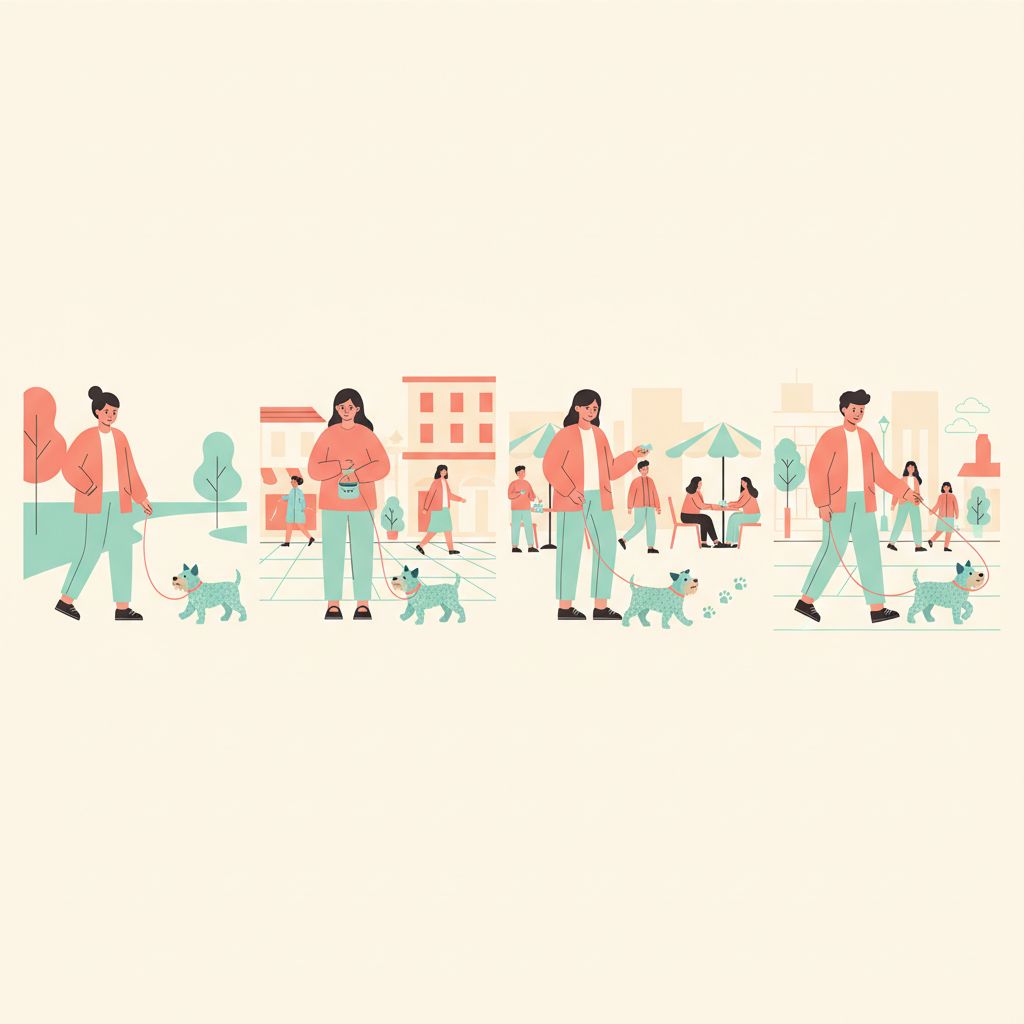
Picture a walk along the Sava on a Saturday morning. Pocket full of treats. Your dog sits at the kerb, you hand one over. Sit at the crossing, another. A calm moment when a tram rattles past, another. Each one feels tiny, almost nothing. But a busy training day can quietly add up to a surprisingly large share of what your dog should eat in total.
The reason food works is simple. Animals repeat behaviour that pays off, and a tasty bite tells your dog or cat, "Yes, that was worth doing." The reward doesn't need to be big to do that job. What matters is that it arrives quickly and that your pet finds it appealing. A pea-sized morsel carries the same message as a whole biscuit.

Here's the trap. Most of us hand out treats bigger than they need to be, and we rarely count how many we've given. Nobody tallies the handful at the park, the chew at home, the bribe at the vet's door.
So that's the plan for this article: keep the motivation, trim the extras. You don't need to feel guilty about using food in training. It's a fair and effective tool. For a healthy weight and daily amount that suits your individual pet, your vet is the best person to ask.
The first and easiest trim is also the most effective: make each reward smaller.
Make Every Treat Smaller Than You Think It Needs to Be
Here's the secret most owners miss. Your dog doesn't count treats. Neither does your cat. They care about the taste and the moment it lands, not the size of the portion.
So shrink everything. For most dogs, aim for a piece about the size of a fingernail or a pea. For cats, think crumb-sized morsel or just a few pieces of kibble. It feels almost silly at first. But the reaction you get will be the same.
Soft treats are easy to cut down at home. A small knife works, but you can also snap them between your fingers or crumble them into bits. Before you leave the flat for a walk, prep a whole pouch in advance so you're never fumbling mid-session (a two-minute job over the kitchen counter).

Then hand-feed one piece at a time. A fistful tells your animal nothing. A single piece, delivered right after the behaviour, ties the reward to exactly what they just did.
Keep this quick checklist in mind:
- Smaller than you think you need
- Softer, so there's no crunching or chewing
- Quick to swallow, so the session keeps moving
And here's the payoff. Tiny pieces mean you can reward far more often. That frequency, not the size of any one treat, is what actually builds a habit.
Once the pieces are small, the next question is where they come from, and the answer may already be sitting in your pet's bowl.
Borrow From the Bowl: Making Treats Part of the Daily Meal
Here's the simple idea. Treats are food. So they belong inside your pet's daily total, not stacked on top of it.
Try it this way:
- Each morning, scoop out part of the usual meal into a small container. A fifth to a third is a good starting point.
- Carry that container through the day and use it for training rewards.
- At bedtime, tip whatever's left into the bowl.
That's it. No math, no guilt, no creeping weight gain.
The dog version
Picture a quiet Zagreb street early in the morning, before you head to work. You've got a pocket of kibble from the morning portion. A few minutes of sit, eye contact, and a loose lead on your usual route. Every piece you hand over comes out of breakfast. Your dog gets paid, and the bowl stays honest.
The cat version
Cats train beautifully indoors. Use a clicker or a short word like "yes" the moment your cat touches a target stick or hops onto a mat. Reward with two or three pieces of their own food, or a lick of wet food from a spoon. Afterwards, trim the next meal to match. (Yes, even a lick counts.)
When to bring out the good stuff
Now, a word on quality. Plain food rewards cover most everyday jobs. Keep a second pouch of high-value extras, like cooked chicken or soft cheese cubes, for the hard stuff. Think recall in a busy park, or walking calmly past another dog. Those moments deserve a bigger payout. Everything else doesn't.
And if you're unsure how much your pet should eat, or how far to cut the bowl when treats go up, ask your vet. They'll give you a number that fits your animal.
Of course, food is only one of the things your pet finds worth working for.
Rewards That Are Not Food: Praise, Play and Everyday Perks
Food works. But if it's the only thing you ever hand over, training gets repetitive fast. Your pet learns to expect a treat every time, and the calories add up quietly. Variety keeps sessions fresh and keeps the waistline in check.
For dogs, think beyond the pouch. A quick game of tug after a good heel. A release to sniff that favourite lamppost on your Zagreb street. Permission to greet a calm friend. A favourite scratch or a happy voice. Cats have their own menu: a few seconds with a wand toy, a chin scratch (if they enjoy it), the balcony door opening, or a lick of food from a spoon.
So how do you know what your pet actually wants? Watch what they choose. Offer a toy, a scratch and a treat side by side, then see where they go. Their pick tells you more than any guess will. And it can change by the day, so keep checking.
Then use daily life as the payoff. Real moments are rewards too:
- Sit before the lead goes on.
- Wait before the door opens.
- Stay calm before the bowl goes down.
You're already doing these things, so you might as well make them count. Mix it all together and food becomes the occasional bonus rather than the only currency. That's when training starts to feel less like a transaction and more like a conversation.
With all these pieces in hand, the last step is to turn them into something you can do without thinking.
A Simple Treat Routine You Can Repeat Every Day
Here's a routine that takes about two minutes. In the morning, measure out your pet's full day of food. Fill the treat pouch from that portion, then put the rest in the bowl. Keep each session short, a few minutes at most. When you're done, tip whatever's left in the pouch back into the bowl. Nothing gets added. Nothing gets lost.
Before a walk, run through a quick checklist:
- Pouch filled and clipped on
- Pieces tiny (think pea-sized or smaller)
- A few extras for tougher moments, like a noisy street or another dog
- A non-food reward in mind, such as a game of tug or a good sniff
Now the warning signs. If the bowl sits untouched, treats are probably filling your dog or cat up. Same if the pieces have quietly crept up in size. Check the body, too. A rounder belly, or a harness or collar that suddenly feels looser or tighter, tells you something. Feel along the ribs with flat fingers. You should find them easily under a thin layer. Then look from above and from the side for a visible waist. Not sure what you're seeing? A vet can judge it in a minute.
On days with extra training, trim the meal slightly instead of stacking treats on top. Ask your vet how much to cut for your pet's size and age.
And if you overdo it one day? That's fine. It happens to everyone. The routine is what counts.
Keep It Light, Keep Going
So here's the whole thing in a nutshell. Cut treats into tiny pieces. Count them as part of the day's food, not on top of it. Rotate your rewards so they stay exciting, and keep the routine simple enough to repeat without thinking.
Above all, training should feel good for both of you. It's play, not a diet project. If you're dreading it, your dog or cat probably is too.
Tomorrow morning, take a small handful from your pet's usual meal, put it in a pouch, and use only that for training. If you're ever unsure about weight or portions, check in with your vet. And tell your neighbours: what tiny reward does your dog or cat love most? Share it with other owners on your street, and you might pick up a new favourite in return.
Meet the pets on your block.
Pethood is free on the App Store and Google Play. We're starting in Zagreb, neighbourhood by neighbourhood.
Related stories
 Training
When Your Young Dog Stops Listening: Surviving the Teen Phase
Your young dog suddenly ignores you for a pigeon? Nothing is broken. Learn what's happening in the teen months and how to rebuild focus with a calm daily routine.
 Behaviour
Teaching Your Dog a Polite Hello, Four Paws on the Floor
Muddy paws on a visitor's coat? Your dog isn't rude, just untaught. Here's a step-by-step plan for calmer greetings at the door and on the pavement, with no shouting.
 Cats
Making the Carrier a Place Your Cat Chooses to Be
A carrier doesn't have to mean a vanishing cat. Learn a calm, step-by-step way to make it a cosy spot your cat chooses, from picking the right one to easier vet visits.
 Training
Pavement Temptations: Training a Dependable 'Leave It'
Learn how to build a reliable 'leave it' for city walks, from a closed-hand game at home to calm responses on busy pavements, with troubleshooting and a note for cat owners.
 Health & vet
Practice Runs: Teaching Your Pet to Cope With the Vet
Small, happy practice steps at home can turn the vet from a surprise into a routine. A gentle week-long plan for dog and cat owners, from handling to waiting-room calm.
 Training
Loose Lead Walking on Busy City Pavements: Step by Step
A step by step guide to loose lead walking on busy Zagreb pavements, covering gear, a six-stage training plan, real city distractions and troubleshooting.