Loose Lead Walking on Busy City Pavements: Step by Step
A step by step guide to loose lead walking on busy Zagreb pavements, covering gear, a six-stage training plan, real city distractions and troubleshooting.
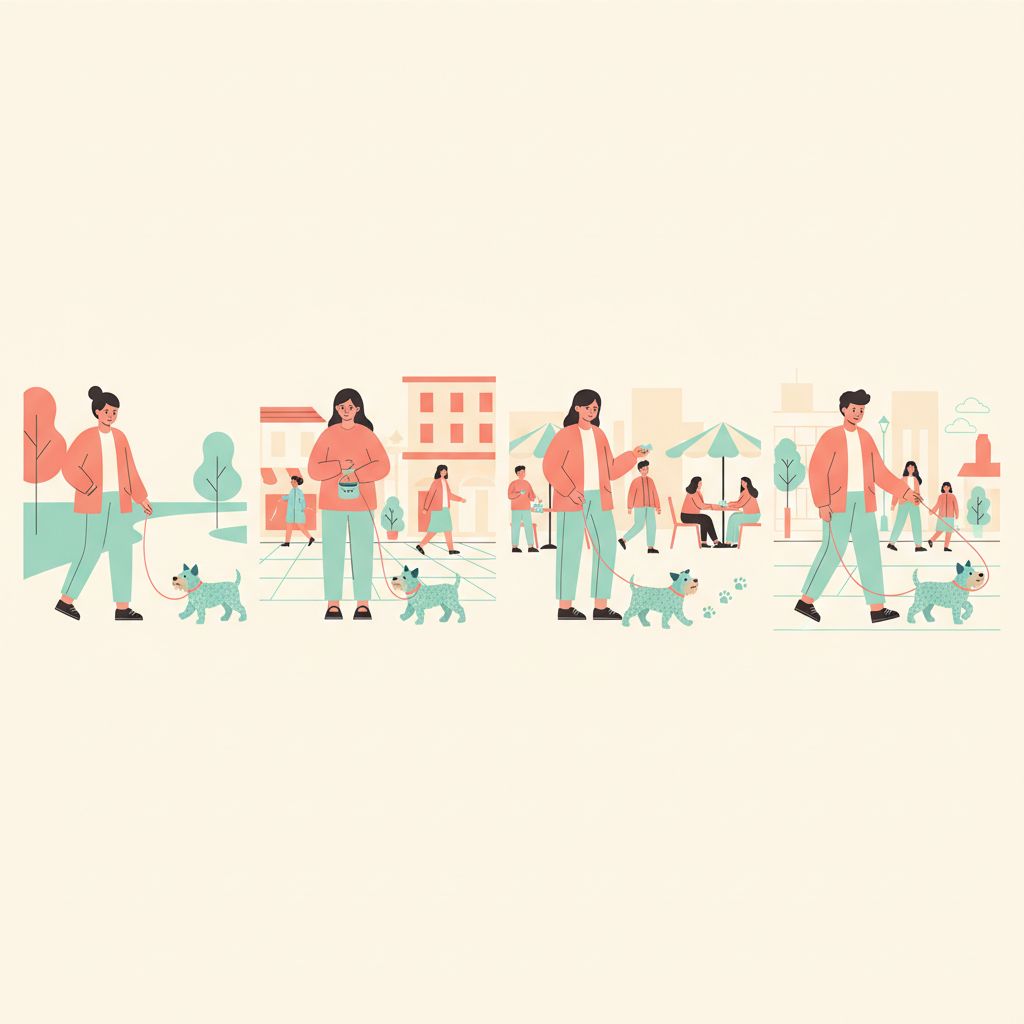
Picture a Tuesday morning on Ilica. The pavement narrows to barely two shoulders wide, a tram rattles past close enough to feel, café chairs spill from a terrace, and your dog is suddenly convinced that every lamppost needs urgent investigation. Your arm stretches, your coffee tilts, a cyclist swerves around you with a muttered word. Sound familiar? Loose lead walking on a quiet forest path is one skill. Doing it on a busy European city pavement is another thing entirely.
The good news: dog training in the city doesn't require a weekend bootcamp or a magic harness. It requires a plan, patience, and the willingness to treat training as part of the walk itself.
Below is a step by step guide to lead manners that fits around real daily life in Zagreb (and any other European city with trams, scooters and café terraces). We'll cover what loose lead walking actually means, the gear you need, a six-step training sequence, how to handle real distractions, troubleshooting, and the quiet art of being a good neighbour on the pavement.
What loose lead walking actually means
Loose lead walking means exactly what it sounds like. The lead hangs in a soft J shape between you and your dog, with no tension pulling your arm forward. Your dog has room to sniff a lamppost, glance at a passing pigeon, and generally be a dog, within reason. You're walking together, not dragging each other down the street.
It's not formal heelwork. Your dog isn't glued to your left knee, eyes locked on your face, marching in perfect sync. That's a competition skill. What you want is calmer, more flexible, and far more useful for daily life.

And daily life in Zagreb isn't easy on a lead. Narrow pavements in Donji grad, trams rattling past on Ilica, e-scooters appearing out of nowhere, café chairs spilling onto the kerb, and other dogs squeezing by at nose distance. Every one of those is a distraction your dog has to learn to handle.
So set the right expectation. This is a skill you build over weeks and months. Not a weekend fix.
Gear and setup before you leave the flat
Expectations set, let's talk kit, because the right setup makes everything that follows easier.
A good walk starts before you touch the door handle. Get the kit right and the rest gets easier.
Start with a well fitted harness that has both a front and back clip. The front clip gives you steering on crowded pavements near Ban Jelačić. The back clip is for calmer stretches. Pair it with a fixed lead of 1.5 to 2 metres. Skip retractable leads in the city, they encourage lunging and tangle around strangers' ankles.

Pack a treat pouch with small, soft rewards your dog can swallow in one bite. Think tiny cubes of cheese or liver paste, not crunchy biscuits that take 30 seconds to chew. You'll also want:
- Poo bags (two more than you think you need)
- Water for warm afternoons
- A reflective strip or clip-on light for dark mornings and evenings
Before you hit the busy street, run a quick check. Has your dog toileted somewhere quiet? Had a short sniff warm-up? Burned a bit of energy on a side road first? A dog who's already decompressed handles tram noise far better.
Now your turn. Unhurried pace. Phone in the pocket. Both hands free when possible. Your calm travels straight down the lead.
The step by step training plan
With the gear sorted and your head in the right place, here's the sequence that turns theory into habit.
Loose-lead walking isn't a trick you teach in one afternoon. It's a habit you build in layers, starting somewhere boring and slowly adding the chaos of a real Zagreb street. Here's the sequence that actually sticks.
Start indoors or in a quiet courtyard. Clip on the lead, let it hang slack, and reward your dog the moment they stand calmly next to your leg. No walking yet. You're just paying them for the position you want.
Take one step, then reward. If the lead stays loose, mark it and treat. Build up slowly, one step, then three, then five, then ten. If the lead tightens at any point, you're moving too fast. Drop back a stage.
Move to a quiet side street (think a back road in Trešnjevka early on a Sunday). Now introduce the stop-and-wait rule. The second the lead goes tight, you freeze. Don't yank, don't talk. Wait for your dog to release the tension, even half a step back, then carry on. They learn quickly that pulling makes the walk stop.
Add turns. Every time your dog starts to forge ahead, change direction. Left, right, a full about-turn. It feels silly at first, but your dog starts watching you instead of the horizon. They're tracking your pace, not setting their own.
Introduce busy elements one at a time. This is where most owners rush and lose weeks of progress. Add a single pedestrian crossing first. Next session, a tram stop. Then a café terrace with people eating. One new variable per walk, not five.
Fade the treats gradually. Once your dog is walking politely in moderate traffic, stop rewarding every few steps. Keep the good stuff for the genuinely hard moments, passing another dog, a cyclist whipping past, a pigeon flock near Dolac. That's when a treat still earns its keep.
Expect three to six weeks of consistent daily practice. Short sessions beat long ones.
Handling real city distractions
Once the basics click, the city itself becomes the real classroom.
Zagreb pavements throw a lot at you. Here's how to handle the usual suspects without your walk turning into a wrestling match.
Other dogs coming towards you. Don't wait to see what happens. Cross Ilica early, step into a side street, or tuck behind a parked car. Space is your friend. Once you've created it, reward your dog for looking back at you instead of fixating on the other dog.
Trams, buses, scooters and skateboards. The 14 rattling past can spook even a confident dog. Pause in a doorway or press against a wall, let the thing pass, then reward calm. Repetition builds a dog who shrugs these off.
Pigeons, cats and dropped burek. You need a solid "leave it" cue, but teach it at home first with boring objects, then your kitchen floor, then a quiet park. Only once it's reliable should you test it against a pigeon on Trg bana Jelačića.
Narrow pavements with café tables. Gather the lead in your hand to shorten it (don't yank). Keep your dog on the inside, away from chair legs and strangers' espressos. A bumped table makes nobody happy.
Children wanting to pet your dog. It's completely fine to say "ne danas" with a smile. Body block if you need to, step between the child and your dog. You're not being rude. You're being responsible.
A note for cat owners: harness-trained indoor cats follow the same principles, but they need much quieter streets and far shorter sessions. Five minutes in a calm courtyard beats twenty on a busy pavement.
Troubleshooting common problems
Even with the right plan, some walks will go sideways. Here's how to diagnose what's happening.
Even with perfect timing and good gear, you'll hit snags. Here's how to fix the most common ones.
Your dog pulls constantly. You're almost certainly moving forward when the lead is tight, which teaches your dog that pulling works. Reset with the stop and wait rule, the second the lead goes taut, you freeze. No step until there's slack.
Your dog freezes or refuses to walk. Back off to a quieter street (the backstreets around Jarun or Maksimir are gentler than Ilica at rush hour). Check the harness isn't pinching under the armpits, and rebuild confidence with short, successful outings.
Your dog lunges at other dogs. Create distance first, cross the road, step behind a parked car. Don't yank or scold, because that pairs other dogs with pain. For reactive dogs, work with a qualified force-free trainer rather than guessing.
Fine on the way out, awful on the way home. Your dog has learned the route. Add random turns, short loops and the occasional sit on a bench so there's no predictable finish line.
Sudden pulling, stiffness or reluctance? Book a vet check before more training. Pain changes behaviour fast.
Weekly checklist: three short focused sessions of 10 to 15 minutes beat one long frustrated walk. Every time.
Being a good neighbour on the pavement
Finally, remember that every city dog walk is also a small act of citizenship.
Pavements are shared space. Treat them that way. Pick up after your dog every single time, and carry a spare bag (because the one you brought always rips on the day you need it most).
Give room to anyone who looks uneasy around dogs. Kids, elderly neighbours, people on crutches. Step aside, shorten the lead, keep moving.
Check local signage before you let the lead out. Parks like Maksimir have zones where dogs must stay leashed or aren't allowed at all, and rules shift from one district to the next. Follow the current ones.
Keep dog-to-dog greetings short, and only if the other owner agrees. A quick sniff, then on your way.
A calm dog on a loose lead is the best advert for dogs in the city.
Start this week, one quiet street at a time
You don't need to fix every city dog walk at once. This week, pick one calm street near your flat, a side road in Trešnjevka, a quiet stretch behind Britanac, whichever feels manageable, and run through steps one to three. Clip on, reward calm, take a few steps, freeze if the lead tightens. That's it. Treat lead manners as part of the walk, not extra homework piled on top of your day.
Be patient with yourself as much as with your dog. Some days will feel like going backwards. That's normal. Every calm walk makes the next one a little easier, and over a few weeks, loose lead walking stops being a project and becomes just how you walk together.
Want Pethood on your block?
Join the waitlist. One email to confirm, one on launch day, nothing else.
More from the journal.
 Behaviour
 Dogs and Children: Safe, Calm Daily Routines at Home
Practical steps for keeping dogs and children safe at home: a safe dog space, body language lessons for kids, calm daily routines and clear supervision rules for families.
 Health & vet
 Dog and Cat Grooming at Home: A Simple Starter Routine
A simple starter routine for grooming your dog or cat at home: brushing, nails, ears and paw care for city pets, with short sessions, calm habits and clear signs it's time to call your vet.
 Training
 Puppy Socialisation Checklist for City Life
A practical, tickable puppy socialisation checklist for city life: sounds, surfaces, people and traffic, with a one-week plan to build a calm, confident urban dog.