Shared Walls, Happy Dog: A Calm Guide for Apartment Owners
From lift etiquette to muddy paws and thin walls, these calm, practical habits help you and your dog be good neighbours, plus a printable checklist for the hallway.

The lift arrives with a soft chime. A neighbour steps in, arms full of shopping bags, and your dog is suddenly very interested in their trousers. You apologise, tighten the lead, and hope for the best.
Moments like this are tiny, ordinary and easy to forget. Yet they are exactly how a building decides what it thinks about the dog down the hall. A friendly lift ride or a tidy landing can build goodwill that lasts for years.
Living with a dog in a flat is a shared experience, and it goes more smoothly with a few simple habits. Below you'll find practical routines for stairwells, sound and shared spaces, plus a short checklist for your hallway.
Why a Dog in a Flat Is a Shared Experience
The lift doors slide open. Your neighbour from the fourth floor is standing there, shopping bags in both hands, and your dog is already leaning in to say hello. Nobody planned this moment. But it happens, and how it goes shapes how the whole building feels about you.
In a flat, your dog isn't just your dog. Their barks, their smells, even the clicking of paws on the stairs become part of everyone's day. So small courtesies add up fast.
Here's the good news. Most neighbour friction comes from surprises, not from dogs themselves. And surprises are very fixable.
We'll cover the comings and goings, sound, and shared outdoor spaces. Then you'll get a short checklist to stick on the fridge.
Let's begin where most of the surprises happen: the few metres between your front door and the street.
Stairwells, Lifts and Doorways: The Daily Handover
The trouble starts before you've even left your flat. Shorten the lead before you open your own front door, and keep your dog right beside you on the landing. Your neighbours can't see round corners. Neither can you.
Lifts are tight spaces, so treat them like a tiny, moving doorway. Let others exit first. Ask your dog to sit or stand close to your legs, and keep the lead short enough that no paw wanders toward a stranger's shopping bag. And if someone looks unsure about dogs, offer to wait for the next lift. It costs you a short wait. It buys you a neighbour who relaxes around you for years.
Stairwells run on the same logic:
- Keep to one side so people can pass.
- Pause on the landing if you hear someone coming up or down.
- Don't let your dog greet anyone uninvited, however friendly they are (your dog's good intentions aren't visible to the person on the step above).
Autumn adds a mess factor. On rainy days in Zagreb, keep a small towel by the door and wipe those paws before you step into the shared hallway. Muddy prints on a communal floor annoy people far more than barking ever will. It takes moments, and it's the kind of courtesy that gets noticed.
None of this happens by accident, so rehearse it. Practise passing a stranger at the door in short sessions, with treats and a simple "wait" cue. Ask a friend to walk past while you reward your dog for staying put. Keep each round to a couple of minutes. Calm is a habit, and habits come from repetition.
Do it often enough and the handover stops feeling like a negotiation. It just becomes how you and your dog get from the front door to the street.
Once the doorway is sorted, the next thing your neighbours notice, or rather hear and smell, is what happens inside your flat.
Sound, Smell and Routine: Keeping the Peace Through Walls
Start by working out when your dog is actually noisy. For most dogs in flats, it's a short list: arrivals and departures, the doorbell, footsteps in the corridor, and being left alone. Once you know the trigger, you can plan around it.
Boredom causes more trouble than most owners expect. Before you leave, give your dog a sniffy walk, where they choose the pace and stop at every lamppost. Then offer a chew or a food toy to carry the calm forward. A tired, fed, occupied dog treats the flat as a place to rest, not a place to wait.
Be honest about the barking, too. If you suspect it starts the moment the door closes, check with a phone propped on a shelf and listen to what really happens. If your dog seems distressed, with pacing, panting or nonstop vocalising, talk to your vet or a qualified trainer. Distress isn't something you fix with a rug.
Then talk to people. Knock on the doors on either side, introduce yourself, mention your dog, and invite your neighbours to tell you kindly if something bothers them. Ten minutes in the corridor can save months of quiet resentment. Most people are far more forgiving of a noise they've been warned about.
If cats live in your building, a brief word helps too. Scent travels under doors and through shared hallways, and a curious cat meeting a dog at the lift is a surprise nobody wants. Agree to keep doors closed while one animal is coming or going, and you'll prevent most of those meetings before they happen.
With the inside of the building calmer, it's time to step outside, where the shared ground belongs to everyone.
Courtyards, Entrances and the Walk Out the Door
The walk out the door starts before you hit the pavement. Your building's courtyard, entrance hall and bin area are shared ground, and everyone who lives there gets a say in how they're used. So keep your dog on a lead through all of it. The only exception is when signage or house rules clearly say otherwise. If you can't point to a sign, assume the answer is no.
Carry bags every time. Even when your dog needs just a quick toilet stop right outside the door, pick it up. And stash a spare in your coat pocket (or two, if you're forgetful) so you're never caught out when the roll in your bag runs dry.
Pick one toilet spot and stick with it. Dogs learn routines fast, and a consistent place makes your life easier too. Choose somewhere away from doorways, play areas and your neighbours' windows. Nobody wants to open their kitchen window to that. Then check current local rules and any notices posted in your building about where dogs may go, so don't guess.
Entrances need a little extra thought. Small children can freeze or bolt when a dog appears, and plenty of adults are nervous around dogs for reasons you'll never know. Give people space, shorten the lead and let them pass. Before you let your dog say hello to anyone, ask first. A yes from the owner doesn't count for a child, so wait for a yes from the person too.
One last thing. Tenancy agreements and building house rules differ widely, so read yours rather than assuming. Then check current local regulations too, since they change.
To make all of this easy to remember, here it is boiled down to something you can pin up and glance at on your way out.
A Good-Neighbour Checklist You Can Keep by the Door
Print this and tape it by the door. Run through it every time you leave.
- Lead on before the door opens
- Paws wiped
- Bags in your pocket
- Lift etiquette sorted (wait for the next one if it's full, keep your dog close)
- Quiet cue ready
Then add a few weekly habits. Sweep fur and mud from the landing. Check your dog's nails and bed spot, because long nails click on floors and a bed placed against a shared wall carries every shuffle next door. And say hello to a neighbour. Even a quick "dobar dan" counts.
Things will still go wrong. A bark-filled afternoon, an accident in the hallway. When it happens, apologise plainly and clean up straight away. Then tell the neighbour what you'll change, whether that's a walk before you leave or a mat by the door.
A small note or a short chat goes much further than silence. It costs you very little time. And it builds goodwill that lasts, so the next slip gets patience instead of a complaint.
Small Courtesies, Calm Building
Here's the whole thing in one breath. A settled dog, a few predictable routines and a friendly word in the stairwell turn a shared building into a pleasant place for everyone. That's it. No grand system required.
And you don't need to get it right every day. Some mornings the lead tangles, the lift door opens on a neighbour, and your dog barks anyway. That's fine. Perfection isn't the goal. Small habits, repeated, are.
So pick just one habit from the checklist to try this week, whether that's a towel by the door or a quick hello to the neighbour next door. Screenshot or print the list and put it where you'll see it. Check your building's house rules and current local regulations, and if barking or stress seems like more than a small hiccup, see your vet or a qualified trainer. Your dog's best manners often begin at your own front door.
Meet the pets on your block.
Pethood is free on the App Store and Google Play. We're starting in Zagreb, neighbourhood by neighbourhood.
Related stories
 Places
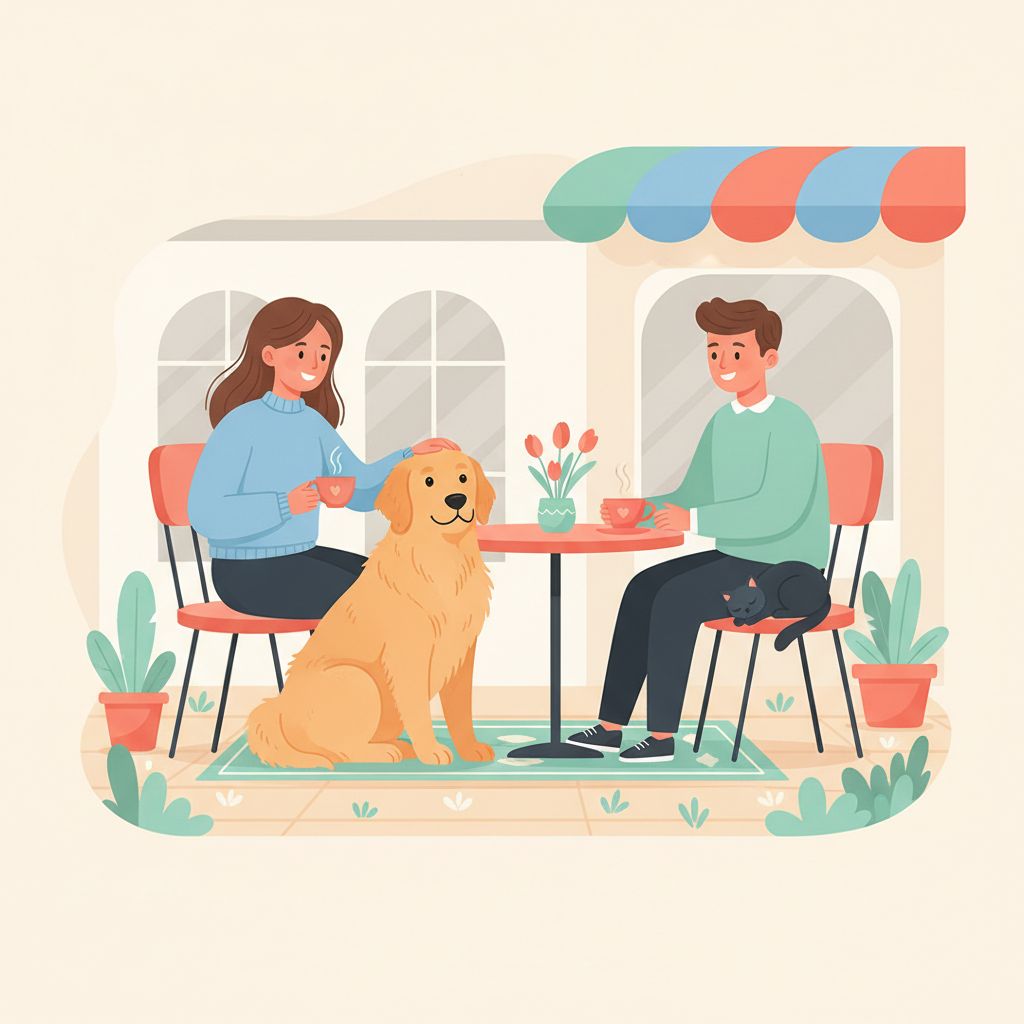
Taking Your Dog to a Café: Etiquette for a Calm Visit
Taking your dog to a café can be calm and enjoyable. Learn how to ask first, prepare your dog, settle them under the table, and read the signs that say it's time to go.
 Community
Before You Take the Lead: Agreeing Terms With a Dog's Owner
A friend hands you a lead and says 'he's no trouble.' Here's the short conversation and checklist that makes walking someone else's dog calm, safe and easy for you, the owner and the dog.
 Community
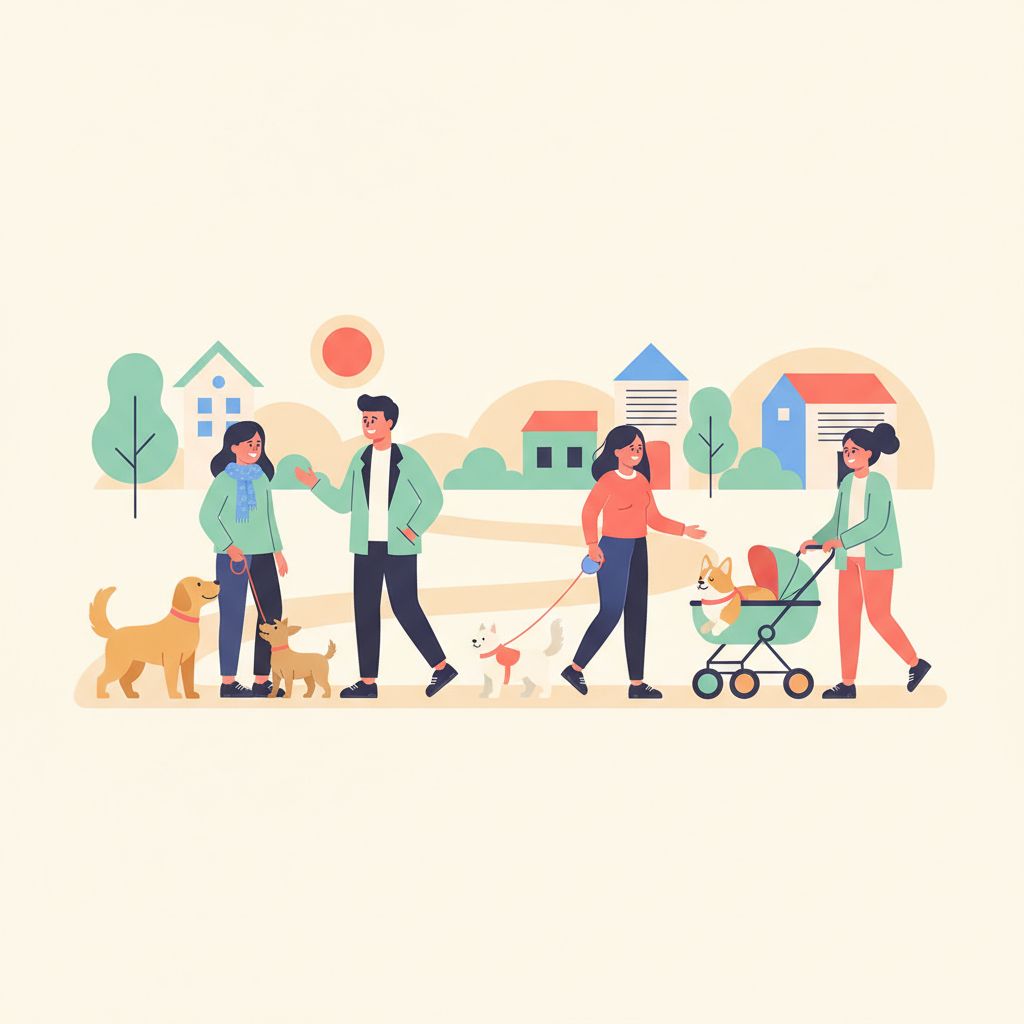
Meeting Your Neighbours on Dog Walks: Building Community on Your Street
Turn the familiar face you pass every morning into a neighbour. A practical guide to building community on your dog walks: routines, openers, etiquette and a simple 7-day plan.
 Behaviour
Teaching Your Dog a Polite Hello, Four Paws on the Floor
Muddy paws on a visitor's coat? Your dog isn't rude, just untaught. Here's a step-by-step plan for calmer greetings at the door and on the pavement, with no shouting.
 Training
Let Your Dog Sniff: Why Slower Walks Are Better Walks
Your dog's pause at a lamppost isn't dawdling; it's the best part of the walk. Learn why sniff-led outings matter and how to try an unhurried one on your city streets this week.
 Behaviour
Reactive Dog on the Pavement? Space, Triggers and Your Nerves
Walking a reactive dog on busy city streets is stressful, but a better plan helps. Learn to manage distance, spot triggers, steady your own nerves and know when to call the vet.