A Calm Moving Plan for Your Dog or Cat, Start to Finish
A calm before, during and after plan for moving house with a dog or cat, with practical checklists, tips for settling in, and a fridge-ready summary for moving day.
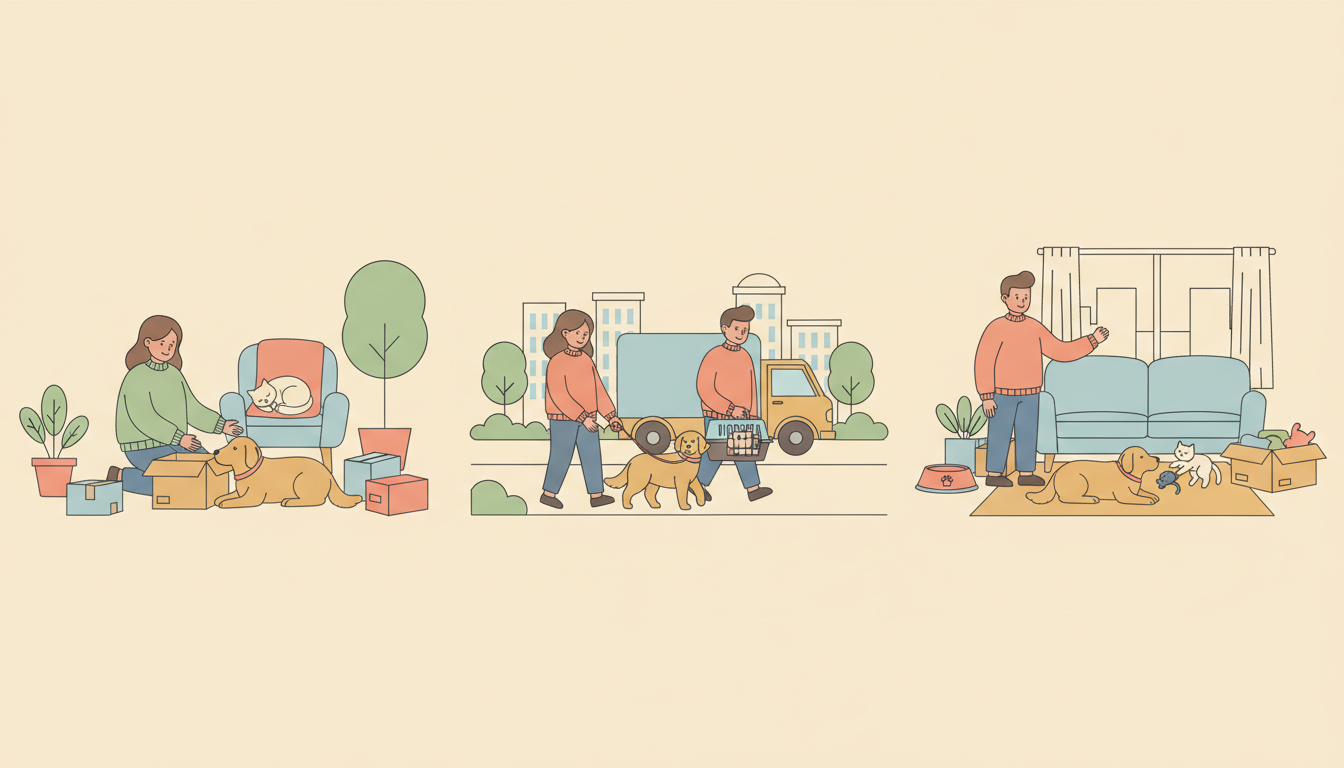
The sofa tilts, groans, and disappears down the stairwell. The cat on the windowsill watches it go, tail low, ears turning toward every unfamiliar thump. Somewhere in the hallway, a dog sniffs at the bare hook where the lead used to hang, then looks up at you, waiting for an explanation that can't be given.
A move is hard to explain to a pet, but it is easy to make gentler with a plan. Dogs and cats don't need to understand what's happening. They need safety, familiar smells and routines that keep showing up on time.
Below, you'll find a calm before, during and after structure for moving house with a dog or cat, with practical checklists at each stage. A short summary to stick on the fridge closes the guide.
Why a Move Feels So Big to a Dog or Cat
Your flat smells like countless things you stopped noticing years ago. Your dog or cat hasn't. Every corner has a scent, every creaky stair a sound, every route from sofa to bowl a well-worn path. That's their map. And a move erases it overnight.
Cats tend to attach to place. The territory is the point, so a new one can feel like losing everything at once. Dogs usually attach to people and routine, which means they'll follow you almost anywhere if the walks and meals still happen when they should. The plan shifts a little for each.

So we'll take it in three parts: before the move, during it, and after. Each comes with a concrete checklist you can print and stick on the fridge.
Most pets settle with predictable routines and plenty of patience. That's the honest promise. A perfect move isn't, and yours doesn't need to be one.
The Weeks Before: Small Steps That Make Moving Day Easier
With that in mind, the best time to help your pet is well before the first box is taped shut. Moving day goes smoothly or it doesn't, and most of that is decided weeks earlier. The good news? The prep is small stuff. You can fold it into your normal routine.
Start with the admin. Update your pet's microchip registration and ID tag with your new address and phone number. (A tag with the old details is worse than useless once you've left.) Then tell your vet about the move. If your pet has health concerns, or you have any travel-related questions, that's the conversation to have with them directly.
Next, introduce the carrier or travel crate early. Leave it open somewhere your pet already spends time. Add a familiar blanket, drop a few treats inside, and let your pet wander in by choice. No pushing, no closing the door. A crate that smells like home and means snacks feels very different on moving day than one that appears from the cupboard that morning.

Pack gradually, one room at a time. And leave your pet's own space alone until the very last day: the bed, bowls, favourite toy, scratching post. Everything else can turn into a maze of boxes. That corner should stay exactly as it was.
Keep walks, meals and play at their usual times too. A flat full of cardboard is odd enough already, and predictable routines give your pet something solid to hold onto.
Then build a pet essentials box. Pack it early and keep it somewhere you can grab it fast:
- Food for several days
- Bowls
- Lead and harness
- Litter and tray
- Bedding and a few toys
- A recent photo of your pet
That photo matters more than you'd think. If your pet slips out during the chaos, you'll be glad it's already printed or saved on your phone.
One optional extra: if you're moving to a different Zagreb neighbourhood, visit beforehand. Walk the surrounding streets and a nearby park. You'll learn the routes, and your first dog walk in the new place won't feel like a guessing game.
Moving Day: Keep Your Pet Safe, Quiet and Out of the Way
Once the preparation is done, the big day itself is mostly about keeping things safe and calm. Moving day is chaos. Doors propped open, strangers carrying boxes, engines running outside. For a pet, that's one big invitation to bolt.
So give them a quiet, closed room before the movers arrive. Stick a sign on the door ("Do not open, cat inside" works) and stock the space with food, water, a litter tray or a plan for toilet breaks, and their familiar bed. Familiar smells matter more than you'd think. And a shut door means no one can accidentally turn your hallway into an escape route.
If your day will be especially busy, consider sending your pet elsewhere. A trusted friend or relative can host them for the day, or you can book a sitter. Ask the same questions you'd use for any pet-sitter check: Have they handled your type of animal before? What's their plan if your pet bolts or gets sick?
When it's time to travel, keep things secure. Cats go in a sturdy carrier on the back seat. Dogs ride in a crate or wear a harness clipped to a seatbelt attachment. On longer drives, plan a short comfort stop for your dog. And never leave any pet alone in a parked car, not even for five minutes.
At the new place, don't just open the carrier and walk away. Check the home first:
- Windows and balcony doors closed or secured
- Gaps behind appliances blocked off
- No loose wires within reach
- Nothing toxic left behind by previous residents, like pest bait or cleaning products
Then there's your own energy. Pets read you. If you're frantic, they'll feel it. Keep your tone calm and matter-of-fact, even when the sofa won't fit through the door.
Here's a quick moving day checklist:
- Quiet room set up and signed
- Carrier or crate ready by the door
- ID tag updated with your new address and phone number
- Phone charged, with a recent photo of your pet saved
Settling a Cat Into a New Home, Room by Room
When the van is empty and the carrier is finally through the door, the real settling-in begins, and for cats that means going slowly. Start small. Pick one quiet room, like a bathroom or spare bedroom, and set it up before your cat arrives. You'll need a litter tray, fresh water, food, soft bedding and a hiding place (a cardboard box on its side works fine). Add something that smells of the old home too, such as a worn T-shirt or the blanket from their favourite spot.
Then let your cat set the pace. Once they're eating and moving around confidently, open the door and let them explore on their own. Don't carry them from room to room. That takes away their choice, and choice is what makes a new place feel safe. Widen their territory over several days, one room at a time, and don't rush it.
Indoor cats should stay strictly indoors at first. Keep windows and balcony doors secured, because a stressed cat may try to find its way back to the old place. That's especially risky in a city, where traffic and unfamiliar streets are real dangers.
If your cat normally goes outside, talk to your vet about timing before you open the door. Don't guess at a number of weeks. Your vet can advise based on your cat's temperament and your new surroundings.
Some hiding is normal. Many cats spend their first days tucked under a bed or behind the sofa. But if your cat stops eating, drinking or using the litter tray for a prolonged period, call your vet. Don't wait it out.
Settling a Dog Into a New Home and a New Set of Streets
Dogs tend to take their cue from routine and from you, so the focus shifts from territory to rhythm. Start outside. Walk your dog before you step through the new front door, so they arrive a little tired and a lot less wired. Then let them sniff every room, on a lead or with you calmly nearby. Sniffing is how dogs read a place, so don't rush it.
Next, set up the bed, bowls and a mat in a quiet corner fast. Keep the feeding spots, mealtimes and cues the same as in the old home. Familiar routines tell your dog that life still makes sense, even when the walls have changed.
Build the walking routine slowly. Begin with a short loop around the block, then stretch it a little further each day. Note where the quiet spots are (a side street, a small park, a patch of grass away from traffic), because a nervous dog will thank you for them. And always check signage and current local rules on leads and shared spaces. They differ between cities and even between neighbourhoods.
Practise alone time in short, easy stretches. Ten minutes. Then thirty. Don't leave a newly arrived dog for hours on day one.
In a building, introduce the shared spaces calmly: the stairwell, the lift, the front door. If your dog seems unsure, add distance and treats, and let neighbours say hello only when your dog is ready.
Watch for pacing, refusing food or constant whining. A day or two of unease is normal. If it persists, call your vet.
Keep It Simple: A Short Plan to Stick on the Fridge
If all of that feels like a lot to hold in your head, here is the whole plan boiled down. Print this, tape it to the fridge, and tick things off as you go.
Before:
- Update microchip details and ID tags with your new address
- Practise carrier time with treats and short trips
- Pack an essentials box: food, bowls, bedding, toys
During:
- Give your pet a quiet room away from the chaos
- Secure them properly for travel
- Do a quick safety check of doors, windows and balconies
After:
- Start with one small, safe space
- Keep feeding and walk times familiar
- Let them explore slowly, at their pace
Every pet adjusts at their own speed. Some settle in a day, others take weeks. Patience and predictability matter far more than any single trick. And if you have questions about health, travel or anxiety, ask your vet. They know your animal.
Start With One Small Thing Today
You don't need to do everything at once. Pick one task and do it today: put the carrier out in the living room with a blanket inside, or update the address on your pet's ID tag. Either one takes minutes, and either one makes the big day easier.
When the move arrives, build the familiar corner in the new home first, before you unpack the kitchen or assemble the bed. A new place becomes home through smell, routine and time. Talk to your vet about anything specific to your pet's health or temperament, and save the short fridge checklist for the day itself. Your dog or cat will take their lead from you, and a calm, steady you is the best gift you can give them.
Want Pethood on your block?
Pethood is on Google Play. On iPhone? Join the waitlist: one email to confirm, one when it’s on the App Store.
More from the journal.
 Health & vet
Practice Runs: Teaching Your Pet to Cope With the Vet
Small, happy practice steps at home can turn the vet from a surprise into a routine. A gentle week-long plan for dog and cat owners, from handling to waiting-room calm.
 Cats
Cat Skipping the Litter Tray? Causes and Fixes to Try
Found a damp patch beside a clean tray? Your cat is telling you something. Work through tray, placement and stress step by step, and learn exactly when to call the vet.
 Cats
Is Your Cat Drinking Enough? Bowls, Fountains and Wet Food
Is that untouched water bowl normal? Learn how bowl placement, fountains and wet food can help your cat drink more, how to spot changes early, and when to call the vet.