Walking Your Dog in Summer Heat: Timing, Paws and Warning Signs
Walking your dog in summer heat? Learn the best times to go out, the seven-second pavement test for paws, and the early signs of overheating in dogs and cats.
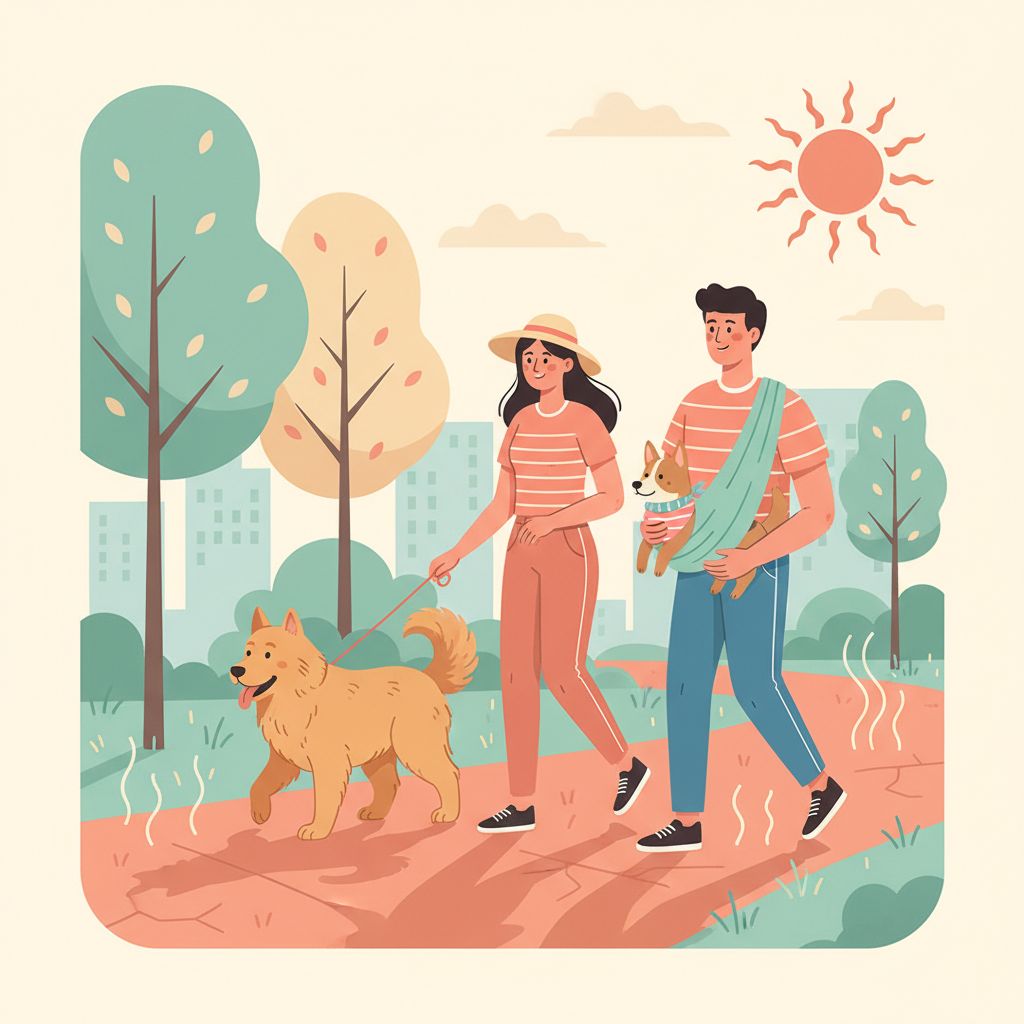
It's nearly nine on a July evening in Zagreb. After a long, sticky day, a walk in the summer heat finally feels possible, and your dog is already waiting by the door with one eye on the lead.
But step outside and the pavement on the way to the park is still warm. It is holding on to the day's sun long after the sun itself has gone.
So when is it actually safe to go out? And how would you know if your dog was starting to struggle?
This guide covers three practical things: timing your walks, protecting paws and recognising overheating early. There are also tips for cat owners keeping a hot flat cool.
When to walk: timing walks in the heat
Timing does most of the work. Early morning and late evening are usually the coolest windows of a summer day, so the best time to walk your dog in summer is in one of those windows. Midday? Keep it to a short toilet break and head back inside.
But cities hold on to heat. Pavements, walls and tram tracks soak it up all day and release it slowly after sunset. A street in Trešnjevka that feels pleasant at 9 pm can still be warm underfoot, and the paving along the Strossmayer promenade may need longer to cool than the air does. The quick hand test in the next section tells you whether the ground is safe.

Check the forecast the night before. Look at the hourly temperature and humidity, not just the daily high. Humid, still days are harder on dogs than dry ones, because panting cools them far less when the air is already heavy.
Some dogs need extra care. That includes flat-faced breeds, older dogs, puppies, overweight dogs, dogs with thick double coats and dogs with existing health conditions. Ask your vet what's sensible for your individual dog. They know its heart, lungs and history better than any general rule.
Here's how it looks in real life. A working owner shifts the long walk to before work. At lunch, they do a five-minute toilet break on a shady side street, and they save the slow sniffing time for after dark.
- Check the hourly forecast the night before
- Pick your two cool windows, morning and evening
- Plan a short, shady midday break
- Cut walks shorter on humid, still days
Even the best-timed walk can go wrong if the ground underfoot is still hot, so paws come next.
Hot pavement and dog paws: the back of the hand test
Paw pads look tough, but they're not fireproof. Surfaces that seem perfectly harmless can burn them quickly. Asphalt, dark paving, metal drain covers, tram tracks and artificial turf all soak up summer sun fast.
Before you head out, try the back of the hand test. Press the back of your hand flat on the ground for seven seconds. If it's too uncomfortable for you to hold, it's too hot for paws. Simple as that.
When the pavement fails the test, change your route. Grass, earth paths and shade are your friends here. Think of the tree-lined paths of Maksimir or the grass around Jarun and Bundek. They are cooler underfoot, and nicer for you too.

Learn the signs of sore paws. Watch for:
- Limping or refusing to walk
- Licking or chewing at the feet
- Redness or blisters
- Pads that look darker or damaged
Check your dog's paws after every summer walk. If you spot any damage, call your vet.
Some owners use dog boots. They add a layer between paw and pavement, but most dogs need practice before they'll walk normally in them. And no boot protects against every injury.
- Do the hand test before you leave
- Pick shade and grass
- Avoid metal and dark surfaces
- Check pads when you get home
Once you've sorted when and where to walk, it's worth rethinking how much you do, both outside and at home.
Shorter walks, shade and keeping pets cool in a city flat
On hot days, less really is more. A slow, sniffy, shorter walk does your dog far more good than a long march or a ball session in the park. Skip running, cycling alongside and intense fetch until the heat breaks.
Pack light but smart:
- Water and a collapsible bowl
- A small towel you can soak to wet your dog's coat if they start to overheat
- Poo bags (obviously)
- A rough plan for shady rest stops along your route
Then let your dog set the pace. If they want two full minutes with one lamppost, let them have it.
Never leave a dog or cat in a parked car. Not briefly. Not with the windows open. Not even in the shade. It's never worth the risk.
Missing walk time doesn't have to mean a bored dog. Swap it for sniffing games, scatter feeding, food puzzles or short training sessions. Frozen treats made from your dog's usual food work brilliantly too.
Cats need help as well. Top-floor and sunny flats get very warm, so close the blinds during the day, put out several water bowls and leave cool tiled spots like the bathroom open. Keep any balcony shaded and safe. And remember that cats hide discomfort well, so don't wait for obvious signs.
Picture an owner in a fourth-floor flat in Trešnjevka. She closes the shutters in the morning and sets out an extra water bowl for the cat. Then she swaps the afternoon walk for a ten-minute sniffing game in the hallway. Simple, and everyone stays cool.
Even with the best precautions, heat can still catch a pet out, so it pays to know exactly what to look for.
Warning signs of overheating in dogs and cats
Heatstroke in dogs can develop fast. Spotting the early signs gives you precious time to act. Treat what follows as general guidance, not a diagnosis, because only your vet can properly assess your pet. Save or screenshot this list so it's on your phone when the next heatwave hits.
Early signs of overheating in dogs
- Heavy panting that doesn't settle with rest
- Thick, ropey drool
- Seeking shade, or lying down and refusing to move
- Restlessness
- Unusually red gums or tongue
Serious signs that need urgent veterinary attention
- Stumbling or wobbliness
- Confusion
- Vomiting or diarrhoea
- Pale or bluish gums
- Collapse
Signs in cats
- Open-mouth panting (this isn't normal for a cat, so call your vet)
- Restlessness
- Drooling
- Lethargy
- Hiding
Cats are experts at masking distress, so even subtle changes deserve your attention.
What to do while you contact the vet
Move your pet into shade or a cool room. Offer small amounts of water, but don't force them to drink.
Wet the coat with cool water and let air flow over them. A fan or an open window works well. Skip ice-cold water, because it can constrict blood vessels and actually slow cooling.
Cooling at home doesn't replace a vet check. Your pet might seem to bounce back within minutes, but heat can still cause internal damage you can't see. Get them examined anyway.
Knowing the signs is only half the job, so here is when to pick up the phone.
When to call your vet
Don't wait it out. Call your vet straight away if your dog or cat shows any of the serious signs above. Call if they don't bounce back quickly after resting somewhere cool. And call if you're simply not sure.
Phone ahead while you start cooling your pet, or ask someone else to make the call. That way the clinic knows you're coming and can be ready the moment you walk in.
Before the next hot spell, save your vet's number and an out-of-hours emergency contact in your phone. Thirty seconds now saves frantic searching later.
Pick up the phone for less urgent worries too. Your vet can help with:
- Burnt or blistered paws after walks on hot pavement or tram-stop concrete
- Safe summer exercise for older dogs, flat-faced breeds or pets with health conditions
Here's the tricky part. Pets can seem to recover and still need checking, because not every problem shows on the outside. It's always better to call and hear that all is well than to sit at home wondering. This article is general guidance only, and your vet knows your pet best.
To keep all of this easy to remember, here's everything in one place.
Your summer heat walk checklist
A quieter summer routine is a kind one. Your dog doesn't need a long hike to have a good day. Ten minutes of sniffing under a shady tree and some calm time with you on the balcony count for a lot.
- Walk early and late
- Do the seven-second hand test
- Choose shade and grass
- Carry water for both of you
- Keep walks slow and short
- Never leave pets in cars
- Cool the flat for cats
- Know the warning signs
- Keep your vet's number handy
Heading to a park or lake? Check the signage and current local rules before your dog swims or goes off lead.
Make your next walk in the summer heat a safe one
You don't need to overhaul your life to keep your pets safe when temperatures climb. A few small habits cover most of the risk.
Start today. Check tomorrow's hourly forecast and plan your walk around the coolest window. Next time you're out, try the seven-second hand test on your usual route, and note where the shade and grass are. Save your vet's number and an out-of-hours contact in your phone now, before you need them.
Then share this checklist with a neighbour or friend who walks a dog. The more owners who know the signs, the safer every pet in the city will be.
Want Pethood on your block?
Join the waitlist. One email to confirm, one on launch day, nothing else.
More from the journal.
 Behaviour
 Dogs and Children: Safe, Calm Daily Routines at Home
Practical steps for keeping dogs and children safe at home: a safe dog space, body language lessons for kids, calm daily routines and clear supervision rules for families.
 Health & vet
 Dog and Cat Grooming at Home: A Simple Starter Routine
A simple starter routine for grooming your dog or cat at home: brushing, nails, ears and paw care for city pets, with short sessions, calm habits and clear signs it's time to call your vet.
 Training
 Puppy Socialisation Checklist for City Life
A practical, tickable puppy socialisation checklist for city life: sounds, surfaces, people and traffic, with a one-week plan to build a calm, confident urban dog.