Socialising a Shy Dog: Calm First Meetings with Other Dogs
Help your shy dog meet other dogs calmly. Learn to read stress signals, find a comfort distance, use parallel walking and plan gentle first meetings in Zagreb.
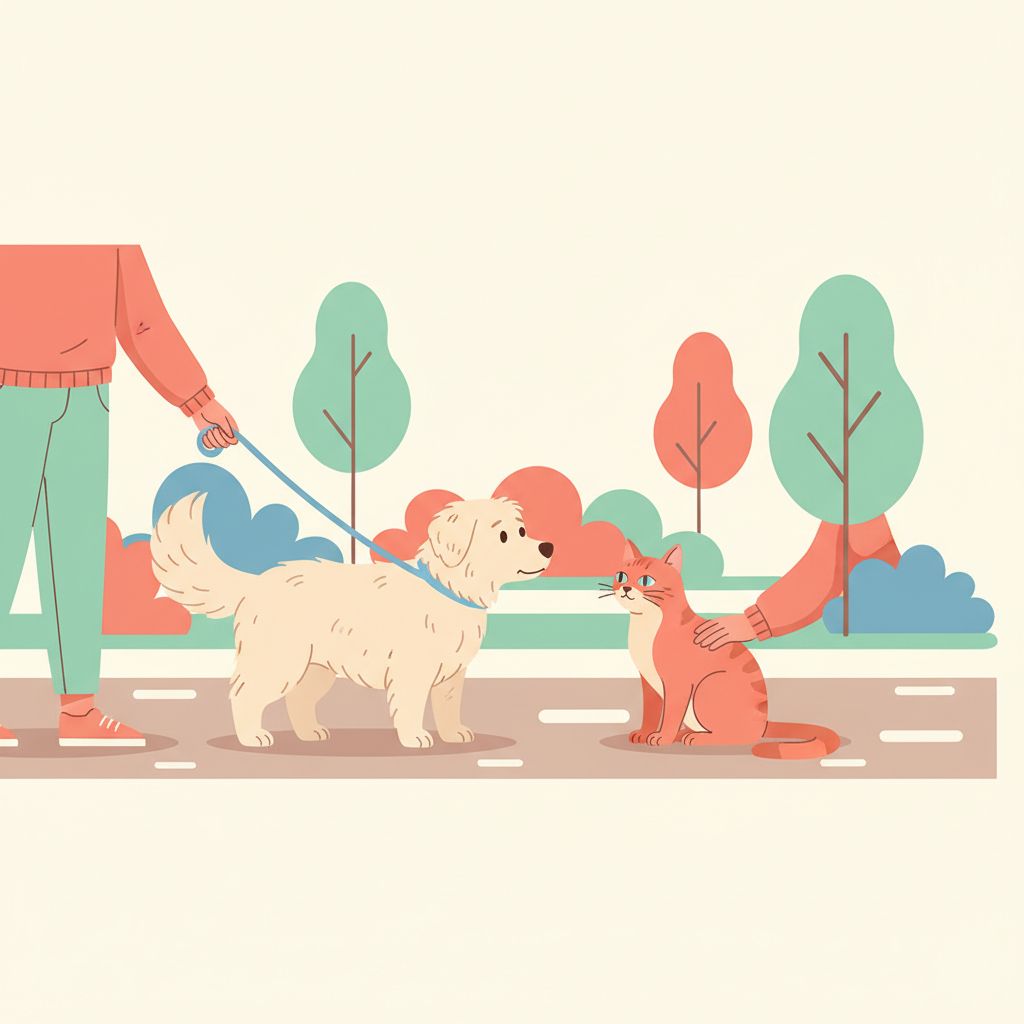
It's a quiet morning walk, the streets still half asleep, and your shy dog is finally sniffing happily along the pavement. Then a friendly but very excitable dog spots you and bounds over. Your dog freezes. Do you push on, or turn back? If you're socialising a shy dog, you probably know that moment well.
Afterwards, many owners ask themselves the same thing: how do I help my nervous dog meet other dogs without making it worse?
The goal is smaller and kinder than you might think. It isn't about forcing friendships. It's about calm and safety, and this guide gives you a clear, practical plan to get there.
Why socialising a shy dog starts with going slower
Moments like that happen all over the city. On a busy Sunday at Maksimir, the path is narrow and a bouncy Labrador trots straight towards you. Your dog either freezes or pulls hard behind your legs.
Socialising a shy dog isn't about making them love every dog they meet. It's about helping them feel safe enough to stay calm nearby. That takes time. A few quiet seconds at a distance count for more than a long play session, and forcing a meeting can make the fear worse.

This guide covers how to read stress signals, how to prepare, a step-by-step plan for a first meeting, and when to call your vet. If you have a cat at home too, the same patience and the same eye for body language work there as well.
Before any meeting, it helps to understand what your dog is already telling you.
Reading your shy dog: signs they need more space
Your dog is talking to you all the time. Shy dogs just whisper. Their early signals are small and easy to miss, especially on a busy street in Trešnjevka or a crowded path along the Sava. If you learn them, you'll spot trouble before it turns into barking, lunging or a full shutdown.
These are the most common dog body language signs of stress and avoidance:
- Lip licking, or yawning when they're not tired
- Turning the head away from another dog or person
- A tucked tail and lowered body
- Ears pinned back against the head
- Whale eye, where the whites of the eyes show
- Freezing mid-step
- Suddenly sniffing the ground (often a polite way of opting out)
- Trying to hide behind your legs
Now look for the signs of comfort. A relaxed dog has a loose, wiggly body, soft eyes and a relaxed, slightly open mouth. They sniff with curiosity, take treats easily and turn when you say their name.

That last part matters most. Your dog's comfort distance is the distance at which they can see another dog and still eat a treat or look back at you. It might be 30 metres. It might be the whole length of Maksimir park. Either way, that's your starting point.
Here's a simple rule. If your dog stops taking food, you're probably too close. Don't coax them or push forward. Add distance first, then try again.
Every dog is an individual, and one yawn doesn't mean panic. Watch your own dog over several walks and look for patterns rather than single signs.
Once you can read those signals and know your dog's comfort distance, you're ready to set up a meeting that works in their favour.
Preparing for a calm first meeting
Most of a good first meeting happens before the dogs ever see each other. Start with the partner dog. You want a calm, older or mellow dog whose owner understands the goal and is happy to go slowly. Skip the boisterous adolescent and the friendly stranger at the park. You don't need to gamble on an unknown dog yet.
Next, pick the place and time. Neutral, open ground with room to move away works best, such as an early morning path at Jarun or a wide stretch of the Sava riverbank. Avoid narrow doorways and crowded entrances. Before you plan anything, check the signage and current local rules about leads and where dogs are allowed, because they change and they vary from park to park.
Pack light but smart:
- A comfortable, well fitted harness
- A standard length lead (leave the retractable at home for meetings)
- Small, high value treats
- Water
- Poo bags
Then prepare yourself. Dogs read tension straight down the lead, so a relaxed owner with a loose lead makes a real difference. Agree on a simple plan with the other owner beforehand. Include a signal that means "let's calmly walk away," so either of you can end the meeting without debate or awkwardness.
Don't skip the warm-up. Give your dog a chance to toilet and sniff around first. A dog who arrives full of pent-up energy isn't ready to be polite, and ten minutes of sniffing can change the whole meeting.
With the right partner, place and mindset sorted, you're ready for your shy dog to meet another dog for the first time.
Step by step: how to introduce a shy dog to another dog
Shy dogs need time, space and a say in what happens. If you rush any of these steps, you can undo days of progress in seconds. Go slower than feels necessary.
- Start at your dog's comfort distance. This is the point where your dog can see the other dog but still sniff, take treats and respond to their name. Let them notice the other dog, then reward calm looking with a treat or a soft "good dog."
- Try parallel walking. Parallel walking with dogs is one of the gentlest ways to build familiarity. Walk in the same direction with plenty of space between the dogs. Close the gap gradually over several minutes or several walks, but only while your dog stays loose and relaxed.
- Let them sniff where the other dog has been. Ground sniffing works like reading someone's profile before you meet them. Your dog gathers information without any face-to-face pressure.
- Allow a brief greeting. If both dogs look relaxed, let them approach side-on rather than head-on, with loose leads. Count to three. Then call your dog away cheerfully and reward.
- Repeat only if your dog chooses. If your dog wants to go back, allow another short hello. If they don't, respect that. Always end on a calm, positive moment.
If it goes wrong, calmly create distance. Don't scold and don't pull hard on the lead, because that teaches your dog that other dogs predict trouble. Give them a quiet, sniffy walk to decompress. Try again another day, starting further apart.
Here's how this can look in real life. Two neighbours in Trešnjevka start meeting at 6:30 a.m. on a quiet residential street, before the trams get busy. In week one, they walk on opposite pavements. By week two, they share a pavement with a few metres between the dogs and let them sniff each other's trail. By week four, both dogs stroll side by side as if it's nothing. There's no big moment, just a few weeks of short, boring, successful walks.
Watch out for these common mistakes:
- Letting an off-lead dog rush up to your shy dog
- Holding the lead tight (your tension travels straight down it)
- Forcing a sniff or pushing your dog closer
- Visiting crowded dog parks or busy dog areas too early
- Letting meetings go on too long. Three seconds beats thirty.
Most nervous dog introductions improve with patience, but some signs point to something that needs a professional eye.
When to call your vet
Everything here is general guidance. It isn't a diagnosis. If something about your dog seems off, see your vet before you turn to forums or a friend's advice.
Book an appointment if you notice any of these:
- Shyness that appears suddenly or gets worse over time
- Signs of pain, or your dog pulling away when you touch them
- Changes in eating, sleeping or toileting habits
- Intense fear, such as shaking, panting, trying to escape, snapping or growling
- Taking a long time to settle after an encounter
Discomfort and health problems can sometimes play a part in fearful behaviour. A sore joint or an upset stomach can make any dog jumpy, just as it would make you short-tempered. Your vet can check for anything physical and talk you through next steps.
Those next steps might include support from a qualified behaviour professional. Every dog is different, so there's no fixed timeline and no guaranteed result. What you do get is a clearer picture of what your dog actually needs.
Once health questions are ruled out, building confidence in a fearful dog becomes steady, unglamorous work.
Building confidence one calm walk at a time
Shy dogs don't gain confidence through big breakthroughs. They build it slowly, through distance, choice and short positive moments that add up week after week.
Keep the routine simple. Plan one or two calm walks each week with a friendly dog your pup already knows. On every other walk, the only goal is staying relaxed at a comfortable distance.
Jot down a quick note after each outing. Record how far away other dogs were, where you were and what time of day it was. After a month, you'll start to see patterns. Quiet mornings along the Sava might work better than busy evenings in Maksimir, for example.
Your dog may never become a social butterfly, and that's fine. A dog who can calmly pass another on the street is a real success.
Every time you give another dog space, you also help every shy dog in your neighbourhood feel a little safer.
Your next small step
You don't need a perfect plan or a perfectly social dog to begin. You need one small, calm step.
This week, choose one quiet time and place, such as an early morning stretch along the Sava. Practise watching other dogs from your dog's comfort distance, and reward every calm look.
Once that feels easy, ask a neighbour with a calm, steady dog to join you for a slow parallel walk. Keep it short and keep it boring.
Socialising a shy dog is rarely dramatic, but small calm steps add up. One day you may notice your dog strolling past another dog as if it's nothing at all.
Want Pethood on your block?
Join the waitlist. One email to confirm, one on launch day, nothing else.
More from the journal.
 Behaviour
 Dogs and Children: Safe, Calm Daily Routines at Home
Practical steps for keeping dogs and children safe at home: a safe dog space, body language lessons for kids, calm daily routines and clear supervision rules for families.
 Health & vet
 Dog and Cat Grooming at Home: A Simple Starter Routine
A simple starter routine for grooming your dog or cat at home: brushing, nails, ears and paw care for city pets, with short sessions, calm habits and clear signs it's time to call your vet.
 Training
 Puppy Socialisation Checklist for City Life
A practical, tickable puppy socialisation checklist for city life: sounds, surfaces, people and traffic, with a one-week plan to build a calm, confident urban dog.