Senior Dog Care: Adapting Walks, Home and Routine
Ageing dog comfort comes from small changes. Practical senior dog care tips for gentler walks, a safer home and a steadier routine, plus when to call your vet.
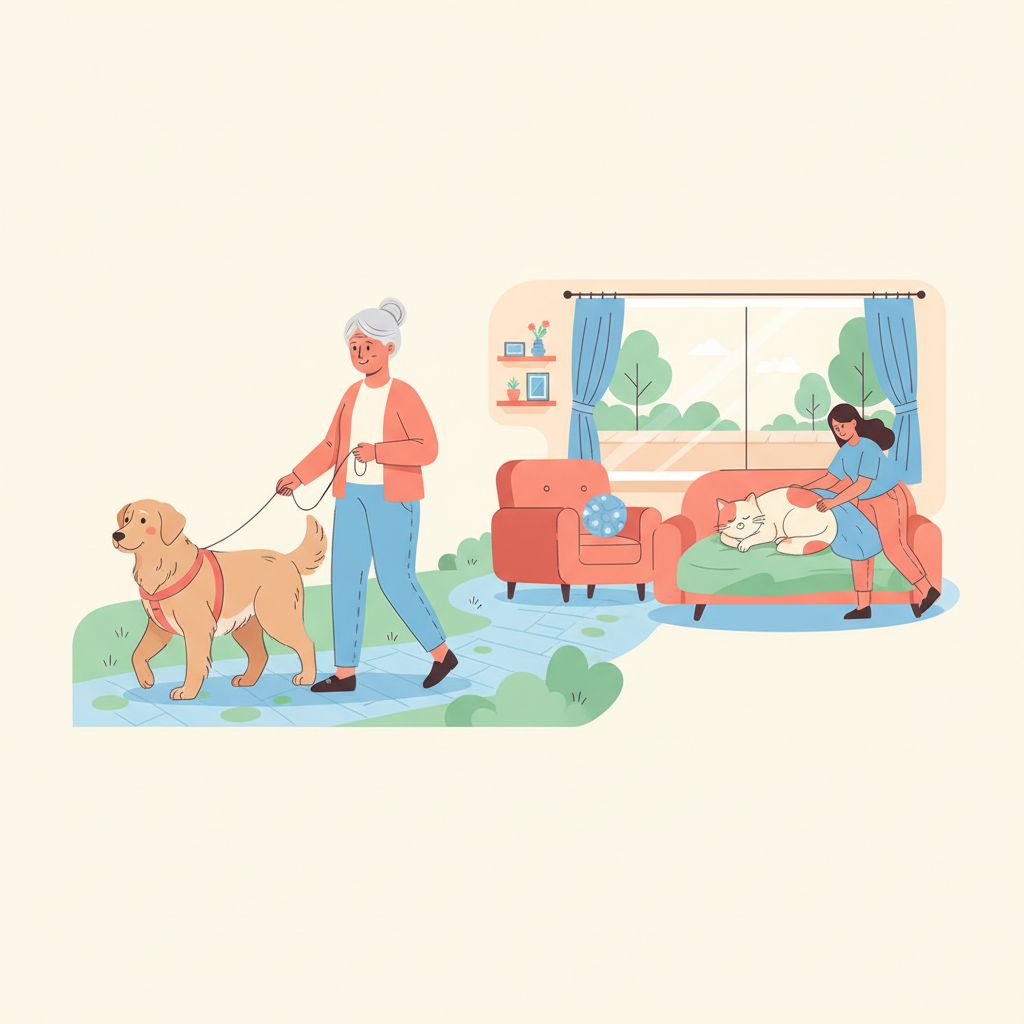
You notice it at the kerb first: a pause before stepping down, where there used to be none. Then it's the stairs, taken one careful step at a time, or the way your dog now chooses the rug over the cold hallway tiles. These are quiet signals, not a crisis, and they're often the first signs your dog is getting older.
The good news is that senior dog care doesn't call for a big overhaul. A few small, practical changes to walks, your home and your daily routine can keep life comfortable for your companion.
This guide walks through each of those areas, with simple checklists you can use right away, whether you live in a flat in Zagreb or a house with a garden elsewhere in Europe.
Why senior dog care is about small changes, not big ones
Senior dog care doesn't need an overhaul. It needs small, thoughtful changes. Your dog is getting older, and that's normal. Often, the gentlest adjustments help the most.
Here's the catch: "senior" means different things for different dogs. A Great Dane may slow down years before a Chihuahua does. So instead of fixed age labels, this guide asks you to watch your dog. Notice how they rise, climb stairs, and handle a walk.

We'll cover three practical areas to adapt:
- Walks: pace, length, and surfaces
- Home: flooring, bedding, and easy access
- Routine: rhythm, rest, and predictability
One note before we start. This is general guidance, not medical advice. For any health question, your vet is the right person to ask.
Let's begin outdoors, because the daily walk is usually where the first changes show up.
Adapting walks for an older dog
Your old dog doesn't need less love. They need a different kind of walk.
Start by splitting the day. Instead of one long march, try two or three shorter, slower outings. Let your dog set the pace. And let them sniff, because sniffing isn't dawdling. It's gentle mental exercise, and it tires a dog out in a good way.
Here's a quick checklist for older dog walks in the city:

- Choose softer ground. Park paths and grass beat long stretches of hard pavement.
- Pick quieter times. Early morning or late evening means fewer bikes, scooters and crowds.
- Dodge the heat. Skip midday sun in summer.
- Watch the ground in winter. Avoid icy or slippery patches.
Picture a realistic swap. You've been doing a brisk loop around a busy block, all traffic noise and hard pavement. Trade it for a calm circuit through the nearest park, with a bench stop in the middle. You sit, your dog sniffs, everybody breathes. Same time outside. Much kinder on ageing joints.
Know the signs that it's time to stop or shorten things:
- Lagging behind you
- Heavy panting
- Reluctance at the door
- Stiffness the next morning
That last one matters most. If your dog is creaky the day after, yesterday's walk was too much. Consistency beats heroics, so keep outings regular rather than saving up for the occasional marathon.
One more thing. Check the signage at your park and look up the current local rules on leads and access. Don't assume. Rules vary between parks and cities, and they change. And if your dog's hearing, sight or reaction time has slowed, keep them on a lead anyway. A dog who once recalled perfectly may not hear a cyclist coming now (or see one, for that matter).
Once you're back through the front door, the next question is what your dog has to deal with indoors.
Making your home safe for an older dog
Walk through your home the way an older dog does. Low to the ground, a little stiff, and not seeing as well as before. You'll spot the problems fast.
Start with the floors. Tiled and laminate surfaces are common in European flats, and they turn into skating rinks for arthritic paws. Lay non-slip rugs or mats along the routes your dog uses most, such as bed to bowl, bowl to door. Then check the sleeping area. A supportive orthopaedic bed works best, placed away from draughts (cold air near windows and balcony doors makes sore joints worse). Put water in more than one spot, so your dog never has to trek across the flat to drink.
Stairs and furniture need attention too. A small ramp or set of pet steps for the sofa or car saves joints from repeated jumping. If your dog's balance is shaky, fit a baby gate at the top of the stairs. And if you have a small dog, carry them on staircases and lifts, supporting the chest and hindquarters so the spine stays level.
Keep the layout predictable. Dogs with fading sight rely on memory, so don't rearrange furniture. Leave a night light on in the hallway, too.
- Raised bowls can make eating and drinking more comfortable for stiff necks and backs.
- A quiet resting spot away from foot traffic lets your dog sleep without being stepped over or startled.
- Check with your vet before changing anything related to diet or medication.
Living with a cat or a younger dog? Make sure your senior can retreat from lively housemates. A gated corner or a spare room works well. Also look at the cat's perches. If shelves and cat trees push your dog to compete for the best spots, add a second option at floor level so nobody loses out.
With the walks and the home sorted, the last piece is the rhythm that ties your days together.
Adjusting your senior dog routine and keeping the mind active
Older dogs love predictability. Keep meals, walks and bedtime at the same times each day, and you'll take a lot of guesswork out of their world. They may also need more toilet breaks than they used to. Plan for that now. If you work long hours in an office, build the extra trips into your day instead of hoping your dog will hold on.
Slower doesn't mean bored. Scent games are perfect: scatter a few treats around the living room and let your dog sniff them out. Snuffle mats and easy food puzzles work well too (pick the beginner level, since frustration helps nobody). Short training refreshers with favourite rewards keep the brain busy. Five minutes of "sit" and "touch" is plenty.
Once a week, give your dog a hands-on check. Run your hands over the body and feel for lumps. Look at the paws, nails, teeth, ears and skin. Keep it gentle and calm, and treat it like a massage. Jot down anything new, because it's far easier to tell your vet "this bump appeared two weeks ago" than to guess.
Sleep changes, too. Many senior dogs sleep more, and that's normal. Protect their rest. Give them a quiet bed away from visitors, children and the noise of a busy city evening (trams, fireworks and late-night chatter all add up).
Here's what a simple week might look like for a working owner:
- Morning: a slow sniff walk where your dog sets the pace
- Midday: a check-in from you, or a visit from a trusted neighbour or friend for a toilet break and a cuddle
- Evening: a calm stroll, then a snuffle mat or short training game
- Once a week: your hands-on health check
Even the best routine can't replace professional eyes on your dog, which brings us to knowing when to pick up the phone.
When to call your vet
This article is general guidance, not a diagnosis. Only your vet can tell you what's going on with your dog. And as dogs age, regular check-ups matter more, not less. Small changes are easier to catch when someone has seen your dog healthy.
So what's worth mentioning at the next visit? Any of these:
- Changes in appetite or drinking
- Weight gain or loss
- New reluctance to walk, climb stairs or jump
- Limping
- Confusion or restlessness at night
- Accidents indoors
- Changes in breathing, or a new cough
- New lumps or bumps
- Shifts in behaviour or mood
Keep a short notes log on your phone or in a notebook. Write the date, what changed and how long it's been going on. (Two lines is enough.) Vets can't see what happens at home, and memory gets fuzzy fast. Your notes fill the gap.
If something seems sudden or worrying, don't wait for the next routine appointment. Call your vet promptly. And never give your dog human medicines or supplements without veterinary advice. What's safe for you can be harmful to them.
Pick one change to try this week
Here's your take-away checklist:
- Gentler walks: shorter, slower, more often
- A safer home: grip underfoot, easy access to food, water and bed
- A steady routine: predictable meals, rest and outings
Don't try to change everything at once. Choose one item from these checklists and try it this week. Lay a non-slip mat by the food bowl, or split the evening walk into two shorter strolls. Then watch how your dog responds and build from there.
If you've noticed any changes in your dog lately, book a routine check-up with your vet. And talk to other dog owners on your street or in your local park. Someone nearby has probably already solved the problem you're facing.
The later years aren't a loss. They're a slower, softer chapter. Give your companion your time and patience, and savour the unhurried sniffs and long naps.
Want Pethood on your block?
Join the waitlist. One email to confirm, one on launch day, nothing else.
More from the journal.
 Behaviour
 Dogs and Children: Safe, Calm Daily Routines at Home
Practical steps for keeping dogs and children safe at home: a safe dog space, body language lessons for kids, calm daily routines and clear supervision rules for families.
 Health & vet
 Dog and Cat Grooming at Home: A Simple Starter Routine
A simple starter routine for grooming your dog or cat at home: brushing, nails, ears and paw care for city pets, with short sessions, calm habits and clear signs it's time to call your vet.
 Training
 Puppy Socialisation Checklist for City Life
A practical, tickable puppy socialisation checklist for city life: sounds, surfaces, people and traffic, with a one-week plan to build a calm, confident urban dog.