Your Puppy's First Month: House Training, Sleep and Walks
A calm, practical guide to your puppy's first month in a European city flat: house training, sleep, chewing and the first short walks around Zagreb.
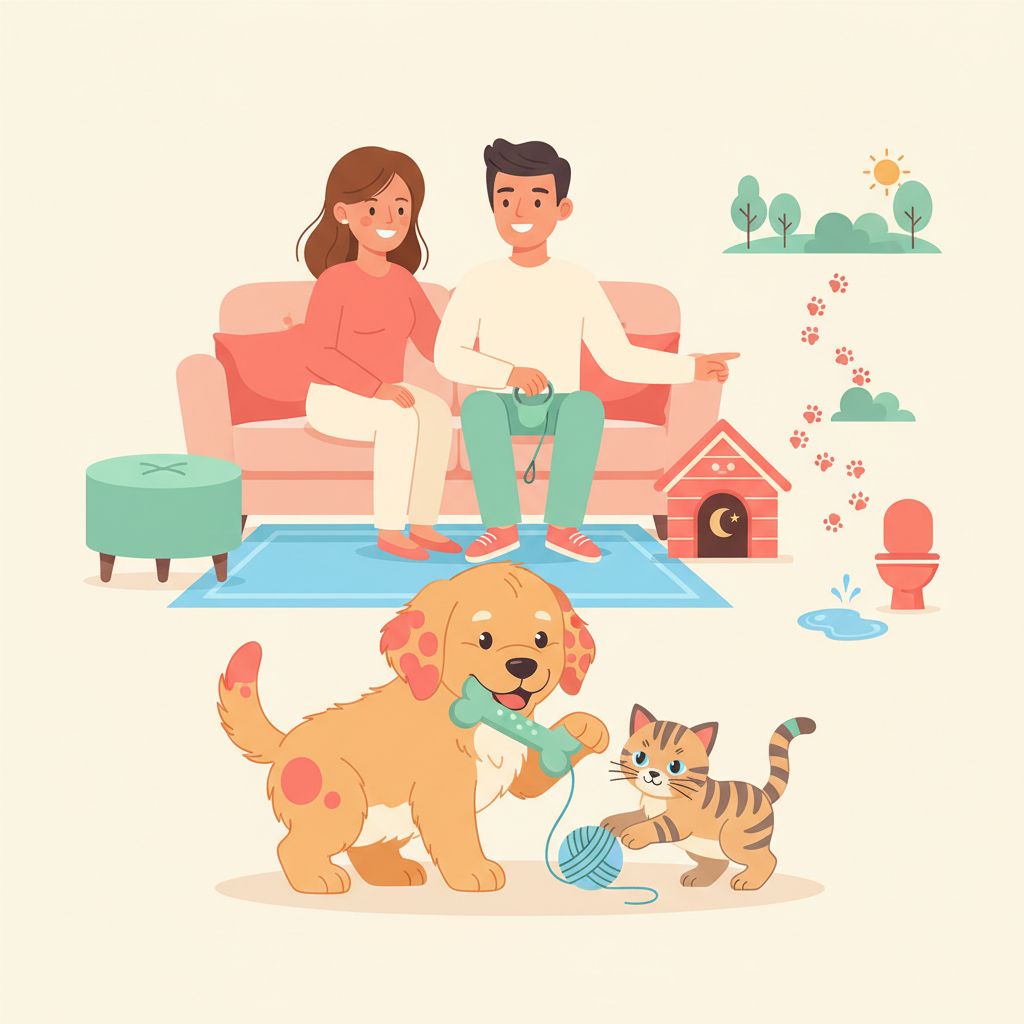
It's a Tuesday evening in a Zagreb flat. Your new puppy is finally asleep on the rug, one paw twitching, and you're standing in the kitchen quietly panicking about toilet trips, chewed phone cables and whether you're already doing the first walk wrong. If that's you, breathe. A puppy's first month feels enormous because it is, but it also comes down to just four things done consistently.
House training. Sleep. Chewing. Gentle exposure to the world outside your door. Get those roughly right and the rest tends to fall into place.
This guide walks you through each one, with a European city flat in mind, lifts, trams, narrow stairwells and all. No perfectionism, no gadgets you don't need. Just a simple plan for the first four weeks together.
What to expect in your puppy's first month
Picture this. A tired, excited, slightly confused small animal who's suddenly away from mum and siblings, trying to learn an entire human world in weeks. That's your puppy. Keeping that image in mind will save you a lot of frustration in the first month.
You really only have four big jobs right now:

- House training, frequent trips outside, calm praise, zero drama when accidents happen
- Sleep, puppies need 18 to 20 hours a day, and overtired puppies act like tiny gremlins
- Chewing, redirect, don't punish, and keep safe chews within paw's reach
- Gentle exposure, new sounds, surfaces, people and short car rides, always at your puppy's pace
And yes, a flat in Zagreb (or Vienna, or Berlin) is a perfectly good home for a puppy. What matters is routine, not square metres. A balcony view of Jarun won't raise your dog. You will.
One last thing. Every puppy is different. Steady routine always beats clever tricks.
House training that actually sticks
Of those four jobs, puppy house training is the one owners worry about most, so let's start there.
House training comes down to timing, repetition, and a bit of patience. Puppies have tiny bladders and almost no warning system in the early weeks, so your job is to get ahead of them. Take your puppy out after every nap, every meal, every play session, and roughly every one to two hours when they're awake. Yes, that often.
Pick one spot outside and go there every time. Use a calm cue word like "potty" or "piški" as they start to go, and reward the exact moment they finish, not thirty seconds later when you're back inside. That timing is what builds the association.

Living in a Zagreb apartment on the fourth floor? Puppy pads near the front door can bridge the gap while you pull on boots and grab the lift. Treat them as a short term tool, not a destination. Move the pad closer to the door each week, then outside the door, then phase it out entirely once your puppy can hold it for the full trip down.
Accidents will happen. Clean the spot with an enzyme cleaner (regular detergent won't remove the scent markers that pull them back to the same corner), skip the scolding, and adjust your schedule. An accident usually means you waited too long, not that your puppy is being difficult.
Watch for these signals that it's go time:
- Sniffing the floor in tight circles
- Sudden stopping mid-play
- Whining or restlessness
- Heading toward a corner or behind furniture
Sleep, crates and surviving the first nights
The faster you build good toilet habits, the sooner everyone starts sleeping, which brings us to the second big job.
Here's something new owners rarely believe at first: your puppy needs 16 to 20 hours of sleep a day. Not play. Sleep. Overtired puppies turn into tiny land sharks, so protecting their rest is half the battle in week one.
Set up a safe sleep zone before you bring your puppy home. A crate or a small pen works well, placed right next to your bed for the first few weeks. Add soft bedding and an old t-shirt that smells of you. That scent is a huge comfort when everything else is unfamiliar.
A simple night routine helps everyone settle:
- Last toilet trip outside, even if it's cold and you're in slippers
- Dim the lights across the flat
- One quiet chew toy in the crate, nothing squeaky
- Calm voice, short goodnight, then quiet
Expect one or two wake-ups for the toilet in the first couple of weeks. Keep these trips boring and brief. Outside, pee, back inside, back in the crate. No play, no chatter, no treats. You're teaching night from day.
Living in Zagreb or any European city? Trams rattling past, neighbours in the lift, Saturday night on your street. A quiet radio or white noise app at low volume smooths over the sudden sounds and helps your puppy sleep through them.
Chewing without losing your shoes
Good puppy sleep protects your sanity. Good chewing habits protect your furniture.
Puppies chew for four main reasons. Teething pain between three and six months. Curiosity about how the world tastes. Boredom when nothing more interesting is on offer. And stress relief after a loud afternoon or a long walk through Jarun. Knowing the "why" makes the fix easier.
Start small. Puppy proof one room at a time instead of tackling the whole flat in a panic. Lift cables off the floor, tuck shoes inside a closed wardrobe, roll up loose rugs, and shut your bins. A kitchen with a bread bin at nose height is an invitation, not an accident.
Rotate textures so chewing stays interesting. Keep a firm rubber toy, a soft fabric option, and something safe to freeze (a wet knotted tea towel works) for sore gums. Swap items every few days so they feel fresh.
When your puppy grabs a slipper, trade, don't chase. Offer an allowed chew, take the slipper calmly, then put the slipper somewhere out of reach. Chasing turns theft into a game they'll want to replay.
Safer chew options and things to skip:
- Yes: rubber Kong-style toys, vet-approved dental chews, frozen damp cloths, carrot sticks
- No: cooked bones, rawhide, hard nylon that chips teeth, old shoes (confuses the rules)
Not sure about a specific chew? Ask your vet before offering it.
The first short walks in the city
With chewing redirected and sleep protected, you've got the headspace to think about the outside world.
Before your puppy finishes the vaccination series, don't skip the outside world, just carry them into it. Pop them in your arms and walk down the street. Let them watch trams rattle past, listen to the espresso machines hissing on Tkalčićeva, see strangers in big coats. This early exposure, done safely from your arms, builds a calmer dog later.
Check what your city actually requires. In Zagreb and most Croatian cities, that means registration, a microchip, rabies vaccination at the right age, and leads in public spaces. Rules differ park by park, so read the signage, some green areas ban dogs entirely, others have fenced zones.
Once your vet gives the green light for pavement walks, keep them short. Five to ten minutes is plenty. Let the puppy sniff a lamp post for two full minutes if they want to. That's not wasted time. That's the walk.
Basic gear you'll actually use for first puppy walks:
- Flat collar with an ID tag (name and your phone number)
- A well-fitted harness, two fingers under the straps
- A light lead, around 1.5 to 2 metres
- Poo bags, more than you think you need
- Small, soft treats for marking good moments
Introduce city things one at a time. Trams one day. Bikes and e-scooters another. Then children, slippery marble entrances, café terraces. Go slow.
And avoid dog parks for the first few weeks. A chaotic pack of strange dogs isn't socialisation, it's overwhelm. One calm, fully vaccinated adult dog belonging to a friend is a far better teacher.
When to call your vet
Routine takes you a long way, but it doesn't replace professional eyes on your puppy.
Puppies can go downhill fast, so err on the side of calling. Ring your vet sooner rather than later if you notice any of these:
- Repeated vomiting or diarrhoea
- Refusing food for more than a meal or two
- Lethargy, limping, coughing or laboured breathing
- A swollen belly, or blood anywhere
Call straight away if your puppy swallows something they shouldn't, socks, stones, chocolate, grapes, cleaning products or human medicines can all cause serious harm, sometimes within hours.
Book routine visits too, not just emergencies. Vaccinations, parasite control and a general once-over keep small problems small. While you're there, ask about microchipping and the right timing for neutering based on your puppy's breed and size.
One last thing: this guide is general information. Your vet knows your puppy.
A gentle first month, a calmer year ahead
So here's your first month in a nutshell: steady routine, plenty of rest, patient house training, safe things to chew, and short calm walks around your block in Zagreb (or wherever home is). That's it. No tricks, no shortcuts.
The hard weeks really do pass. The 3am wake-ups, the chewed slipper, the puddle by the door, all temporary. Small daily habits build the dog you'll live with for the next 12 years.
Keep a simple notebook. Jot down what calms your puppy, what overwhelms them, which treats work. You'll spot patterns faster than you think.
Above all, remember that a puppy's first month is about building trust and routine, not perfection. Go at your puppy's pace. Lean on your vet for anything health related. And give yourself a moment to notice the small city milestones, the first confident walk down your street, the first proper nap curled at your feet, the first time your puppy sleeps through the tram at 6am. Those quiet wins are the ones that stay with you.
Want Pethood on your block?
Join the waitlist. One email to confirm, one on launch day, nothing else.
More from the journal.
 Behaviour
 Dogs and Children: Safe, Calm Daily Routines at Home
Practical steps for keeping dogs and children safe at home: a safe dog space, body language lessons for kids, calm daily routines and clear supervision rules for families.
 Health & vet
 Dog and Cat Grooming at Home: A Simple Starter Routine
A simple starter routine for grooming your dog or cat at home: brushing, nails, ears and paw care for city pets, with short sessions, calm habits and clear signs it's time to call your vet.
 Training
 Puppy Socialisation Checklist for City Life
A practical, tickable puppy socialisation checklist for city life: sounds, surfaces, people and traffic, with a one-week plan to build a calm, confident urban dog.