After Summer: Helping Your Pet Adjust to a New Routine
A calm, practical guide to easing your dog or cat through post-summer routine changes, with gentle schedule shifts, enrichment ideas and a two-week checklist.
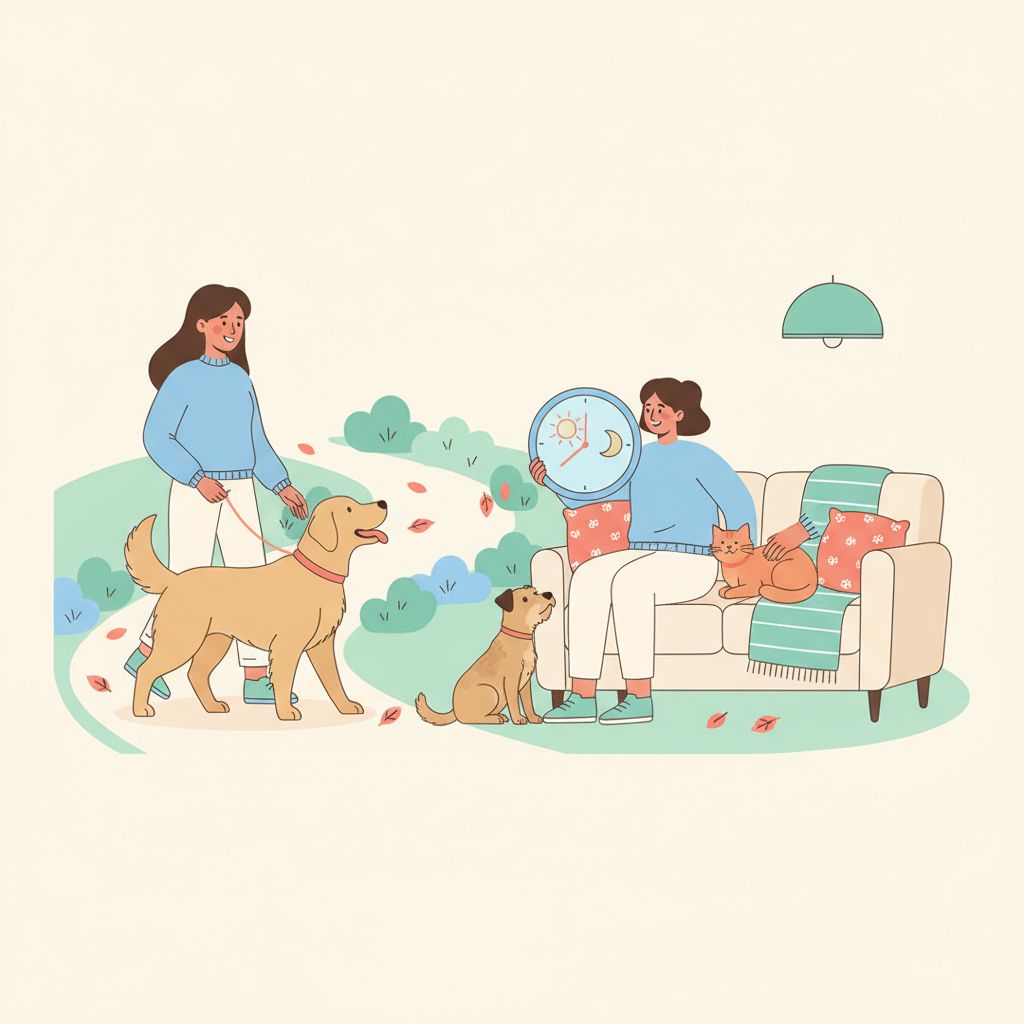
It's the first Monday morning back. You're hunting for your keys, half-dressed, while your dog stands watch at the door and your cat sits quietly beside the empty chair. Somewhere between the toast and the rush, you might wonder: is my pet quietly asking where the summer went?
A change in routine can feel surprisingly big to an animal who spent weeks with company on tap. The good news is that it doesn't have to be dramatic, and you don't need to feel guilty about it.
This is a calm, practical guide to the autumn routine for dogs and cats, so the transition is easier for everyone in the household.
Why a change in routine can feel so big to your dog or cat
For weeks, you've been home. Coffee at nine, a walk at noon, someone always on the sofa. Then Monday comes and you're out the door at eight again. Your dog is already waiting by the door. Your cat watched you pack the bag and knew before you did.
Pets run on pattern. Meals, walks, play and naps all slot into a rhythm they learn to read, and that rhythm tells them what's safe and what comes next. So when the household schedule shifts, it isn't a small thing to them. It's the map changing.

You might notice a few signs. Your pet follows you from room to room. They vocalise when you leave, or restlessly pace when you're about to. Appetite shifts, toilet habits slip, a cat hides more, or someone starts over-grooming. None of these point to a diagnosis. They're simply ways of saying "this feels different."
But a persistent change in behaviour or health can also have a physical cause. If something lasts more than a few days or seems to be getting worse, talk to your vet.
Most pets adjust gradually. The steps below won't make the transition perfect. They'll make it gentler.
Start the new schedule before you need it
The best way to ease back to routine with pets is to begin before the routine actually returns.
Here's the core idea. Don't wait for the first Monday back to flip the switch. Start one to two weeks earlier and change things in small steps. Your pet doesn't read calendars. A sudden jump from lazy summer mornings to a 7 a.m. rush feels like chaos to them, and chaos can show up as whining, chewing or a cat yowling at your door.
Work through this checklist:

- Shift the morning. Move wake-up time, breakfast and the morning walk or play session earlier by 10 to 15 minutes every couple of days, until you match the new timetable.
- Practise departures. Leave calmly at the times you'll really be out. Start with a few minutes, then build up. Keep goodbyes low-key.
- Move the evening. Shift dinner, the evening walk and bedtime toward the autumn pattern the same gradual way.
Picture a dog who's spent the summer on long, meandering mornings in a Zagreb park (think Maksimir, nose in every bush). If you cut that to 20 minutes overnight, it feels like a loss. So trim gradually. Aim for a shorter weekday walk and save a proper long wander for the weekend. The weekday then feels normal rather than like something was taken away, and the weekend becomes something to look forward to.
One caveat. Every pet is different, so fit the plan to your animal's age, health and temperament. A confident adult dog may adapt in days. An anxious rescue might need the full two weeks, or longer. And if your pet is older or has a health condition, go slower and have a chat with your vet before changing routines, especially around feeding times and medication.
Keep dogs busy and settled while you are out
Once the timetable is shifting, the next question is what your dog actually does while you're gone.
For most dogs, the biggest shift isn't the schedule itself. It's being left alone for hours after weeks of constant company. Your dog got used to you being around, and now the house goes quiet. That adjustment takes time, so help them through it, especially if you're worried about dog separation anxiety after summer.
Before you head out, run through a quick checklist:
- A proper walk or a relaxed sniffing session (sniffing tires a dog out more than you'd think)
- A toilet break right before you leave
- Fresh water within easy reach
- A safe, comfortable resting spot they can settle into
Then give their brain something to do. You don't need to spend much. A stuffed or frozen chew toy can keep a dog busy for a good while. Scatter-feed part of their meal across the floor or a sniff-friendly mat so they have to forage. And rotate toys every few days, so old favourites feel new again.
Keep your comings and goings low-key. No long, emotional goodbyes. No wild greeting when you walk back in. Wait until your dog is calm, then say hello. When leaving and returning feel ordinary, your dog learns that nothing dramatic is happening.
City life calls for a steady walking routine. Stick to consistent times so your dog knows what to expect. But vary your routes now and then, because new smells and corners give them real mental stimulation. And always check local signage and current rules for parks and lead requirements, since they differ from one place to the next.
If your dog shows ongoing distress when alone, such as persistent howling, destruction, or panting that won't ease, don't wait it out. Speak to your vet or a qualified, reputable trainer. They can rule out health issues and help you build a plan that works.
Helping cats settle into the autumn schedule
Cats need just as much care during a change in routine, but they tend to show it in far quieter ways.
Cats don't complain. They withdraw. That's why so many owners miss the signs that a changed schedule is bothering them, because the cat simply goes quiet and sleeps somewhere you can't see.
So when it comes to helping cats adjust to a new schedule, start with the anchors. Keep feeding times steady, even when your own mornings get messier. Leave the litter tray in the same spot and scoop it daily (cats judge cleanliness harshly). Protect their usual sleeping place, and make sure they still have a hiding spot or a high perch where they can watch the room without being part of it.
Over the summer, you probably gave your cat extra attention without thinking about it. Now that you're out more, replace it with something predictable. Two short play sessions work well: ten minutes before you leave and another when you walk back in. Set times matter more than long sessions. They give your cat something to anticipate.
If your cat lives in a flat, the window is their television. Put a safe perch where they can see the street, or secure a balcony so they can sit outside without risk. Add puzzle feeders to make mealtimes last longer, and rotate a few toys each week so nothing gets stale.
Then watch closely. Changes in eating, drinking, litter habits or grooming deserve your attention. If they last more than a day or two, call your vet. Don't assume it's only the routine. And during the transition week, resist rearranging furniture or introducing anything new.
Your first-two-weeks back checklist
To pull all of this together, here's a simple plan you can follow day by day.
Screenshot this one. Stick it on the fridge. It's the whole plan in a few lines.
Week one
- Keep mealtimes steady, same times, same place.
- Add one short play session or walk every day.
- Practise brief departures. Step out for a few minutes, then come back calmly.
- Leave enrichment out when you go, like a stuffed puzzle feeder or a chew.
Week two
- Lengthen time apart gradually. Add minutes, not hours.
- Keep weekends predictable too. Your pet won't know it's Saturday.
- Jot down what seems to help (and what doesn't).
Household and backup
- Tell everyone at home who does which feed, walk or play session. A consistent day keeps your pet settled.
- Ask a trusted neighbour or friend to be your backup for very long days.
Above all, be patient. Praise calm behaviour when you see it, and don't punish anxious or unsettled behaviour. Your pet isn't misbehaving on purpose. They're struggling with a big change.
And if changes in behaviour, appetite or toileting stick around, book a vet visit. That's worth doing even if everything else on this list seems to be going well.
Settling in together
Most pets don't need a perfect plan. They need a predictable one. Change things gently, give them something worth doing while you're out, and keep a few anchors steady, like mealtimes, a favourite blanket, or that evening cuddle.
But don't tackle it all at once. Pick one or two steps from the checklist and start this week. Shift the morning routine by ten minutes, or set up a first enrichment toy before you leave. Small, steady changes add up faster than you'd expect.
If you can, fold in an autumn walk through one of Zagreb's parks or along its quieter streets. The crisp air and fallen leaves make a lovely part of the new rhythm. Just follow local signage and current rules, especially around leash requirements.
Keep an eye on how your pet is doing, and talk to your vet if you notice lasting changes in behaviour, appetite or toileting. Then, once you find what works, share it with friends and neighbours. Another pet owner on your street may be wondering about exactly the same thing.
Want Pethood on your block?
Join the waitlist. One email to confirm, one on launch day, nothing else.
More from the journal.
 Behaviour
 Dogs and Children: Safe, Calm Daily Routines at Home
Practical steps for keeping dogs and children safe at home: a safe dog space, body language lessons for kids, calm daily routines and clear supervision rules for families.
 Health & vet
 Dog and Cat Grooming at Home: A Simple Starter Routine
A simple starter routine for grooming your dog or cat at home: brushing, nails, ears and paw care for city pets, with short sessions, calm habits and clear signs it's time to call your vet.
 Training
 Puppy Socialisation Checklist for City Life
A practical, tickable puppy socialisation checklist for city life: sounds, surfaces, people and traffic, with a one-week plan to build a calm, confident urban dog.