Indoor Games for Dogs: 7 Rainy-Day Ideas That Tire Them Out
Rain outside and a restless dog inside? Try seven easy indoor games for dogs, from nose work to puzzle meals, that tire them out in a small flat with no special gear.
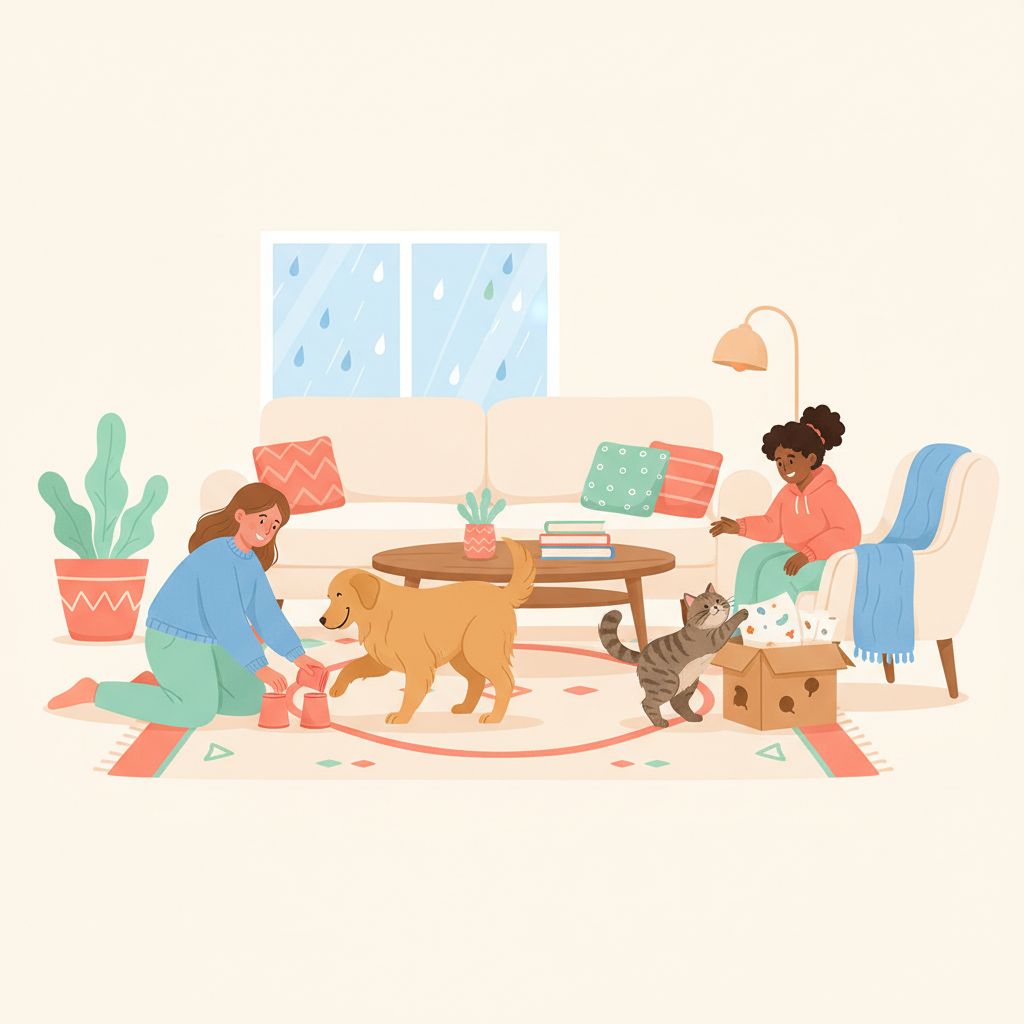
Rain streaks the window, your walk was a short, soggy lap around the block, and now your dog is circling the living room with a toy in their mouth and a hopeful look. You know that look. It says: is that it?
Every owner has asked the same question on a grey day: how do I tire out my dog when we can't go out properly? The good news is that a handful of indoor games for dogs can do the job, and none of them needs special equipment.
Below you'll find seven flat-friendly ideas, from nose work to puzzle meals to gentle movement. They suit small spaces, take minutes to set up, and work for rainy day dog activities in any European city.
Why Rainy Days Leave Dogs Restless (and Why a Game Can Help)
Grey sky over the city. A quick, soggy lap around the block. And by 8pm your dog is still ricocheting off the sofa like the walk never happened.
Here's the thing. Dogs don't just need to burn energy. They need to think and sniff, too. A short walk in the rain tires the legs but barely touches the nose or the brain. That's why ten minutes of searching for hidden treats or working out a simple puzzle can leave a dog surprisingly flat afterward. (Many owners notice it within the first try.)

So that's our goal here: indoor games that suit a typical city flat, need no special equipment, and take minutes to set up. They work for small dogs and big ones, puppies and seniors. One reminder, though. If your dog has health, mobility, or joint concerns, check any new activity with your vet first.
Before we get to the games, a little preparation will keep every session safe and fun.
Before You Start: A Quick Setup and Safety Checklist
A few minutes of prep makes every game safer. Run through this before you start:
- Clear the floor. Move slippery rugs and anything breakable. Your dog will skid, spin and crash into things.
- Put away small objects. If it's small enough to swallow, it's gone from the play area.
- Check the treats. Make sure they suit your dog, then count them as part of the daily food allowance. Those extras add up fast.
Keep sessions short and upbeat. Five to ten minutes is plenty. And stop while your dog is still keen, so they'll come back eager next time.
Supervise every game. That goes double for anything involving chewing or shredding. If a toy gets damaged, take it away.

Watch your dog, not just the game. Heavy panting, walking off or a sudden lack of interest all mean it's time to stop. End things kindly, with a calm pat or a last easy win.
One more thing. Puppies, seniors and dogs with health issues may need gentler versions of these games. Your vet is the right person to ask.
With the room ready, let's start with the sense your dog trusts most.
Nose Work: Indoor Games for Dogs That Use Their Best Sense
Your dog's nose has roughly 300 million scent receptors. Yours has about 6 million. So a rainy day stuck indoors isn't a problem. It's a chance to let that nose do what it was built for.
Here are three games that need nothing fancy.
Game 1: Find the Treats
- Show your dog a treat so they know what's on offer.
- Ask for a wait or a stay. A short one is fine.
- Hide the treat somewhere easy, like on the floor behind a chair leg.
- Release with a cheerful "find it!"
- Once they're winning every round, hide treats in tougher spots.
Game 2: The Scatter Hunt
Take a few pieces from your dog's daily kibble. Sprinkle them across a towel or a cleared corner of the room. Then let your dog sniff them out one by one. It slows down gulpers, and it turns a bowl of food into a puzzle.
Game 3: Cup Shuffle
Set out three cups and put one treat under one of them. Let your dog choose. If they nudge the right cup, they get the reward. It takes almost no space, so it suits a small flat perfectly.
Making it harder
Start easy. Quick wins build confidence, and confident dogs search longer. Then stretch the challenge. Add another room. Place treats higher, on a low shelf or the seat of a sofa. Change one thing at a time so your dog doesn't get frustrated.
Picture a drizzly morning stroll along a Zagreb park path. You come home with a damp, slightly restless dog. Spend ten minutes hiding treats through the hallway and kitchen, and watch the energy settle. That short hunt can tire a dog out more than you'd expect.
Once your dog has mastered the sniffing, it's time to give their problem-solving skills a turn.
Brain Games and Puzzle Feeding for Dogs Stuck Inside
Rainy day in Zagreb? Your dog's brain needs a workout as much as their legs do. These next three games offer simple mental stimulation for dogs, cost almost nothing and fit in a small flat.
Game 4: Homemade puzzle feeders. Grab a muffin tin, drop a treat in each cup, and cover them with tennis balls. Your dog has to nudge the balls aside to eat. Or roll kibble up inside a towel and let them unroll it with their nose. A cardboard box stuffed with crumpled paper and a few treats works too. Always supervise, and pull out anything your dog starts swallowing.
Game 5: Meal time as a game. Ditch the bowl. A snuffle mat, a lick mat or kibble scattered across a clean floor turns dinner into a hunt. A bowl is empty in two minutes. Foraging can stretch the same meal to fifteen or twenty, because your dog has to sniff, search and work for every bite. Plus, sniffing is tiring in the best way.
Game 6: Learn a new trick. Pick one simple cue. "Touch" (nose to your hand), "spin" or "go to your mat" all work nicely. Keep it friendly and reward-based, always.
- Show it. Lure the move with a treat and reward the moment it happens.
- Name it. Once your dog repeats the move reliably, add the word just before it.
- Fade the lure. Use an empty hand, then reward from your pocket.
Keep sessions to three or five minutes. Stop while your dog still wants more.
If something goes wrong:
- Your dog gives up. Make it easier. Fewer balls, looser towel, more visible treats.
- Your dog gets overexcited. Slow down and switch to calmer, softer treats.
- Your dog ignores the treats. Try a different food, or try again when the flat is quieter.
Every dog learns at their own pace, so go with whatever your dog finds fun.
Of course, some dogs also need to move their bodies, and even a narrow hallway can help with that.
Gentle Movement Games for Small Flats
Burning off physical energy doesn't require a garden. These dog games for small flats use the space you already have.
Game 7: Hallway Fetch or Soft Tug. A clear corridor makes a surprisingly good playground. Grab a soft toy (nothing hard that could skid or bounce into furniture) and toss it a few meters down the hall. Or offer one end for a gentle tug. Either way, teach a "drop it" or "give" cue early. Trade the toy for a treat, then immediately start the game again. Your dog learns that giving it up doesn't end the fun, so the game stays friendly.
The indoor obstacle path. You don't need special gear. Line up a few cushions to step over. Balance a broom handle on two stacked books so your dog can walk under or around it. For confident dogs, drape a blanket over two chairs to make a tunnel. Keep every obstacle low and let your dog set the pace.
Rules for safe indoor play:
- Skip slippery floors. Parquet and tile are tough on paws, so play on a rug or carpeted stretch.
- Avoid hard jumping and sharp turns. Slow, steady movement protects joints.
- Keep intensity moderate, especially for puppies, seniors and dogs with joint concerns. If you're unsure what's safe for your dog, ask your vet.
Sharing the flat with a cat? Give your cat a safe high spot or a separate room during dog games. A shelf or cat tree works well. And keep the cat's quiet corners strictly off limits, so your cat always has somewhere to retreat.
Finally, end every energetic game with something calm. A lick mat works beautifully. The slow licking helps your dog settle, and you both get a breather.
Now that you have seven games to choose from, here's how to stitch them into a day.
Build a Simple Rainy-Day Routine (and When to Check With Your Vet)
Here's a rainy-day plan you can copy and tweak, built around simple dog enrichment at home:
- Short wet walk. Let your dog sniff as much as they like. Sniffing counts as real work.
- Nose game. Scatter a few treats around the living room.
- Puzzle meal. Serve breakfast or dinner in a snuffle mat or food toy.
- Quick trick practice. Five minutes of "spin" or "paw" is plenty.
- Calm settle time. Lights low, chew ready, blanket close.
A quiet dog isn't the only sign of a good day. You're aiming for content and relaxed, not exhausted. A dog who flops down with a soft body and a sigh has had exactly what they needed.
But if your dog seems unusually restless, low on energy, uncomfortable or just very different from normal, call your vet. More games won't fix that.
Pick One Game and Try It Tonight
Learning how to tire out a dog indoors doesn't mean doing all seven games at once. Choose just one, try it tonight, and notice how your dog responds. Then repeat whatever they love.
To make the next grey day easier, build a small rainy-day kit and keep it in one drawer: a towel, a muffin tin, a lick mat and a few treats. When the clouds roll in, everything is ready in seconds.
Jot a tiny "what worked" note on your phone (it'll save you guessing next time). And if anything about your dog's health or behaviour worries you, see your vet. When the clouds clear, check local signage and current rules before you head back out.
Want Pethood on your block?
Join the waitlist. One email to confirm, one on launch day, nothing else.
More from the journal.
 Behaviour
 Dogs and Children: Safe, Calm Daily Routines at Home
Practical steps for keeping dogs and children safe at home: a safe dog space, body language lessons for kids, calm daily routines and clear supervision rules for families.
 Health & vet
 Dog and Cat Grooming at Home: A Simple Starter Routine
A simple starter routine for grooming your dog or cat at home: brushing, nails, ears and paw care for city pets, with short sessions, calm habits and clear signs it's time to call your vet.
 Training
 Puppy Socialisation Checklist for City Life
A practical, tickable puppy socialisation checklist for city life: sounds, surfaces, people and traffic, with a one-week plan to build a calm, confident urban dog.