Holiday Pet Care Options: Kennel, Sitter or a Friend?
Kennel, pet sitter or a friend? Compare your holiday pet care options, ask the right questions and build a handover plan so you can travel knowing your dog or cat is happy.
The suitcase is half packed, the flights are booked, and your dog is watching you from the hallway with that look that says they know something is up. Then it hits you: you haven't decided who will look after them. Sorting out your holiday pet care options is one of those jobs that quietly nags at every pet owner, long after the fun parts of the trip are planned.
The good news is that this decision doesn't have to be stressful. With a calm, clear way to compare kennels, pet sitters and friends, you can choose something that suits your animal and leaves you feeling good about going away.
Let's start with the part most people get wrong: the timing.
Why Your Holiday Pet Care Plan Starts Earlier Than You Think
The flights are booked. The suitcase is half packed. And you still have no idea who's feeding the dog or cat while you're gone.
By the end of this guide, you'll know the three main holiday pet care options, how they differ, and how to pick the right one for your own animal. Here's the guiding idea: there's no single best option. There's only the best fit for your pet's temperament, age, health and routine.

So start looking early. Good carers and kennels fill up fast around school holidays and the summer months, and the best ones often book out long before you've even chosen your dates.
Once you've given yourself enough time, the next step is understanding what each choice actually involves.
The Three Main Holiday Pet Care Options Compared
You've got three realistic choices when you leave town. Each one works well for some pets and badly for others. So it helps to know what you're actually signing your animal up for.
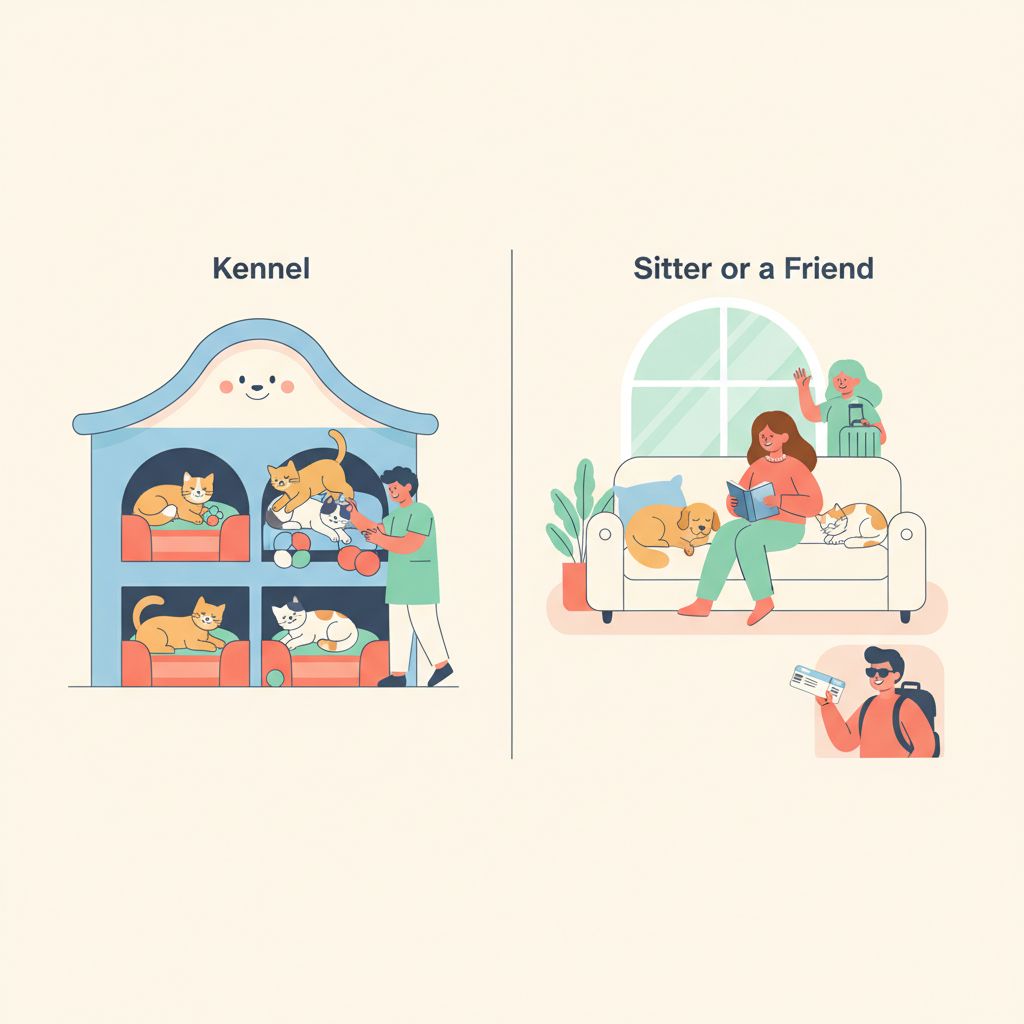
Kennels or boarding. Your dog stays at a facility with other animals. That suits sociable dogs who cope with noise and keep to a schedule. But a shy, elderly or anxious dog may find it stressful. And the setup varies a lot from place to place, so visit first and look at the space yourself.
Pet sitters. This covers two things. Someone might visit your home once or twice a day (common for cats). Or they might stay in your home, or host your dog in theirs. Either way, the routine stays closer to normal and the arrangement is usually more flexible. The catch? It depends heavily on the individual person.

Friends, family or neighbours. They're familiar and often cheap. But be honest with yourself. Do they have the time, the skills and the nerve to handle an emergency, a runaway dog or a cat who refuses to eat? Goodwill doesn't replace experience.
If you're weighing pet sitter vs kennel, here's how the three compare:
- Routine: Kennels follow their own schedule. Sitters and friends can mirror yours.
- Social contact: Kennels offer plenty, sitters offer one-on-one attention, and friends vary.
- Supervision: Kennels have staff on site. Visiting sitters and friends leave gaps between visits. Live-in sitters close most of them.
- Flexibility: Sitters and friends adapt easily. Kennels work to fixed drop-off and pick-up times.
- Dogs vs. cats: Kennels and hosted stays suit sociable dogs. Home visits suit cats best.
As a rule of thumb, cats do better in their own territory, which makes leaving a cat at home while on holiday (with someone calling in) a popular choice. Many dogs can adapt to a change of place if they're sociable and well prepared. That's a general pattern, not a guarantee. You know your animal best.
Knowing the options is only half the job, though, so let's match them to your pet.
How to Choose the Right Holiday Pet Care Option for Your Pet
When you're choosing pet care for holiday, start with your pet, not the options. Six quick questions will point you in the right direction:
- Is your pet sociable or nervous around new people and places?
- Do they have a health condition or take regular medication?
- Are they young, adult or senior?
- Are they used to being left alone for hours?
- Are they an escape artist?
- Does your cat go outdoors?
Now see how those answers play out.
The confident young dog. A friendly two-year-old who loves everyone will probably thrive in a boarding kennel or a sitter's home. New dogs mean new games. Done.
The elderly cat on a fixed routine. She eats at 7 a.m. and 6 p.m., sleeps in one spot, and sulks if the furniture moves. Home visits or a sitter staying in your flat usually suit her best, because nothing about her world changes. Boarding would turn her routine upside down.
The nervous rescue dog. New smells, noises and faces can overwhelm him. A familiar sitter who stays in your home, or one he's already met a few times, is the gentler choice. Plus, if he bolts at the first open door, you'll want someone who knows to handle it carefully.
Then weigh the practical side. A three-day trip makes drop-in visits workable. Two weeks might call for a live-in sitter or boarding. If you live in a Zagreb flat with a trusted neighbour or friend close by, you have more options than someone whose nearest carer faces a long commute. Travel time matters, and so does the cost.
If your pet has a health condition, needs medication or is elderly, talk to your vet before you book. They can advise what level of care is appropriate.
Finally, trust your own read. If your pet hides, trembles or refuses food in unfamiliar places, that's useful information. Believe it.
Once you have a front-runner or two, it's time to put the people (or places) behind them to the test.
Questions to Ask Before You Hand Over Your Pet
You wouldn't hand your house keys to a stranger without asking a few things first. Your pet deserves the same care. If you've ever wondered who looks after my dog when I travel, and how to be sure they're up to it, put these questions to any kennel or sitter before you commit:
- What does a typical day look like? Ask about walks, feeding times, play, and quiet time.
- How many animals do you look after at once?
- What happens if my pet is unwell or escapes?
- How will you keep me updated? Photos, messages, a daily call?
- Who covers if you're ill? A solid backup person matters more than most owners realize.
Then ask for a meet and greet. Better still, book a short trial visit or a single night. You'll see how your dog or cat reacts to the carer, and how the carer reads your pet's body language. (Cats especially tell you a lot by how quickly they hide, or don't.)
Sort out vaccinations and parasite protection early. Requirements differ between carers, and some treatments need to be given weeks before a stay. Talk to your vet about what your pet needs and when. And check the carer's own terms, because they may ask for more than you expect.
Ask about insurance, too. Does the carer have cover? Is there a written agreement that spells out fees, care routines, and what happens in an emergency? Rules vary by country and city, so check current local requirements and read the carer's terms before you sign anything.
Finally, listen for red flags. Vague answers are the first one. A carer who won't let you visit the space is another. No clear emergency plan should worry you, and so should a house or facility packed with more animals than one person could realistically manage. If something feels off, trust that feeling. Walk away.
With your carer chosen, the last piece is making the handover as smooth as possible.
Your Pre-Holiday Handover Checklist
Good handovers start on paper. Write a care sheet your sitter can follow without guessing. Include feeding amounts and times, your walking routine, favourite toys, and the little habits that make your pet them. Add house rules too (no sofa, no table scraps). And flag anything that frightens them, like fireworks or thunder, so nobody's caught off guard.
Next, sort the contact details. Give your carer your phone number and travel dates, plus a trusted backup person who can step in. Add your vet's details and a clear note on any health needs they must know about.
Then check identification and safety:
- Confirm your pet's microchip details are up to date.
- Make sure the collar tag is readable and the fastening is secure.
- Consider a well-fitted harness for nervous dogs, since it's harder to slip out of.
- Share a recent, clear photo in case your pet goes missing.
Now pack supplies. Bring enough food for the full trip plus a few extra days. Include any prescribed items, used exactly as directed by your vet. Add clean bedding and one familiar item that smells like home, such as a worn T-shirt or a favourite blanket.
Finally, keep the handover calm. Make goodbyes short and relaxed, because long, emotional farewells can unsettle your pet. Avoid big changes to diet or routine right before you leave. And if you'd like peace of mind, ask for a photo update on the first day.
Choosing With Confidence and Enjoying Your Trip
The right choice among your holiday pet care options is the one that fits your pet's personality and needs, backed by solid preparation. Feeling a twinge of guilt? That's normal. A well-briefed carer is what lets you actually relax.
Here's your action plan for this week:
- Shortlist your top two options.
- Arrange a meet and greet or a trial visit or short stay.
- Write a clear care sheet covering food, routines, and vet details.
- Book early, especially before holidays.
Then start a conversation with your neighbours and other dog and cat owners nearby. Their honest, firsthand experiences often point you to reliable help faster than any search will, and swapping recommendations is a lovely way to build a local pet-care network. And before you travel, speak to your vet about any health or vaccination questions, so nothing is left to chance. Your pet will be in good hands, and you can enjoy the trip.
Want Pethood on your block?
Join the waitlist. One email to confirm, one on launch day, nothing else.
More from the journal.
 Behaviour
 Dogs and Children: Safe, Calm Daily Routines at Home
Practical steps for keeping dogs and children safe at home: a safe dog space, body language lessons for kids, calm daily routines and clear supervision rules for families.
 Health & vet
 Dog and Cat Grooming at Home: A Simple Starter Routine
A simple starter routine for grooming your dog or cat at home: brushing, nails, ears and paw care for city pets, with short sessions, calm habits and clear signs it's time to call your vet.
 Training
 Puppy Socialisation Checklist for City Life
A practical, tickable puppy socialisation checklist for city life: sounds, surfaces, people and traffic, with a one-week plan to build a calm, confident urban dog.