Walking Your Dog in the Dark: An Autumn Safety Guide
Clocks back, evenings dark: learn how to keep your dog's walks in the dark safe this autumn with reflective gear, lit routes, smarter routines and cat tips for city owners.
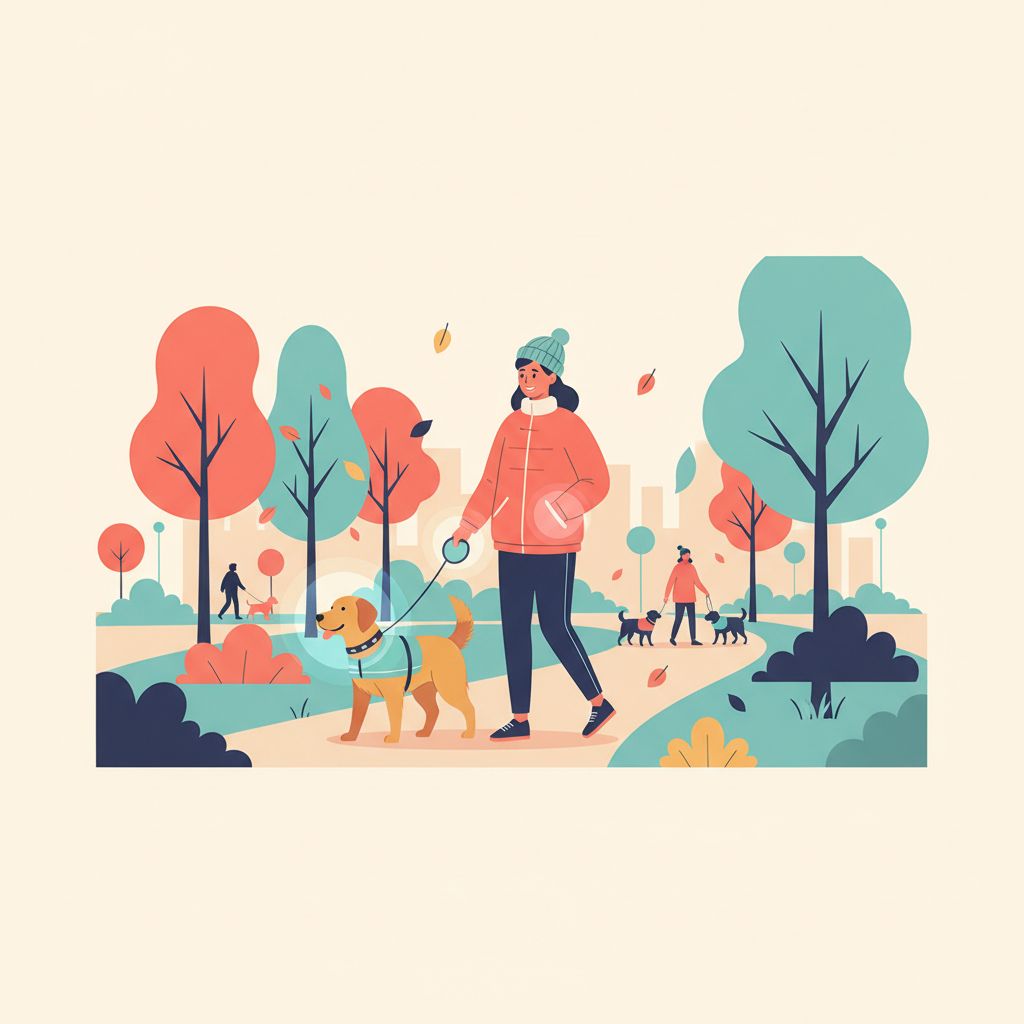
You leave work, grab the lead, and step outside, only to realise it is already dark at the hour you used to walk in daylight. The clocks go back on October 25, and suddenly the park you know by heart looks like a different place. Walking your dog in the dark in autumn feels nothing like the same stroll in July.
Paths blur into shadow. Familiar corners disappear. Your dog trots ahead, and for a moment you lose track of exactly where they are.
So here is a simple question: could a driver or cyclist see you and your dog from a distance right now? If you are not sure, you are in the right place. This is a practical, step-by-step guide, with no scare tactics, to help you and your pet enjoy the darker months with confidence.
Why autumn walks in the dark need a new plan
The clocks go back on October 25, and your usual 6pm walk changes overnight. Same park. Same bench. But now it's pitch dark, and the place feels different.
Autumn is the tricky season. Dusk arrives early. Wet leaves hide uneven paths. Shadows pool under the trees where your dog's dark coat vanishes completely. And you're tired after work, which makes it tempting to rush through the loop and call it done.

So this guide covers four things: being seen, choosing safer routes, adjusting your routine, and a short checklist to take with you. Cat owners, you're covered too. Darker evenings shift indoor and outdoor cat routines just as much.
Let's start with the single most important change you can make: being seen.
Be seen first: reflective dog gear and visibility for you
Here's the goal. Drivers, cyclists and e-scooter riders should spot you from a distance, and you should be able to spot your dog at all times. Everything else is just a way to get there.
For your dog, you've got several options. Reflective dog gear such as a high-visibility harness or coat. A high visibility dog lead. A light-up or flashing clip for the collar. An LED tag. No single item does it all, though. Reflective gear only works when a light hits it, and light-emitting gear can fail when the battery dies. A mix of both is far more reliable than betting on one.
Now you. A head torch or small hand torch lets you see the pavement and be seen. Add a reflective vest or armband, and wear a bright outer layer if you can. And keep your phone charged (it's your torch backup and your lifeline).

Here's a quick test. Take your dog out in the dark and check how they look in the beam of a torch or phone light from a distance. Dark and light-coloured dogs show up very differently, so test your actual setup rather than assuming it works.
One more thing. If your dog is dark-coated or has thick fur that hides a collar, don't rely on the collar alone. Put your visibility gear on the harness or body, where it can't disappear into the fluff.
Your quick checklist:
- Reflective item on your dog
- Light on your dog
- Light on you
- ID tag with a current phone number
- Spare poo bags
Once you're properly lit, the next question is where you actually walk.
Choosing safer routes for walking your dog in the dark
The shortest route isn't always the best one after dark. And your usual summer loop might be the worst. Pick paths where you can see the ground, see what's coming, and be seen. Well-lit pavements beat unlit park sections or riverside tracks every time, and familiar routes beat clever new ones.
Picture a Zagreb neighbourhood. You could take the lit street loop, a few extra minutes past shopfronts and streetlamps. Or you could cut through a dark stretch of a big green area to save time. The loop wins. You'll spot trouble sooner, and so will drivers spotting you.
Plenty of hazards hide in the dark:
- Wet leaves and slick paving
- Tree roots and uneven slabs
- Potholes and broken glass
- Fallen branches
- Puddles masking kerbs
Near roads, shorten the lead. Cross at lit crossings only, and walk your dog on the side away from the traffic. Stay sharp around cyclists and e-scooters. They're quiet, fast, and often barely lit.
Off-lead after dark? Be honest with yourself. If your dog's recall isn't rock solid, or the space isn't properly enclosed, keep the lead on. A long line gives freedom in open areas without gambling on a sprint into the dark. And always check signage and current local rules on leash requirements, since they vary by area and season.
Finally, look after yourself. If you're walking alone late, tell someone your route. Keep your phone within easy reach. And stay alert instead of scrolling (the screen wrecks your night vision anyway).
With the gear and the route sorted, the last piece is fitting all of this into your day.
Building an autumn dog walking routine for darker evenings
The clocks have changed, and your dog noticed before you did. Don't worry. A few small timetable tweaks keep both of you comfortable all through autumn and winter.
Start with the big walk. Move your longest, most active outing into daylight wherever you can. That might be a morning loop before work, a lunchtime break, or a midday visit from a dog walker or a friend (even one 45-minute daylight session does a lot of heavy lifting).
Then keep evenings short and calm. Think of the dark walk as a focused toilet-and-sniff outing, not an adventure. Once you're home, burn off the leftover energy indoors:
- A snuffle mat scattered with part of the dinner
- A puzzle feeder or stuffed toy
- A five-minute training session (sit, down, "find it")
Consistency matters more than you'd think. Dogs read the day through routine, so try to keep meal and walk times predictable even when the clock shifts. If you need to move things, nudge them by 10 to 15 minutes every couple of days. Gradual changes are easier for everyone.
Some dogs get jumpy or nervous in the dark. Watch their body language. Tucked tails, wide eyes, or stopping and refusing to move all say "I'm not sure about this." Give them time to settle, and don't rush them past whatever's worrying them. If the behaviour is new or it worries you, talk to your vet or a qualified behaviourist.
Puppies, older dogs, and dogs with health or vision concerns may need extra care in low light. This is general advice only, so ask your vet what suits your dog.
And finally, the weather. Wet, cold evenings can call for a dog coat, especially for short-haired or older dogs. Keep a towel by the door for a quick rub-down before they trot inside.
Dogs aren't the only ones whose habits shift when the light fades, so here's what changes for cats.
Cat safety in dark evenings: indoor routines and outdoor care
You won't walk your cat the way you walk your dog. But autumn darkness changes their routines too, and it pays to adjust with them.
If your cat goes outside, bring them in before dark or set a fixed evening time. Cats learn schedules fast. A reflective or light-up collar helps drivers spot them, but make sure it's a breakaway design so it releases if it snags. And check that the microchip details are current.
Be extra careful when you reverse or leave a driveway at night. Cats hunt for warmth, and a recently parked car is an appealing spot. Look around and under the vehicle first. It takes five seconds.
Harness-trained cats follow the same visibility rules as dogs. Add reflective gear and stick to lit routes. Avoid dark patches where a startled cat could bolt.
Indoor cats feel the longer evenings too. More darkness often means more energy at night, so plan a play session before dinner and another before bedtime. A tired cat settles better.
Finally, confirm that ID tags and microchip records are up to date. And if your cat's behaviour or health seems off, talk to your vet. Don't wait it out.
Now let's pull everything together into something you can use on your very next walk.
Your autumn dark walk checklist and next steps
Before you clip on the lead tonight, run through this quick list:
- Reflective or light-up gear on your dog
- A torch or head torch for you
- A fully charged phone
- ID tag and microchip details checked
- A lit, familiar route
- A short lead near roads
- Poo bags
- A towel waiting at home
Lead rules and shared-space etiquette differ from park to park and city to city. So check the signage and your current local rules wherever you walk.
And if your pet seems anxious, stiff, or unwell in the dark or cold, talk to your vet. Don't guess.
Dark evenings can still make good walks with the right prep. Try one change this week. Clip a light to the harness, maybe. Then pass the tip along to your neighbours and fellow dog owners.
Make one change this week
You don't need to overhaul everything at once. Pick one small step: add a light or reflective item to your dog, choose one well-lit route you'll stick with, or move one walk into daylight. Then use the checklist above on your next evening outing and see how much more relaxed the whole walk feels.
Remember to check signage and current local rules wherever you walk, and speak to your vet about any behaviour or health concerns. Then share what works with the dog and cat owners on your street. Autumn walks in the dark are far more enjoyable when everyone in the neighbourhood is seen, safe and prepared.
Want Pethood on your block?
Join the waitlist. One email to confirm, one on launch day, nothing else.
More from the journal.
 Behaviour
 Dogs and Children: Safe, Calm Daily Routines at Home
Practical steps for keeping dogs and children safe at home: a safe dog space, body language lessons for kids, calm daily routines and clear supervision rules for families.
 Health & vet
 Dog and Cat Grooming at Home: A Simple Starter Routine
A simple starter routine for grooming your dog or cat at home: brushing, nails, ears and paw care for city pets, with short sessions, calm habits and clear signs it's time to call your vet.
 Training
 Puppy Socialisation Checklist for City Life
A practical, tickable puppy socialisation checklist for city life: sounds, surfaces, people and traffic, with a one-week plan to build a calm, confident urban dog.