Dog Scared of Thunder? How to Help Them Through a Storm
Dog scared of thunder? Learn to read the signs, set up a safe space, stay calm during a storm and build confidence gently, with tips for city flats and when to call the vet.
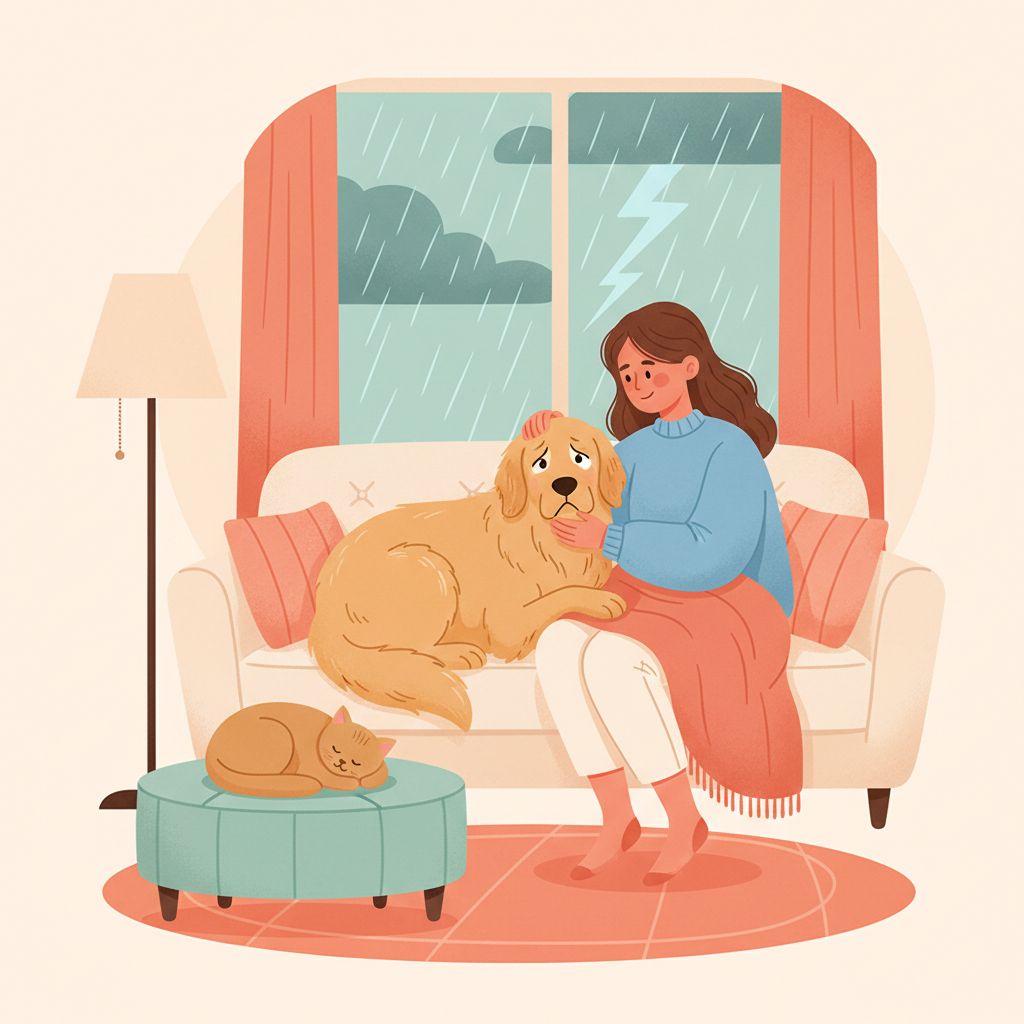
It's a warm summer evening in your Zagreb flat. Dinner is half cooked, the windows are open, and then you hear it: a low rumble somewhere over Medvednica. Your dog stops eating, presses against your leg and starts to tremble. If you have a dog scared of thunder, you know this scene well.
And you're probably asking yourself the quiet question every owner asks: am I making this better or worse?
The honest answer is that most of us are doing some things right and a few things that could be gentler. This guide walks you through calm, concrete steps, from understanding the fear to preparing your home, getting through the storm itself and building lasting confidence.
Why a dog scared of thunder is not being dramatic
Your dog isn't being dramatic. When she shakes, hides or paces while the sky rumbles, she's genuinely frightened. She's not misbehaving, and she's not angling for attention.
Here's what's easy to miss. A storm is far more than noise. There are sudden flashes, wind rattling the shutters, rain hammering the windows and shifts in air pressure you can't feel at all. Plus the smell of wet earth and ozone, which is unfamiliar and strange. Each one adds to the last, and together they can overwhelm a dog's senses.

So what does a dog afraid of storms actually look like? Watch for:
- Panting and drooling, even when it's cool
- Trembling or shaking
- Pacing and restlessness
- Hiding behind the sofa or squeezing into tight spaces
- Refusing food, even a favorite treat
- Clinging to you and following you from room to room
- Trying to bolt through a door or off a balcony
That last one is serious. A panicked dog will try to escape, so keep doors and balcony access closed.
Cats feel it too. A frightened cat often vanishes under the bed or into a wardrobe, with ears flattened against her head. If your cat disappears at the first rumble, she's not sulking. She's scared.
The good news? Noise fear in dogs can ease with patient, steady support. We can't promise a cure, but many animals grow noticeably calmer over time.
Understanding the fear is the first step; the next is making your home ready before the weather turns.
Before the storm: prepare your home and your routine
The best storm prep happens while the sky is still clear. Set things up early, and your dog walks into the afternoon already calmer.
Start with the storm safe space for dogs. Pick one quiet place, ideally an interior room, a crate with a blanket (only if your dog already likes it), or the space under a table. Then let your dog choose. Forcing them in turns a refuge into a trap.
Next, soften the world outside. Close the curtains or blinds, shut the windows, and switch on a TV, radio or steady background sound. It won't erase thunder, but it takes the sharp edges off. And if you live in a flat in a busy Zagreb neighbourhood, remember that thunder can echo between buildings. The inner room, away from the street, is often the calmest option.

Keep familiar comforts within reach:
- A worn T-shirt that smells like you
- A favourite blanket
- A chew or lick mat, for dogs who are still willing to eat
Timing matters too. If a storm is forecast, do the toilet walk and exercise earlier in the day. Bring your dog in well before the first rumble, not during it.
Finally, run the safety basics, because frightened dogs bolt. Check these before the clouds roll in:
- Tags are legible
- Microchip details are up to date
- The harness fits properly (a loose one is easy to slip out of in a panic)
- Balcony doors and gates are secured
Ten minutes of checking now can save you hours of searching later.
During the storm: how to calm a dog during a thunderstorm
Once the first rumble arrives, your preparation pays off, and what you do next matters just as much.
Your job during the storm is simple. Be calm. Speak in a low, even voice, stay nearby, and let your dog decide where to be. If they press against your leg, great. If they wedge themselves behind the sofa, that's fine too. Hiding is a coping strategy, not a problem to fix.
You've probably heard that comforting a scared dog "rewards" the fear. It doesn't. Fear isn't a behavior you can reinforce with a kind word and a hand on the back. Gentle reassurance is fine. Just skip the over-the-top fussing, the high-pitched "it's okay, it's okay, it's okay!" That tone feels like an emergency to them.
If your dog seems receptive, offer a gentle distraction. Scatter a few treats on the floor, set up a simple sniff game indoors, or hand over a slow chew. But if they refuse, drop it. Pushing makes things worse.
Here's your quick checklist for how to calm a dog during a thunderstorm:
- Do keep them indoors and keep doors and windows closed
- Do stay with them if you can
- Don't scold, even if they've chewed something or had an accident
- Don't force them out of their hiding spot
- Don't leave them alone outside
- Don't tie them up
Products marketed for storm anxiety do exist. But don't try them at random. Talk to your vet first, because what suits one dog may not suit another.
So what does this look like in real life? A thunderstorm rolls in on a Tuesday evening while you're cooking. Pause dinner. Turn the lights on, pull the blinds down, and put some sound on (a podcast works as well as music). Then settle onto the floor with a blanket and let your dog join you. The food can wait. They can't.
Getting through one storm is a win, but the real progress comes from what you do on the quiet days in between.
Building long-term confidence: gentle noise desensitisation
Here's the idea in plain terms. Right now, thunder predicts something awful for your dog. Desensitisation teaches the sound to predict something good instead. You play a recording of a storm at a volume so low your dog barely notices it, then pair it with food, play, or calm company. Over time, the noise loses its power.
The process is simple. It just isn't fast.
- Start so quietly that your dog hardly reacts. If you can barely hear it yourself, that's about right.
- Reward relaxed behaviour. Treats, a favourite chew, a gentle game.
- Keep sessions short, a few minutes at most.
- Raise the volume only a notch, and only after many sessions across weeks.
- Stop at once if you see panting, pacing, lip-licking, or hiding. Drop back to an easier level next time.
Patience is the whole game. Rush it and you can make the fear worse, because the dog learns the recording is just another threat. Slow and boring is the goal. If your sessions feel dull, you're doing it right.
Daily life matters too. A predictable routine, regular exercise, and enrichment all lower your dog's baseline stress and ease dog anxiety during storms. Sniff walks are brilliant for this, and a quiet loop through one of Zagreb's parks works nicely (the scenery's a bonus, the sniffing is the point). Calm, easy outings build confidence without asking too much of your dog.
Plus, keep a short storm diary. Jot down the date, what your dog did, and what helped. Patterns show up fast, and the notes are easy to hand over to a vet or trainer.
And if progress stalls, don't push harder. Ask a qualified, reward-based behaviour professional for help. They can adjust the plan to your dog.
Sometimes, though, a home plan isn't enough on its own, and knowing when to bring in your vet is part of caring well.
When to call your vet
Some noise fear fades with time and patience. Some doesn't. Your vet is the right person to check for pain or other health issues that can quietly make a dog's fear worse, so a visit is worth it even when you're unsure.
Book an appointment if you notice any of these:
- Fear that gets stronger each season
- Panic that leads to injury or destruction
- Not eating or drinking
- Extreme drooling or panting
- House soiling that's out of character
- Fear that has spread to other sounds
Bring your storm diary. Add any notes you've jotted down, plus short phone videos of the behaviour (thirty seconds is plenty). Your vet can't watch your dog during a thunderstorm, so this is the next best thing.
And here's the part owners often need to hear. Asking for help doesn't mean you've failed. It means you're paying attention. Your vet can talk through safe, suitable support options for your individual dog, and no two dogs need exactly the same plan.
The same approach applies to fireworks and other loud city noise. If you plan to be outdoors during celebrations, check local rules and signage first.
A calm plan you can start today
Here's your quick recap:
- Spot the early signs
- Create a safe spot
- Prepare ahead
- Stay calm yourself
- Skip the scolding
- Build confidence slowly
- Call the vet when needed
Now make it yours. This week, before the next forecast pops up, set up your dog's safe spot, check their tags and microchip details, and write down a simple three-step storm plan. Keep it short enough to remember when thunder hits. Stick it on the fridge.
If your dog's fear is intense or getting worse, book a chat with your vet. And if something has worked well for your own nervous pet, share it with a friend who's going through the same thing. Storms will come to Zagreb, and your dog will feel every one. But you don't have to face them alone. Together, one rumble at a time, you'll get through.
Want Pethood on your block?
Join the waitlist. One email to confirm, one on launch day, nothing else.
More from the journal.
 Behaviour
 Dogs and Children: Safe, Calm Daily Routines at Home
Practical steps for keeping dogs and children safe at home: a safe dog space, body language lessons for kids, calm daily routines and clear supervision rules for families.
 Health & vet
 Dog and Cat Grooming at Home: A Simple Starter Routine
A simple starter routine for grooming your dog or cat at home: brushing, nails, ears and paw care for city pets, with short sessions, calm habits and clear signs it's time to call your vet.
 Training
 Puppy Socialisation Checklist for City Life
A practical, tickable puppy socialisation checklist for city life: sounds, surfaces, people and traffic, with a one-week plan to build a calm, confident urban dog.