Dog Recall Training: Build a Reliable 'Come' for the Park
Turn 'maybe' into 'reliably' with dog recall training: pick your cue, climb a four-stage ladder, use a long line, and follow a park-day checklist for city walks.
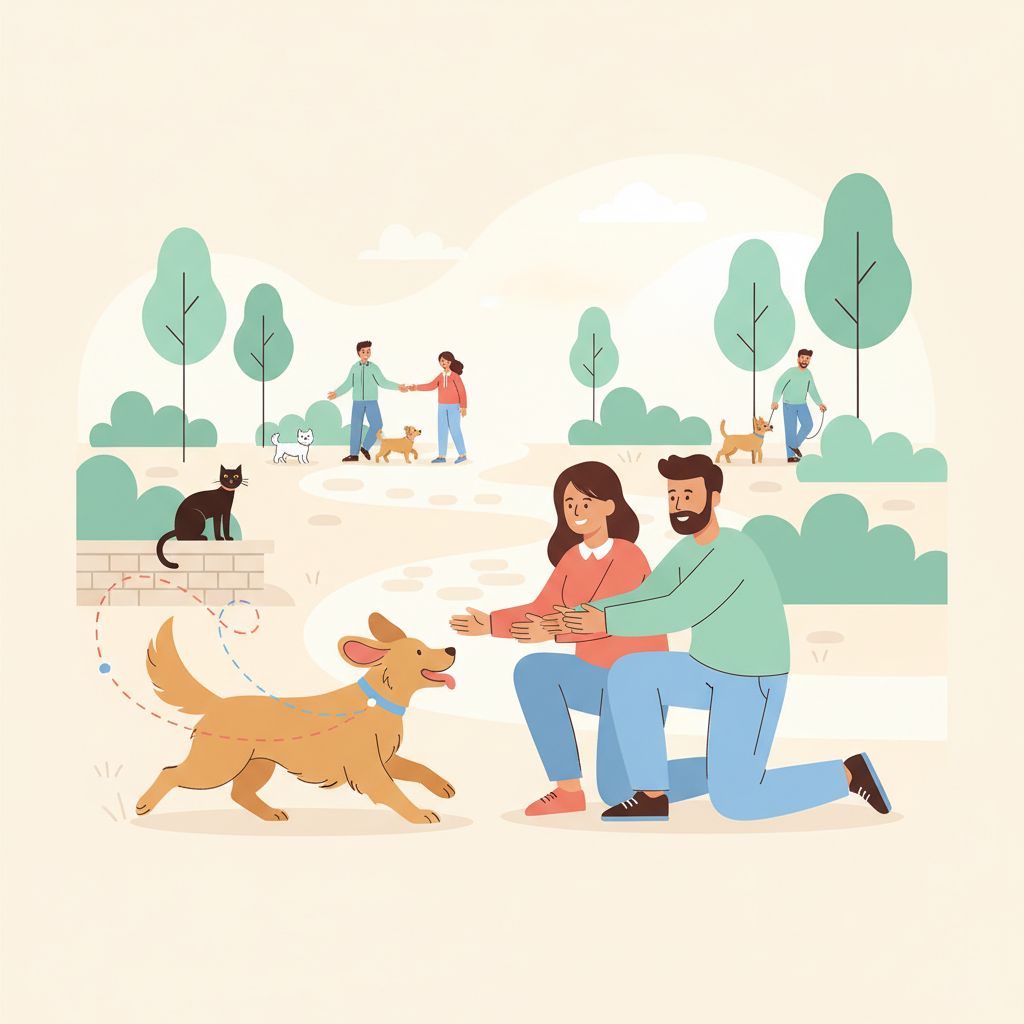
You're on a path in Zagreb's Maksimir, or maybe a green corner of Vienna, Prague or Ljubljana. Your dog is happily sniffing, then suddenly locks eyes on something across the grass. You call "come," and your voice simply vanishes into the air.
How does that moment feel? And would you trust your dog's response if the stakes were higher than a squirrel?
Good dog recall training is the way out of that uncertainty. This guide offers a practical, step-by-step route from "maybe" to "reliably," with no shortcuts, no tough-love tactics and no unrealistic guarantees. It's about building trust and freedom, together.
Why Dog Recall Training Matters More Than Any Other Cue
Picture the scene. You're walking along the Sava, your dog loose and happy. Then a squirrel bolts across the path. Or a jogger appears. Or another dog trots toward the road edge. You call "come." Nothing. Your dog's ears don't even twitch.
That moment is why recall outranks every other cue. It's a safety skill, because it pulls your dog away from traffic and trouble. But it's also a freedom skill. A dog who comes reliably earns more off-lead time, not less.

Be realistic, though. Recall gets built in small steps over weeks and months, and no dog is 100 percent perfect. So management (long lines, careful choice of location) stays part of your plan.
Here's what you'll get: a recall cue, a 4-stage training ladder, a park-day checklist and a troubleshooting list. And before any off-lead outing, check the signage and current local rules for that specific park.
Everything starts with the cue itself, so let's choose one and make it irresistible.
Step One: Choose Your Recall Cue and Make It Worth Running To
Pick one cue. A short, happy word like "Here!" or a two-note whistle works well. Then protect it. This recall cue for dogs is for recall only, never for scolding, never for "get over here, what did you do?" The moment it predicts something bad, your dog stops believing it.
The rule behind everything is simple: the cue means good things. Every single recall ends in a reward your dog genuinely loves. Not one they tolerate. One they'd cross a park for.
To teach your dog to come when called, start in the living room, where nothing competes with you. Say the cue once, in a bright voice. When your dog arrives, deliver a jackpot: three tiny treats, one after another. That small burst of generosity is what makes "Here!" feel like a lottery ticket.

Match the reward to your dog's own taste:
- Tiny, soft, smelly treats (they swallow fast, so the party keeps moving)
- A favourite toy that only appears on recalls
- A quick game of tug
- A release back to sniffing, which is gold for scent-driven dogs
One firm warning. Don't call your dog away from the fun and then do something unpleasant. Bath, nail trim, ear cleaning? Walk over and fetch them instead. Otherwise the cue turns into a trap.
Your starter checklist:
- One cue, nothing else
- One agreed wording for every family member
- Treats ready in a pouch, always
- Rewards that vary, so the cue stays exciting
Once the cue is loaded with good associations, it's time to put it to work in progressively harder places.
The Four-Stage Ladder: From Living Room to Park
Think of recall training as a ladder. You don't leap to the top. You climb one rung at a time, and you only move up when your dog is steady on the rung below.
- Home. Pick a quiet room and stand a few steps from your dog. Call once, reward when they arrive, repeat. Do 5 to 10 short repetitions and stop while your dog is still keen. Ending early feels odd, but it keeps the game fun.
- Garden, hallway or courtyard. Add mild distractions. Drop a toy on the floor or have a family member nearby. Deliver the cue once, in a calm voice. No repeating it, no pleading.
- Quiet park corner on a long line. Long line recall training begins here. Clip a lightweight training line (commonly 5 to 10 metres) to a harness and practise when the park is calm. Always reward arrivals, even the slow, wandering ones. A dog who arrives and gets paid will want to arrive again.
- Busier park with real distractions. Move here only after your dog has succeeded at the previous level repeatedly. And when things fall apart, drop back a step. That's not failure. That's the method working.
Here's the rule of thumb that saves most owners from frustration: raise only one thing at a time. Distance, distraction or duration. Never all three together. If you add a longer line and a jogger and a 20-minute session, you've changed everything at once and your dog can't tell what you're asking.
A quick safety note on long lines. Wear gloves, because a running line burns skin fast. Never wrap the line around your hand. And keep watching for tangles around your legs, trees and other people.
If you live in a city like Zagreb, timing matters. Choose quieter hours for early park sessions, such as early morning or mid-morning on weekdays. Stay clear of road edges, bike paths and gates while you train, since those are the spots where a loose moment could go wrong. Done patiently, this is how you build a reliable recall in the park and, eventually, comfortable off-lead walking in the city.
The same ladder works for adolescent dogs and for rescue dogs. You just climb it more slowly. Spend extra sessions on each rung, and let your dog set the pace.
Even on a well-built ladder, though, you will slip now and then, so here's how to handle the wobbles.
Fixing Common Recall Problems in the Park
Every dog stumbles at recall. It's part of the process, not a sign you've failed.
Your dog ignores the cue. Usually the distraction came too soon, the reward wasn't exciting enough, or you've said the cue so often it's turned into background noise. So go back a stage. Train somewhere quieter and bring out something truly special, like chicken or cheese.
Your dog comes close, then dodges the grab. Reward at your feet and practise touching the collar or harness gently while the treat is being eaten. Arriving should never mean getting trapped.
You keep repeating the cue. Say it once. Then make yourself worth running to. Crouch down, move away, use a happy voice.
Your dog fixates on other dogs or people. Train at a greater distance and keep the long line on. Teach an "attention on me" game before you ask for recall, so your dog already knows how to switch focus back to you.
You're getting frustrated. You'll hear it in your voice, and so will your dog. Stop the session. Ask for something easy, reward it, and finish there. Try again later.
Here's the reassurance you might need. Setbacks are normal. Adolescent dogs in particular often seem to forget everything they knew, sometimes overnight. It feels personal, but it isn't. Keep sessions short, keep rewards high, and the skills tend to return.
One last note. If your dog suddenly stops responding, or seems unwell, uncomfortable or unusually anxious, a check-up with your vet is a sensible step.
With the troubleshooting covered, here's a quick routine you can carry with you on every outing.
Your Park-Day Recall Checklist
Screenshot this one. Pin it to your phone's home screen. Run through it before every park trip until it becomes automatic.
Before leaving home
- Treat pouch loaded with small, high-value treats
- Long line and well-fitting harness packed
- Fresh water and waste bags
- A hungry dog (practice before a big meal, not after)
At the park entrance
- Check signage and current local rules on where off-lead is allowed
- Scan for hazards: roads, cyclists, other dogs
- Pick today's training level and stick to it
During the session
- Practice in short bursts spread through the walk
- Mix recalls with play and sniffing, so "come" isn't the end of every fun moment
- Quit while it's going well
Respect other park users
- Call your dog back early if you spot a nervous dog, a child, a jogger or anyone who clearly doesn't want a visit
- Keep the long line out of walkways
After the walk
- Note what worked and what didn't
- Set tomorrow's single goal
A checklist gets you through today's walk, but the real progress comes from what you do over the weeks ahead.
Keep Building: A Reliable Come Is a Habit, Not a Trick
Here's the whole recipe in three lines. Pick a special cue only you use. Pay with rewards your dog would race you for. Climb the difficulty ladder slowly, one rung at a time. That's it.
But recall isn't a trick you teach once and file away. It's a skill, and skills fade without practice. So keep rewarding some recalls even when your dog seems flawless.
Cat owners, a quick note. A rattle of treats or a consistent call can ease indoor-outdoor routines or harness walks. Every cat is different, so treat it as an invitation, not a promise.
Ready to start? Choose one action today: pick your cue, fill a treat pouch and do five easy repetitions at home before your next walk. Save the park-day checklist for your next outing, and share this post with a fellow dog owner who is struggling with "come."
Before you unclip the lead anywhere, check the park signage and current local rules. And if you have any health or behaviour concerns, book a chat with your vet.
The payoff? A dog who glances back at you on every walk, checking in just because. That quiet confidence is worth every treat.
Want Pethood on your block?
Join the waitlist. One email to confirm, one on launch day, nothing else.
More from the journal.
 Behaviour
 Dogs and Children: Safe, Calm Daily Routines at Home
Practical steps for keeping dogs and children safe at home: a safe dog space, body language lessons for kids, calm daily routines and clear supervision rules for families.
 Health & vet
 Dog and Cat Grooming at Home: A Simple Starter Routine
A simple starter routine for grooming your dog or cat at home: brushing, nails, ears and paw care for city pets, with short sessions, calm habits and clear signs it's time to call your vet.
 Training
 Puppy Socialisation Checklist for City Life
A practical, tickable puppy socialisation checklist for city life: sounds, surfaces, people and traffic, with a one-week plan to build a calm, confident urban dog.