Dog Park Etiquette: Read Play, Spot Tension, Know When to Go
Is it play or trouble? Learn to read dog body language, spot early tension, and know when to leave. A practical dog park etiquette guide for city owners in Zagreb and beyond.
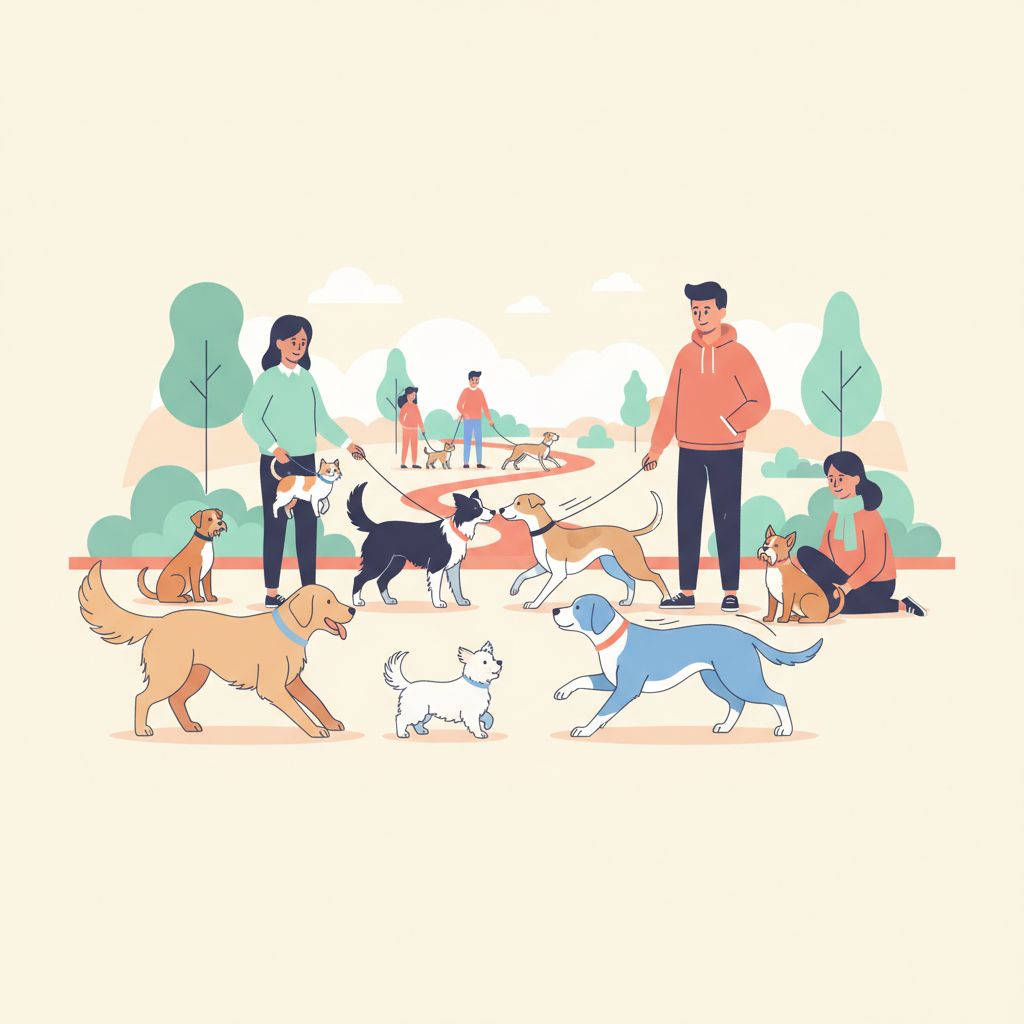
It's a warm evening, and the park is full of dogs. Your own has been happily sniffing the grass, but now they've gone quiet. They're pressing against your legs, tail low, eyes on a bigger dog trotting your way. Is this play, or is something going wrong?
Every owner has stood in that moment, and good dog park etiquette starts with being able to tell the difference. The answer is usually visible in the dogs' bodies, long before anything goes wrong.
This guide offers a simple way to read what you're seeing, and permission to leave when a visit feels off. You don't owe anyone an explanation for walking out of the gate.
Why Dog Park Etiquette Matters in a Busy City
It's 6:40 p.m. at a neighborhood park, and the light is going gold. A beagle zigzags through the grass. Two owners swap stories by the bench. Three more stare at their phones. And in the corner, a young terrier presses against the fence, ears flat, while a bigger dog circles closer.
Nobody meant any harm. But that's how city dog parks work. You're sharing a small patch of green with many unfamiliar dogs, and one distracted moment can turn a nice outing into a scary one. A few shared habits make visits safer and far more enjoyable for everyone.

This guide covers three skills: reading play, spotting tension, and knowing when to leave. Plus a short routine to run before you walk through the gate.
Cat owners, this applies to you too. Maybe you walk a harness-trained cat near a dog area, or a dog friend is visiting your home. Rules also differ from park to park, so always check the signage and current local regulations.
Those three skills start before you even set foot inside, so let's begin at the gate.
Before You Go In: A Simple Dog Park Etiquette Checklist
Stop at the gate. Seriously. Give it a full minute before you step through.
Count the dogs. Check the energy. Is one dog being chased by three others? Is someone's puppy cowering under a bench? If the mood already feels tense, come back later. A park that looks chaotic from the outside will feel worse once you're inside it.
Once you're happy with what you see, run through this checklist, which doubles as a handy set of dog park rules for beginners:

- Keep the lead on until you're fully through the gate and it's closed behind you.
- Collar with an ID tag. Always.
- Treats stay out of sight. Pockets or a sealed pouch, not waving in your hand.
- Water on hand, especially in summer.
- A reliable recall. If your dog won't come when called, they're not ready for off-lead time.
Pick up after your dog every single time, and carry spare bags (you'll end up handing one to someone who forgot theirs). Leave toys and food at home too. Both can spark guarding between dogs, and a friendly game of fetch can turn ugly fast when three dogs want the same ball.
Now for the honest part. Some dogs shouldn't be there. If yours is unvaccinated, unwell, or in season, skip the park. The same goes for a dog who struggles around other dogs. Quiet one-to-one walks are kinder to them, and fairer to everyone else. Not sure whether your dog is healthy enough or ready? Ask your vet. It's a five-minute conversation that can save you a lot of stress.
Finally, read the signage. Rules differ from park to park and city to city, so don't assume the one you know back home applies here.
With the basics sorted, the next skill is the one that answers our opening question: working out what you're actually watching.
Reading Play: What Healthy Dog Play Looks Like
Good play looks goofy. That's the first thing to know when learning how to read dog play. Dogs having fun move like they've forgotten how bones work, with loose, wiggly bodies, bouncy strides, and mouths that hang open in a relaxed grin.
Then there's the give and take. Healthy play is a conversation, not a monologue. One dog chases, then spins around and gets chased. Roles swap. Both dogs pause now and then, shake it off, and start again. The classic opener is the play bow, front legs down and rear end up, which basically says "everything I do next is a joke."
Size differences don't automatically spell trouble. Good players self-handicap. A big dog eases off, rolls onto its back, or lets the smaller dog "win" the wrestling match. If you see a Labrador flopping over for a terrier, relax. That's good manners.
Don't panic about noise, either. Growly, barky play can sound dramatic (some dogs are just theatrical). Watch the bodies instead, and watch whether both dogs keep coming back for more.
Not sure what you're seeing? Try the consent test. Calmly step in or call one dog away for a few seconds. If both dogs return to the game eagerly, they're enjoying it. If one stays away, that's your answer.
Signs of healthy play:
- Loose, wiggly bodies and bouncy movement
- Play bows and exaggerated, goofy motions
- Taking turns chasing and being chased
- Pauses, shake-offs, and role reversals
- Bigger dogs easing off or rolling over
- Both dogs returning after a brief break
Picture two dogs zooming around a park bench in Maksimir. One chases, then skids to a stop and bows. Suddenly the chaser becomes the chased. That's play at its best.
Of course, not every encounter looks like that, and the earlier you notice the difference, the easier everything becomes.
Spotting Tension Early: Signs a Dog Is Uncomfortable
Dogs rarely go from relaxed to fighting in one leap. They telegraph it. Dog park body language is your early-warning system, so you just have to know what you're looking for.
Watch for these early signs of tension between dogs:
- A stiff or frozen body, or a tail held rigid
- A hard stare that doesn't blink or break
- Lip licking and yawning (when nothing about the moment is sleepy or tasty)
- Turning away, a tucked tail, or hiding behind your legs
- Raised hackles along the neck and back
- Mounting, or relentless chasing that the other dog clearly wants to escape
Tension builds in stages. So the earlier you spot it, the easier it is to step in calmly. A dog that's freezing is far simpler to redirect than one that's already growling.
Know your trouble spots, too. In any city dog area, gates and entrances cause the most friction, along with narrow paths, benches where owners are handing out snacks, and favourite toys or sticks. Crowding plus something valuable is a recipe for a scuffle.
When you do step in, keep it low-drama:
- Call your dog away in a happy, upbeat voice.
- Move toward them calmly. Don't rush or shout.
- Never grab in the middle of a scuffle. That's how people get bitten.
- Give both dogs space to reset before they meet again.
If your dog is the bully, take a break and leash up for a minute. If they're the target, step between them and the other dog, then move away together. Don't force them to "work it out."
Then check in with the other owner. Try "Everyone okay?" rather than "Your dog started it." (Nobody relaxes when they feel accused.) A kind word keeps the park friendly for everyone, and that's the whole point.
Sometimes, though, a calm intervention isn't enough, and the best move is the simplest one: heading home.
Knowing When to Leave the Dog Park
Some visits need to end early. That's not a failure. It's good judgment, and your dog benefits from it. Knowing when to leave the dog park is as much a part of dog park etiquette as picking up after your pet.
Head for the gate if you see any of these:
- Your dog is hiding behind you or glued to your legs.
- Another dog keeps singling yours out, no matter how often you step in.
- The other owners are staring at their phones, not their dogs.
- Play has turned rough or one-sided, with one dog pinning or chasing while the other tries to escape.
- Your dog ignores recall because they're too wound up to listen.
- You simply feel uneasy. (Trust that. You know your dog better than anyone.)
Leaving early teaches your dog something valuable: you notice, and you care. Ending on a calm note beats pushing through until something goes wrong.
Keep the exit simple. Call your dog and reward them when they arrive. Clip on the lead away from the crowd, not in the middle of the action. Then walk out calmly. No scolding. Your dog didn't do anything wrong.
Once you're outside, take a slow, relaxed walk to help them settle. Later, jot down what set things off. Was it a certain dog, the crowd size, the time of day? That note makes next time easier.
And if stress, fear or aggression keeps coming up, don't keep forcing it. Talk to your vet or a qualified, reputable trainer. The dog park isn't compulsory.
Once leaving feels normal rather than awkward, the rest comes down to building a few steady habits.
Building Good Habits for Your Next Visit
Good habits don't take long to build. You already have the three skills:
- Watch before entering. Read the room from the gate.
- Read body language during play. Stiff, loud, or one-sided is a signal.
- Leave early when in doubt. Nobody ever regretted a quiet exit.
Now make them routine. Short, regular visits at quieter times beat one long session at the busiest hour. Early mornings and weekday afternoons tend to be calmer, though every dog and every neighbourhood differs. A park in Zagreb's Maksimir won't feel like a courtyard dog run in Vienna, and your dog won't react the same way as the one next door.
Plus, get to know the regulars. Familiar dogs and friendly owners make a shared space more predictable and a lot more welcoming.
So here's your small action. Next time you go, spend the first minute just watching. Then decide.
Your One-Minute Plan for the Next Visit
On your next trip, stop at the gate and watch for a full minute. Run a quick mental scan using the leave-now checklist: is your dog hiding, is one dog being singled out, is play turning rough, are the other owners distracted? If anything feels off, trust it and head home. There's always another day.
Share the checklist with a friend or neighbour who walks dogs. Good dog park etiquette spreads when more people know what to look for.
If you notice repeated stress or conflict, talk to your vet or a qualified trainer. And always check the signage and current local rules for any space you use.
Want Pethood on your block?
Join the waitlist. One email to confirm, one on launch day, nothing else.
More from the journal.
 Behaviour
 Dogs and Children: Safe, Calm Daily Routines at Home
Practical steps for keeping dogs and children safe at home: a safe dog space, body language lessons for kids, calm daily routines and clear supervision rules for families.
 Health & vet
 Dog and Cat Grooming at Home: A Simple Starter Routine
A simple starter routine for grooming your dog or cat at home: brushing, nails, ears and paw care for city pets, with short sessions, calm habits and clear signs it's time to call your vet.
 Training
 Puppy Socialisation Checklist for City Life
A practical, tickable puppy socialisation checklist for city life: sounds, surfaces, people and traffic, with a one-week plan to build a calm, confident urban dog.