Cats in a Heatwave: Keeping an Indoor Cat Cool in a Hot Flat
Is your top-floor flat turning into an oven? Practical, room by room steps to keep an indoor cat cool in a heatwave, from shutters and water bowls to heatstroke warning signs.
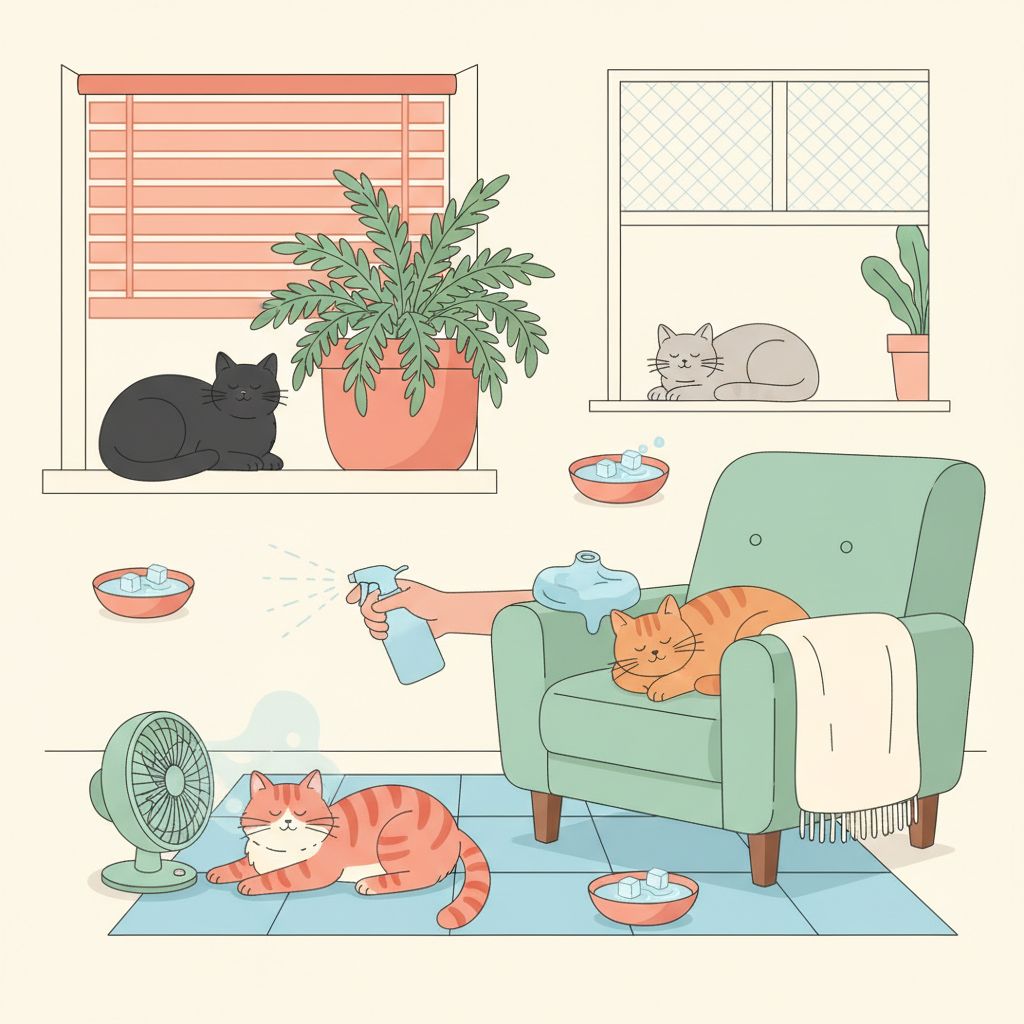
It's a still July afternoon in a top-floor flat in Trešnjevka or Maksimir. The air hangs heavy behind half-closed shutters, and your cat lies stretched out on the cool bathroom tiles, barely flicking an ear. That's the moment many owners realise they need a proper heatwave plan for their cat.
If you feel the heat in your flat, how must your cat feel? You can step out to a shady terrace or a breezy park. Your cat can't go anywhere else.
For an indoor cat, the flat is the whole climate. Every degree inside is a degree they live with, day and night. Below you'll find practical, step by step ways to keep your indoor cat cool, covering cooler rooms, water and food routines, calm daytimes and the warning signs that mean it's time to call the vet.
(One quick note. This is general guidance, and your own vet is the right person for anything health related.)
Before the practical steps, it helps to understand why heat is so hard on cats in the first place.
How cats cope with heat in a city flat
Cats don't handle heat the way you do. You sweat all over your body to cool down, but your cat can only sweat a little through its paw pads. So it loses heat far less efficiently.
Instead, cats rely on behaviour. They hunt out cool spots, rest more and groom often, because saliva drying on their fur gives a small cooling effect.

City flats make that job harder. Top floors sit right under the roof and soak up sun all day. South- and west-facing windows let in strong afternoon light.
Concrete walls store warmth, then keep releasing it long after sunset, so rooms stay hot well into the night. Plus, many flats get very little cross breeze.
Some cats need extra care during a heatwave:
- Flat-faced breeds like Persians and Exotic Shorthairs
- Kittens
- Older cats
- Overweight cats
- Long-haired cats
- Cats with existing health conditions
If your cat fits any of these groups, ask your vet about its specific needs. They know its history best.
Plenty of heatwave behaviour is completely normal, though. Expect more sleeping. Your cat may stretch out on tiles or floors, or curl up in the bath or sink.
It might eat a little less too. That's simply a cat in hot weather managing the heat sensibly (and honestly, it's a smart move).
With that in mind, let's turn the flat itself into a cooler place, starting with a simple heatwave routine you can follow every day.
Keeping a flat cool for pets: a room by room checklist
Start early. Throw the windows wide open at dawn, when the air outside is at its coolest, and let it flush through the flat.
Then, by mid-morning, close everything on the sunny side: windows, shutters, blinds and curtains. Reopen once the evening cools down.
But watch your cat while you do it. Open windows mean moths, and moths mean a cat leaning out over a fourth-floor drop. Only open windows fitted with sturdy screens, or ones your cat simply can't reach.

Keep balcony doors shut unless the balcony is fully cat-proofed. And never leave a window tilted. That narrow gap looks like an invitation, and a cat that climbs into it can get trapped and badly hurt.
Next, pick one cool room. A bathroom, hallway or north-facing bedroom usually works best. Leave the door open and clear the floor so your cat can stretch out on the tiles (they'll find them fast).
Fans and air conditioning help, but aim the airflow across the room rather than straight at your pet. Your cat should always be able to move away from the breeze.
Hide or cover cables, too. A bored cat stuck indoors all day may decide they're worth chewing.
Low-tech options work surprisingly well. Try a damp tea towel on the floor, a ceramic tile, or a frozen water bottle wrapped in cloth near a favourite resting spot.
Gel cooling mats are fine, but supervise at first in case your cat starts chewing.
Finally, keep up with brushing. Removing loose undercoat helps air reach the skin. Don't shave your cat without asking your vet first.
Daily heat checklist
- Shutters closed by mid-morning
- Windows secured
- Cool room ready
- Water bowls refilled
- Cables tidied
A cool room only works if your cat stays well hydrated, so water and food come next.
Water, food and cat hydration in summer
Water comes first. Place several bowls in different rooms around your home, and make sure one sits in the cool room you've set up. Keep them away from sunny windowsills (nobody wants a bowl of warm water).
Many cats prefer wide, shallow bowls that don't brush their whiskers. And they often drink more when the water sits away from their food.
Refresh every bowl at least twice a day. Dropping in a couple of ice cubes is fine. If your cat loves pawing at a dripping tap, try a pet water fountain, since some cats simply prefer moving water.
Food helps with hydration too. Wet food adds moisture to your cat's diet without any extra effort. You can also ask your vet whether adding a little water to your cat's food is a good idea for your particular cat.
But heat spoils food fast. Don't leave wet food sitting out for long, and clear away anything your cat walks away from. Serve meals in the cooler morning and evening hours instead of during the midday heat.
Don't worry if your cat eats a little less during a heatwave. That's common. But a cat that stops eating or drinking needs a call to the vet.
Once cooling and hydration are covered, the next challenge is filling long, hot afternoons without letting your cat overheat.
Keeping your cat calm and content through the hottest hours
Cats are smart about heat. Most will nap through the worst of it if you let them.
So shift play to early morning and late evening, and keep sessions short (five to ten minutes is plenty). Stop as soon as your cat starts breathing harder or loses interest.
Cool enrichment helps fill those long afternoons:
- A lick of a frozen treat made from cat-safe food. Plain wet food frozen in an ice cube tray works well.
- Cardboard boxes set up in the coolest room
- A shallow tray with a little water for paw play, if your cat enjoys it
Give your cat hiding and resting spots off the floor and out of direct sun. Move beds and cat trees away from windows during the day.
Heading out? Close the shutters, open interior doors to the cool room, and fill extra water bowls. Then check that no closed door can trap your cat in a sunny room.
Picture a Trnje flat with a dog and a cat. The dog goes out for walks at dawn and late evening, and the cat gets its play at those same quiet times. Both share the cool back bedroom, each with its own water bowl.
Going away during a heatwave? Power cuts happen, and fans stop without warning. Arrange for a trusted neighbour or pet sitter to check in daily, and make sure they know exactly where the cool room and water bowls are.
Even with the best routine, it pays to know when heat has turned into a medical problem.
When to call your vet: signs of heatstroke in cats
Heatstroke is an emergency. Full stop. Only a vet can properly assess your cat, so don't wait to see if things improve on their own.
Watch for these warning signs:
- Open-mouth breathing or panting
- Heavy drooling
- Restlessness or confusion
- Wobbliness or weakness
- Vomiting or diarrhoea
- Very red or unusually pale gums
- Collapse
Spot any of these? Phone your vet straight away, and while you call, move your cat to the coolest room in your home. Offer water, but don't force it.
Dampen the fur with cool (not ice-cold) water. Skip wrapping your cat in a wet towel, though, because it traps heat instead of letting it escape.
Then follow your vet's instructions exactly, even if your cat seems to bounce back. Things can change fast.
That's why it's worth saving your vet's number and an out-of-hours option in your phone before summer starts. You don't want to be searching for numbers in a panic.
Slower changes deserve a call too. Think of a cat who hasn't eaten or drunk for a day, or tiredness that just won't lift. And if you're worried about an older or flat-faced cat in the heat, trust that instinct and ring.
The good news is that most hot days never get that far, as long as a few simple habits are in place.
Your cat's heatwave plan, ready before the next hot spell
Keeping a cat comfortable through a heatwave isn't about expensive gear. It comes down to small habits: shutters closed early, one cool room, plenty of fresh water, play at the edges of the day and fast action if warning signs appear.
So do three things today. Run through the room by room checklist above before the next hot spell, not during it. Save your vet's number and an out-of-hours option in your phone. And agree with a trusted neighbour to check on each other's pets if anyone is away when the temperature climbs.
Then share this heatwave checklist with other cat and dog owners in your building or street. When the whole neighbourhood is ready, the next time your cat stretches out on the bathroom tiles, it won't be escaping the heat. It'll just be comfortable.
Want Pethood on your block?
Join the waitlist. One email to confirm, one on launch day, nothing else.
More from the journal.
 Behaviour
 Dogs and Children: Safe, Calm Daily Routines at Home
Practical steps for keeping dogs and children safe at home: a safe dog space, body language lessons for kids, calm daily routines and clear supervision rules for families.
 Health & vet
 Dog and Cat Grooming at Home: A Simple Starter Routine
A simple starter routine for grooming your dog or cat at home: brushing, nails, ears and paw care for city pets, with short sessions, calm habits and clear signs it's time to call your vet.
 Training
 Puppy Socialisation Checklist for City Life
A practical, tickable puppy socialisation checklist for city life: sounds, surfaces, people and traffic, with a one-week plan to build a calm, confident urban dog.