Car Journeys With Your Dog: Comfort, Safety and Breaks
Make car journeys with your dog calmer and safer: how to restrain your dog properly, build comfort step by step, plan breaks, and pack a checklist the night before.
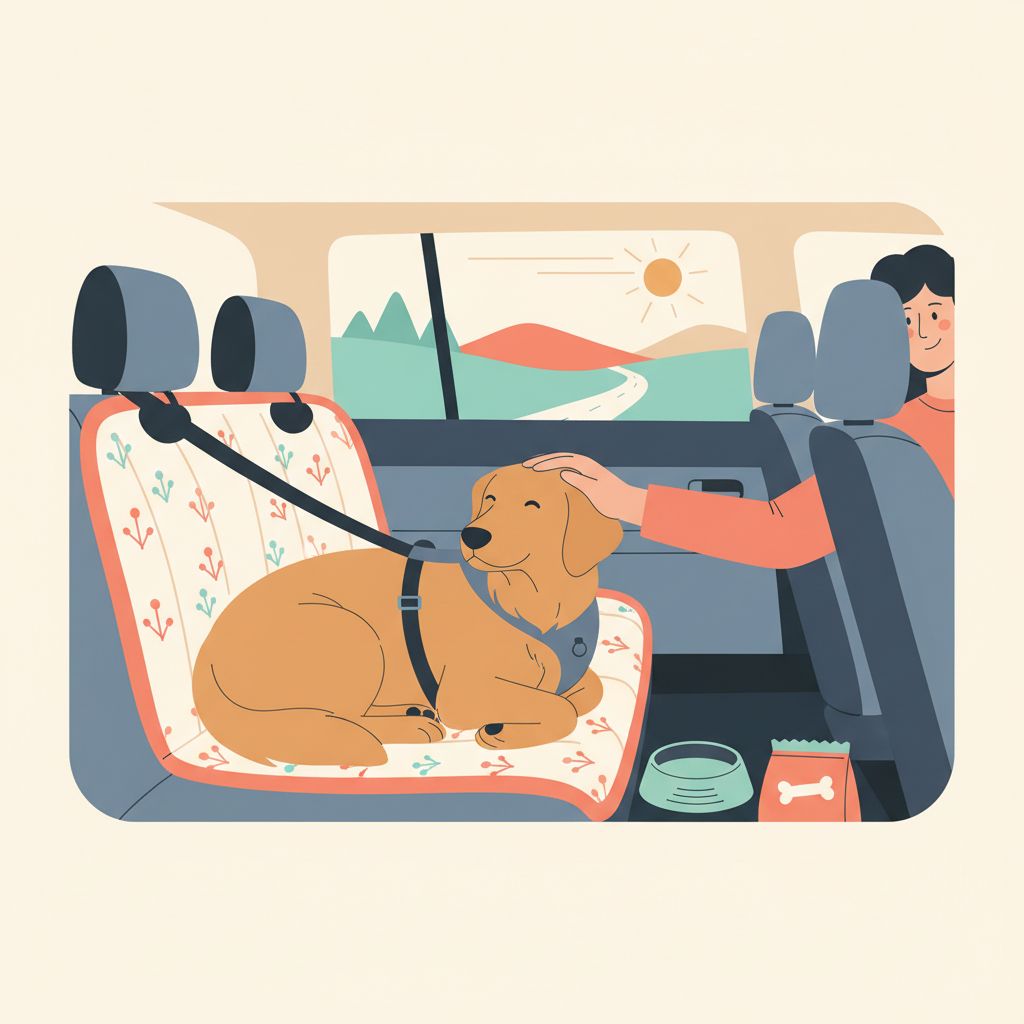
It is Saturday morning. The boot is packed, the lead is looped over your wrist, and your dog is bouncing at the car door as if the whole world is about to open up. What nobody has quite decided is where the dog will actually sit, when you will first stop, or what happens if the traffic out of the city crawls.
That gap between excitement and preparation is where most car journeys with your dog go wrong. A few concrete habits can close it, and none of them is complicated.
So here is the question worth asking before you turn the key: does your dog travel, or just get transported? The rest of this guide is about making it the first.
Why car journeys with your dog need a plan
It's Saturday morning. You're leaving Zagreb for Plitvice, or maybe heading to your cousins in Vienna, and your dog is already in the back seat. Tail wagging. Then forty minutes in, the drooling starts. Or the panting. Or that low whine that makes every kilometer feel twice as long.
That's why a car journey with your dog needs a plan. This guide covers three pillars: comfort, safety and planned breaks.

Here's the good news. Most roadside problems, from restlessness to a stressed dog, are far easier to prevent than to fix mid-journey. But every dog is different. Age, size and temperament all change what works, so adapt each step to the dog sitting behind you.
Let's start with the part that matters most if something goes wrong: keeping everyone secure.
Keeping your dog safe in the car
Picture a normal Tuesday in Zagreb traffic. A tram stops without warning, the car ahead brakes hard, and you do the same. Everything in your car keeps moving forward at the speed you were travelling. That includes your dog. A 20 kg dog doesn't weigh 20 kg in a sudden stop. It hits the seat in front of it, a window, or a person with far more force than its body weight suggests. So an unrestrained dog is a danger to the passengers as much as to itself.
Good dog car safety starts with choosing restraint that fits your dog and your car. You have three solid options.
- Harness: Clips into the seat belt system. It suits small to medium dogs and most hatchbacks and saloons.
- Crate: Strapped down securely. It works well for nervous dogs and for estates or SUVs with a flat boot.
- Boot guard: A fitted barrier between the boot and the passenger area. It suits larger dogs in estates, though it protects people better than it protects the dog.
Fit matters as much as the gear itself. A harness should be snug but not tight. You should be able to slide two fingers under the straps, no more. A crate needs to be anchored so it can't slide or tip, and it should be big enough for your dog to stand, turn around and lie down comfortably.

Placement is simple. Back seat or boot. Never loose in the front, and never on someone's lap (an airbag can seriously hurt a dog, and a lap offers no restraint at all).
Keep windows open only far enough that your dog can't lean out or get its head through. And never leave a dog alone in a parked car, even for a quick errand. A car heats up far faster than you'd expect.
One last thing. Rules on restraining animals in vehicles differ from country to country. Check the current local rules wherever you're driving, especially on cross-border trips, rather than assuming.
Once your dog is secure, the next job is making the seat somewhere they actually want to be.
Making car journeys with your dog more comfortable
Start before you ever turn the key. If the car only means the vet, your dog will read every trip as bad news. So flip that. Take a few short outings to somewhere fun, like Maksimir or Jarun, and let the car become the thing that leads to sniffing, running and treats.
Go slowly. Here's a simple progression:
- Sit in the parked car with the engine off. Reward calm behaviour, then get out.
- Repeat with the engine on.
- Drive for five minutes, then head straight to a park.
- Build up to longer trips only when your dog stays relaxed at each stage.
Set up the space with care. A familiar blanket and a non-slip mat help your dog feel steady and smell something safe. A favourite chew or lick mat works well for dogs who settle easily. Keep air moving and the cabin comfortably cool (a stuffy car makes everything worse).
Timing matters too. Walk your dog and offer a toilet break before you leave. Feed a light meal a few hours earlier rather than a full bowl right before driving. A full stomach and a moving car rarely get along.
Then there's your driving. Accelerate smoothly. Brake early. Take corners gently. Your dog feels every jolt far more than you do.
Watch for early signs of stress or nausea:
- Drooling
- Lip licking
- Yawning
- Restlessness
- Whining
If you spot them, don't push on. Pull over somewhere safe and let your dog settle before you continue.
Puppies, seniors and dogs who get unwell in the car may need extra support. Raise it with your vet, who can give advice tailored to your dog.
Even a calm, well-secured dog needs to get out and move, which brings us to the stops themselves.
Planning breaks on longer journeys
Think rhythm, not racing. When you are planning breaks on a road trip with a dog, aim for a stop every two hours or so, and add extra time on top of what your map app says. Puppies and seniors need shorter gaps (every hour or 90 minutes is kinder), and hot weather means more shade, more water and earlier starts.
A good break isn't a quick pit stop. Look for a safe, fenced or leash-ready spot away from the road, with a toilet opportunity, water and a few minutes of sniffing. Add a gentle stretch. That's it. Ten to fifteen minutes does more for your dog than a rushed five.
Choose stops with care. Quiet green areas beat busy forecourts, where traffic and strange dogs add stress. Check the signage at each place and look up current local rules about dogs before you go, since they differ between countries and even towns.
Discipline matters at every stop. Leash on before the door opens. Harness checked. And make sure your microchip details and tag are up to date, because a panicked dog in an unfamiliar place can bolt in seconds.
Offer small amounts of water at each stop rather than letting your dog gulp a full bowl. Gulping on a travel-wound stomach can bring it all back up.
Sample plan: Zagreb to Vienna (about 4.5 hours of driving)
Treat these times as examples to adapt, not rules.
- 8:00, Departure walk, 20 minutes, toilet included
- 10:00, First stop at a quiet green area, 15 minutes
- 12:00, Lunch stop, 30 to 40 minutes with a proper sniff and stretch
- 14:00, Final stretch break, 10 to 15 minutes
- Arrival, Short, calm walk before anyone gets comfortable
Staying overnight? Check ahead that your accommodation accepts dogs, and ask about conditions directly. Fees, size limits and rules about leaving a dog alone in the room all vary.
With the route and rhythm sorted, the final piece is making sure nothing essential gets left on the hall table.
Your dog travel checklist
Screenshot this one. Pack the night before, tick things off, and you won't be hunting for a lead at a petrol station outside Karlovac.
- Safety: secure harness or crate, spare lead, sun shades for the rear windows
- Comfort: familiar blanket, non-slip mat, favourite chew, a towel, waste bags, cleaning wipes and a spare towel for mishaps
- Hydration: fresh water plus a travel bowl or bottle
- ID: tag with your phone number, microchip details to hand
- Paperwork: crossing a border? Check the current entry requirements and travel documents for every country on your route well before departure
- Health: your dog's regular medication and your vet's contact details
- Food: the usual food in a labelled container, so the diet stays consistent
One more habit worth building. Ask your vet any travel-related questions before you go, not after the first wobble on the motorway.
Speaking of the vet, it helps to know in advance when a phone call is the right next step.
When to call your vet
This article is general guidance, not medical advice. Your vet knows your dog, and that counts for a lot.
Call before you travel if your dog is often unwell in the car, very anxious about journeys, elderly, very young, or living with a health condition. A quick chat now can save you a stressful trip later.
Call during or after a journey if you notice repeated vomiting, heavy or distressed panting that doesn't ease with rest and shade, lethargy, or collapse. Or if something simply seems off. You know your dog better than anyone, and trusting that instinct is always reasonable.
One practical step: on a longer route, find an emergency vet along the way before you set off. It takes five minutes, and you'll be glad you did it.
Make the next trip your calmest yet
You've got the three pillars now. Secure your dog properly. Build comfort gradually. Schedule breaks that actually meet your dog's needs, not just your own.
So start small. This week, take one short practice drive. Check the harness or crate fit before you pull out, and end the trip at a park (Maksimir works nicely if you're in Zagreb). Ten minutes is plenty. Your dog learns that the car leads somewhere good. Then pack the checklist the night before your next longer trip.
Save the checklist for later, and send it to a friend who drives with a dog. A well-planned journey isn't an endurance test. It's an adventure you share.
Want Pethood on your block?
Join the waitlist. One email to confirm, one on launch day, nothing else.
More from the journal.
 Behaviour
 Dogs and Children: Safe, Calm Daily Routines at Home
Practical steps for keeping dogs and children safe at home: a safe dog space, body language lessons for kids, calm daily routines and clear supervision rules for families.
 Health & vet
 Dog and Cat Grooming at Home: A Simple Starter Routine
A simple starter routine for grooming your dog or cat at home: brushing, nails, ears and paw care for city pets, with short sessions, calm habits and clear signs it's time to call your vet.
 Training
 Puppy Socialisation Checklist for City Life
A practical, tickable puppy socialisation checklist for city life: sounds, surfaces, people and traffic, with a one-week plan to build a calm, confident urban dog.